



'/%3E%3C/svg%3E "Youtube")
Mustafa Adel Raouf19 November 2026
Taser X26P · Source: Axon website
This investigation reveals that Israel is using stun guns (Tasers), made by the American company Axon, to torture Palestinian detainees in prison, in violation of US export control regulations.
In his dark cell, Issa stares at the stumps of his amputated feet. He thinks back to the Israeli bombardment in late 2023 that destroyed his home in Beit Hanoun, left members of his family dead or injured, and led to his arrest.
A few minutes later, soldiers burst in and drag him to a section of the jail the prisoners call “Hell’s Wing”.
They push him into a corner of the ‘cell,’ and one fires two rubber bullets at him. He falls to the ground; they tie him up, continuing to beat and kick him, while one of the soldiers looks on laughing. Another takes out a stun gun, walks up to Issa, aims it at him and pulls the trigger. Issa convulses, his limbs flailing. He writhes in pain.
Issa was released from Israel’s Ofer Prison in October 2025, but the marks left by the stun gun are still visible.

We presented photographs of Issa’s scars to the International Council for the Rehabilitation of Torture Victims (IRCT). The IRCT responded: “According to experts from the Independent Forensic Experts Group (IFEG), affiliated with the IRCT, the close spacing of these scars may result from repeated use of a stun gun, and their proximity suggests the person was immobilized, and possibly restrained, while being subjected to electric shocks.”
What happened to Issa prompted us to look into how stun guns have come to be used in Israeli prisons. During our investigation, four other prisoners said they had been tortured with the same type of stun gun. We also obtained documents proving that this model of gun was made by an American company.
We searched for images of electric stun guns from inside Israeli prisons and found two video clips produced by the Israel Prison Service (IPS), showing a specific model of gun. The first clip, from September 2025, shows IPS Commissioner Kobi Yaakobi receiving weapons and equipment for Israeli prisons. The second clip was shot in April 2026, during IPS celebrations of Israel’s Independence Day.
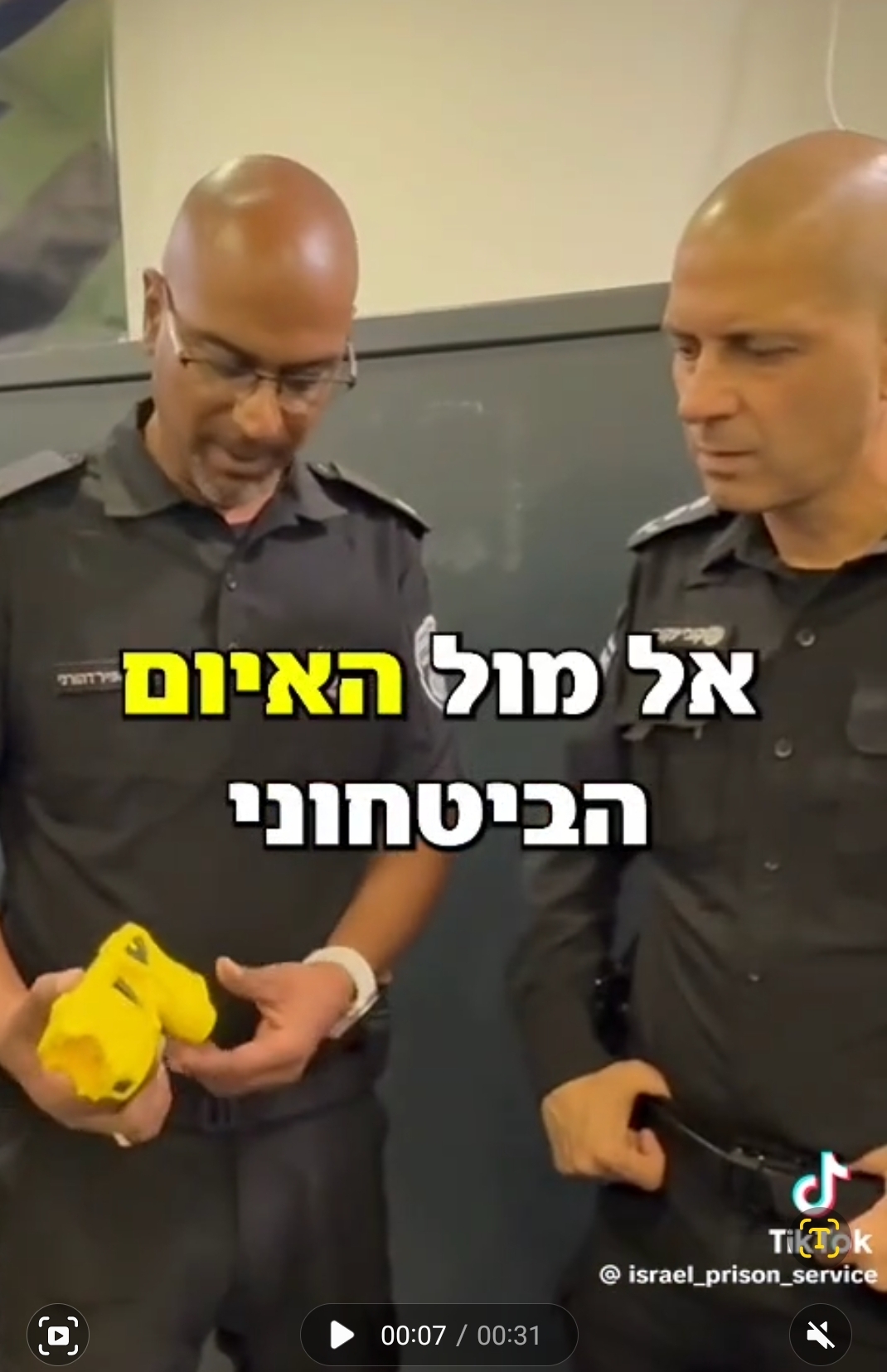
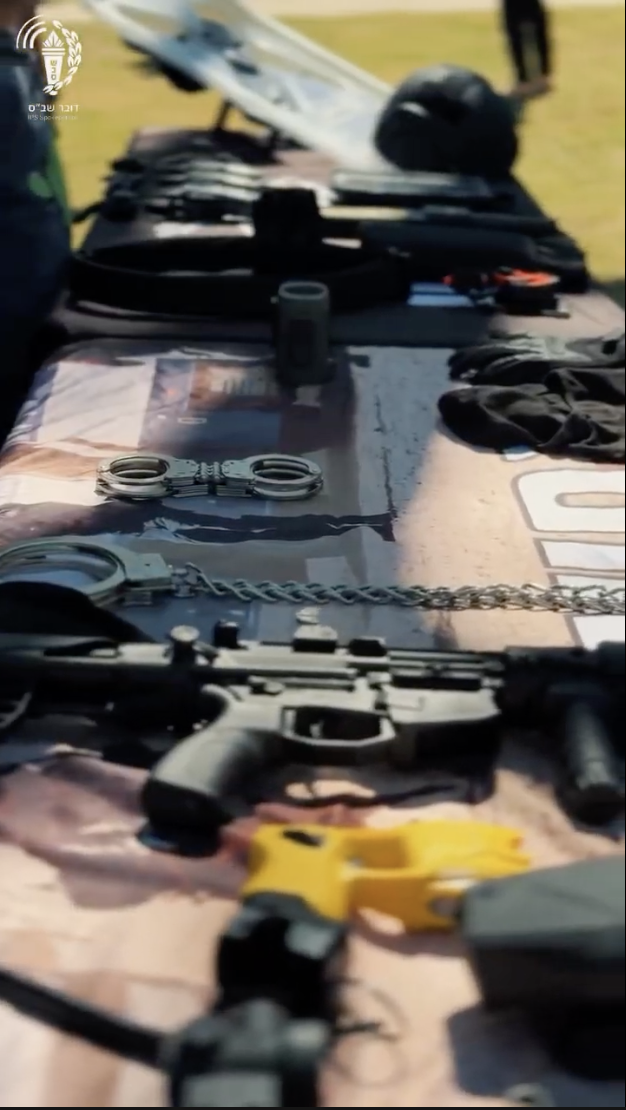
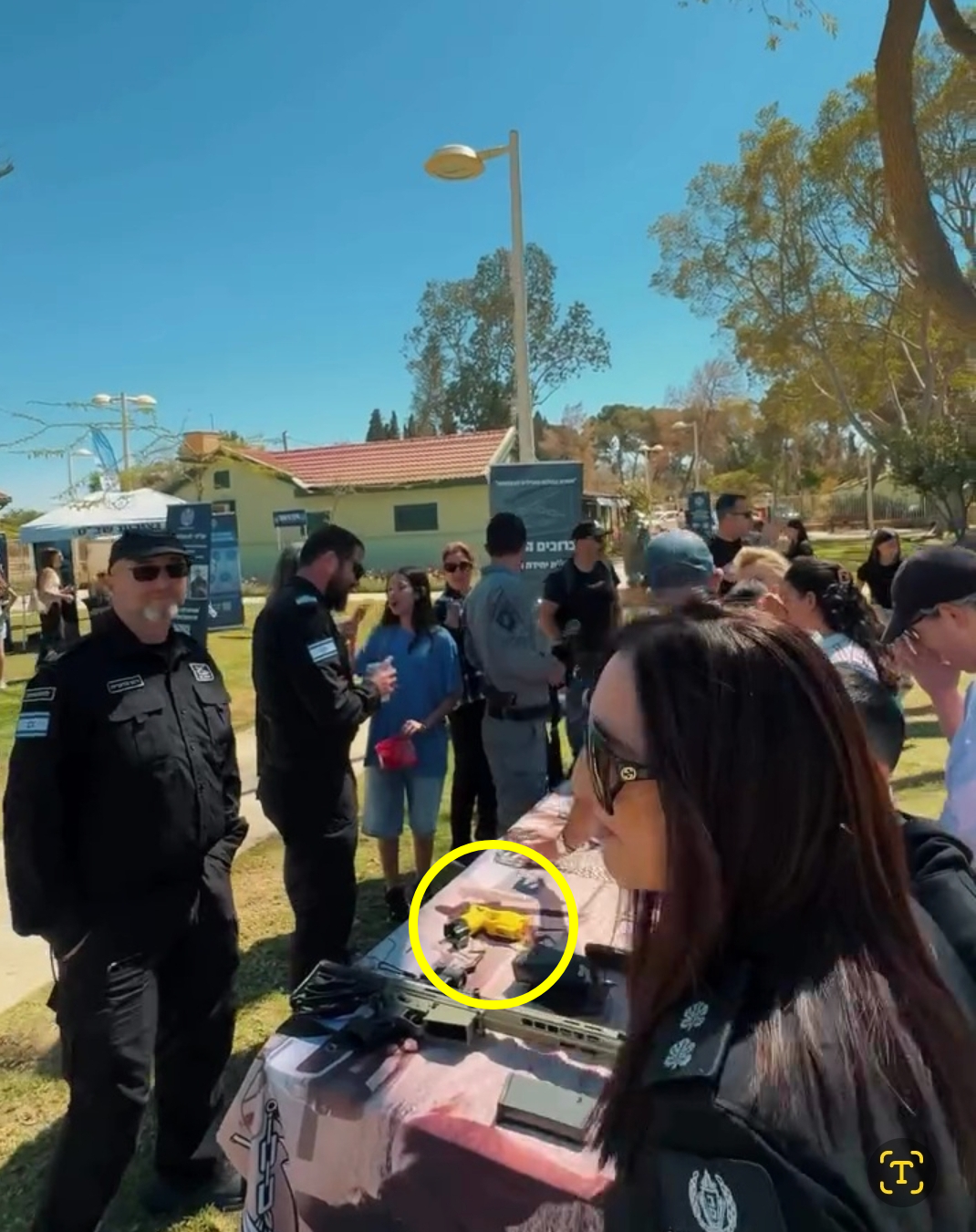
Stills from the two Israel Prison Service clips: Kobi Yaakobi receiving weapons and equipment in September 2025, and equipment on display at Independence Day celebrations in April 2026
The design and color of the stun gun, which appeared in both clips, match those of a Taser.
We showed a photograph of the Taser to the people whose cases we documented, and they all agreed that it resembled the stun gun used in Israeli prisons.
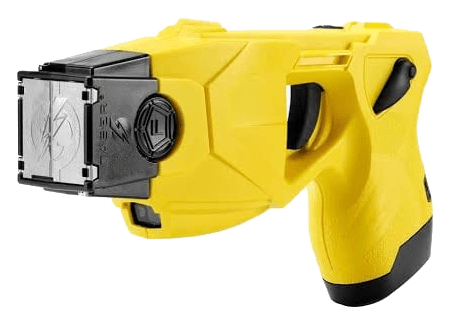
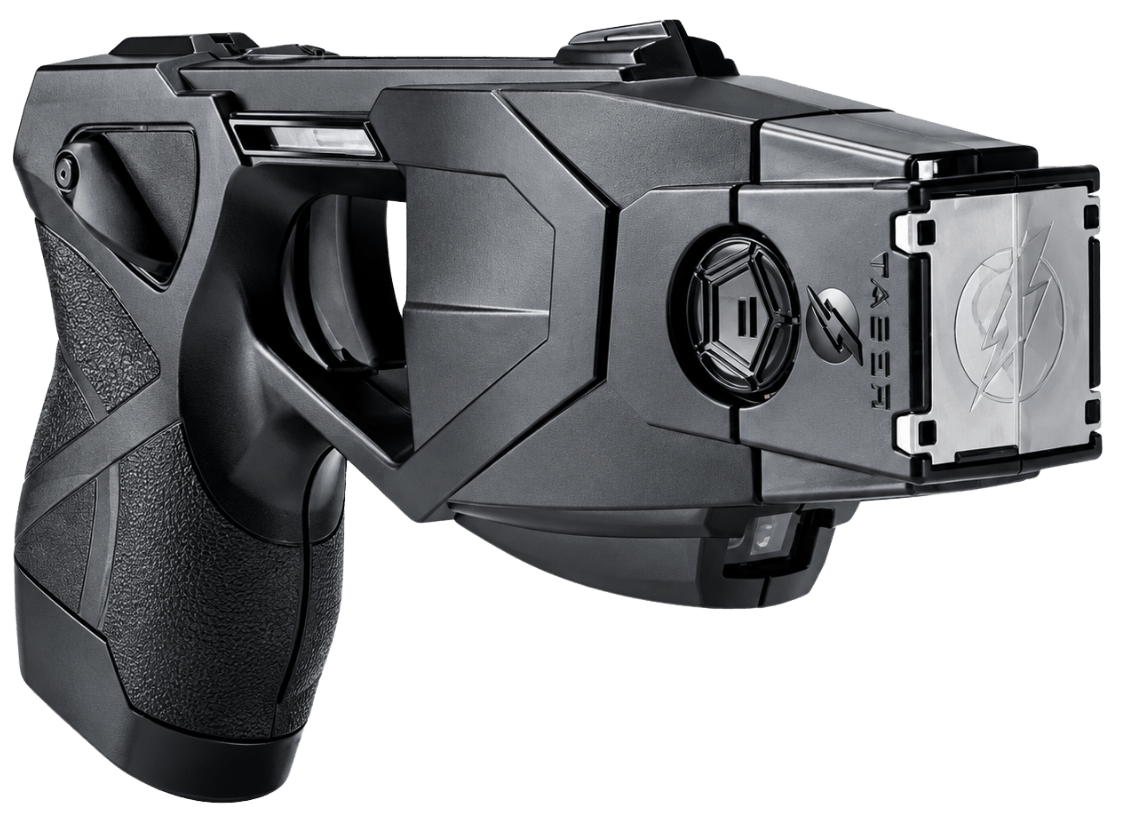
The two Taser stun guns in the photographs shown to the people whose cases we documented
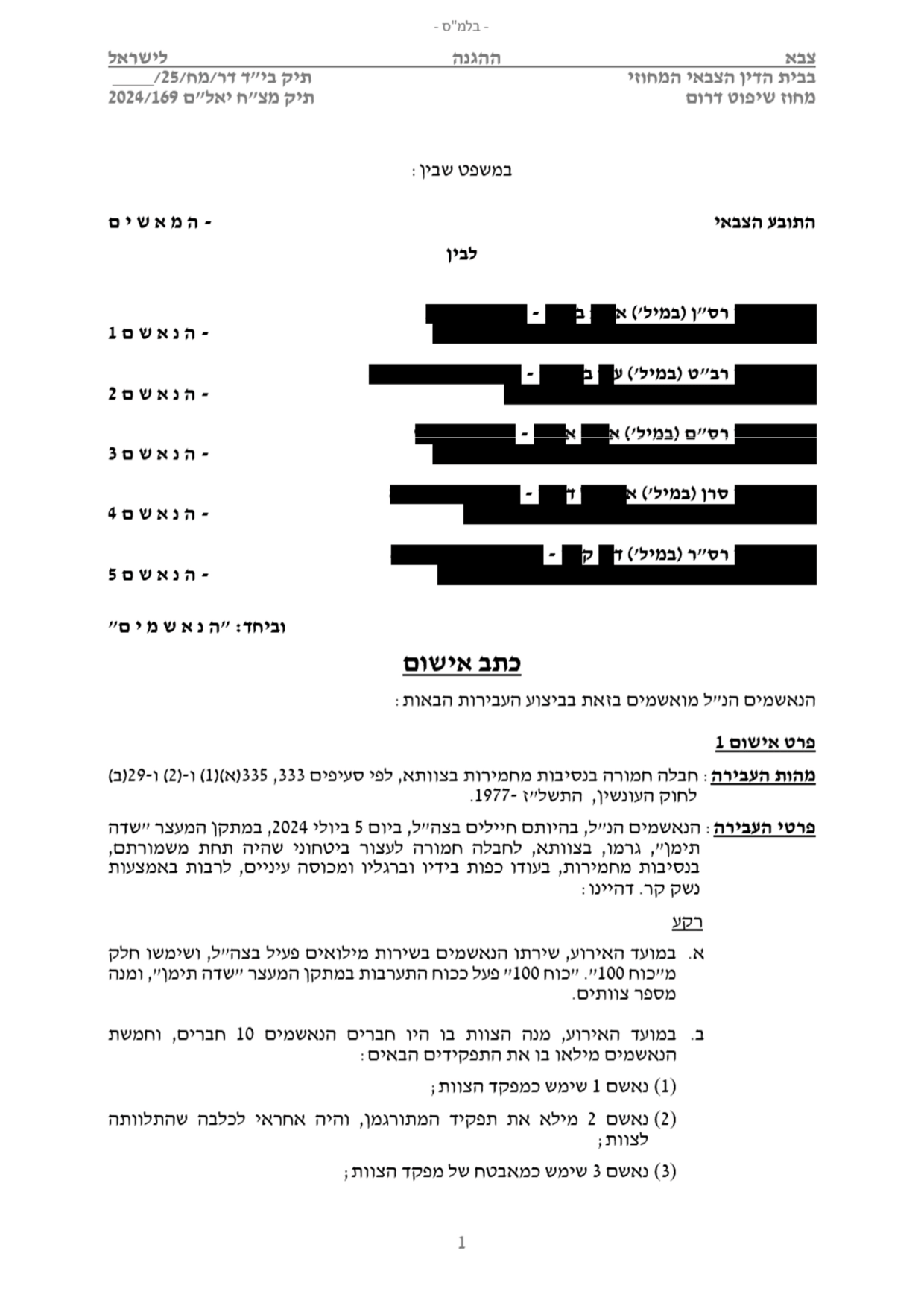
To confirm this conclusively, we obtained documents from an Israeli Military Advocate General investigation into five Israel Defense Forces (IDF) soldiers accused of sexually assaulting a Palestinian detainee at the IDF’s Sde Teiman base in July 2024. This investigation detailed horrific acts committed against the detainee, including the use of a Taser (electroshock device) on his head.
It also reveals that one of the accused stabbed the detainee in the “backside” with a sharp object, rupturing his bowel.
About an hour after the incident, the detainee complained of difficulty breathing and a headache. He was also bleeding heavily and, after being examined by the “prison” doctor, was taken to hospital.
The violence left him with seven fractured ribs, a punctured left lung, and various injuries to his body and face that required surgery, hospital treatment and prolonged medical follow-up.
The Israeli Military Advocate General’s investigation reports that the soldiers used various tools to torture the detainee, including a Taser.
So how did this stun gun come to be inside Israeli prisons?
Axon · ArizonaManufacture, assembly, testing
Axon branch · NetherlandsConfirms sole distributor, 2018
IsraelPolice · Ministry of National Security · Prison Service
The Taser stun gun is manufactured by the American company Axon Enterprise, formerly known as Taser International.
When we searched through the Israeli tender register, we came across a document dated March 2023 in which the Israeli police asked M.R. Hunter Ltd., Axon’s distributor in Israel at the time, to supply spare parts for Taser X26P stun guns under a contract worth 3.5 million shekels (approximately $1.145 million).
We also found a document dated June 2023, in which the Israeli police and the Israeli Ministry of National Security requested the supply of holsters for the Taser X26P.
In September 2023, a tender was issued for a one-year contract to supply stun guns to the Israeli police. Under the terms of the tender, the Israeli security authorities could extend the contract for a further seven years. In January 2024, M.R. Hunter was announced as the winner of the tender.
The terms of the tender state that the Israeli police are the contracting party, while the Ministry of National Security, which includes the Prison Service, has the authority to extend use of the goods and services covered by the tender to additional users.
Choose a distributor, then click each link in the chain to read what the investigation documented.Contact International2009–2014M.R. Hunter2016–2024Goren-Kidon Group20251Axon EnterpriseManufacturer · Arizona2Goren-Kidon GroupAxon listed it as a distributor of its products in Israel in 20253Israeli PoliceContracting authority in the 2023 tender4Israeli Ministry of National SecurityHad authority to extend the contract to additional users5Israeli Prison ServiceA gun matching the Taser model appeared in two video clips
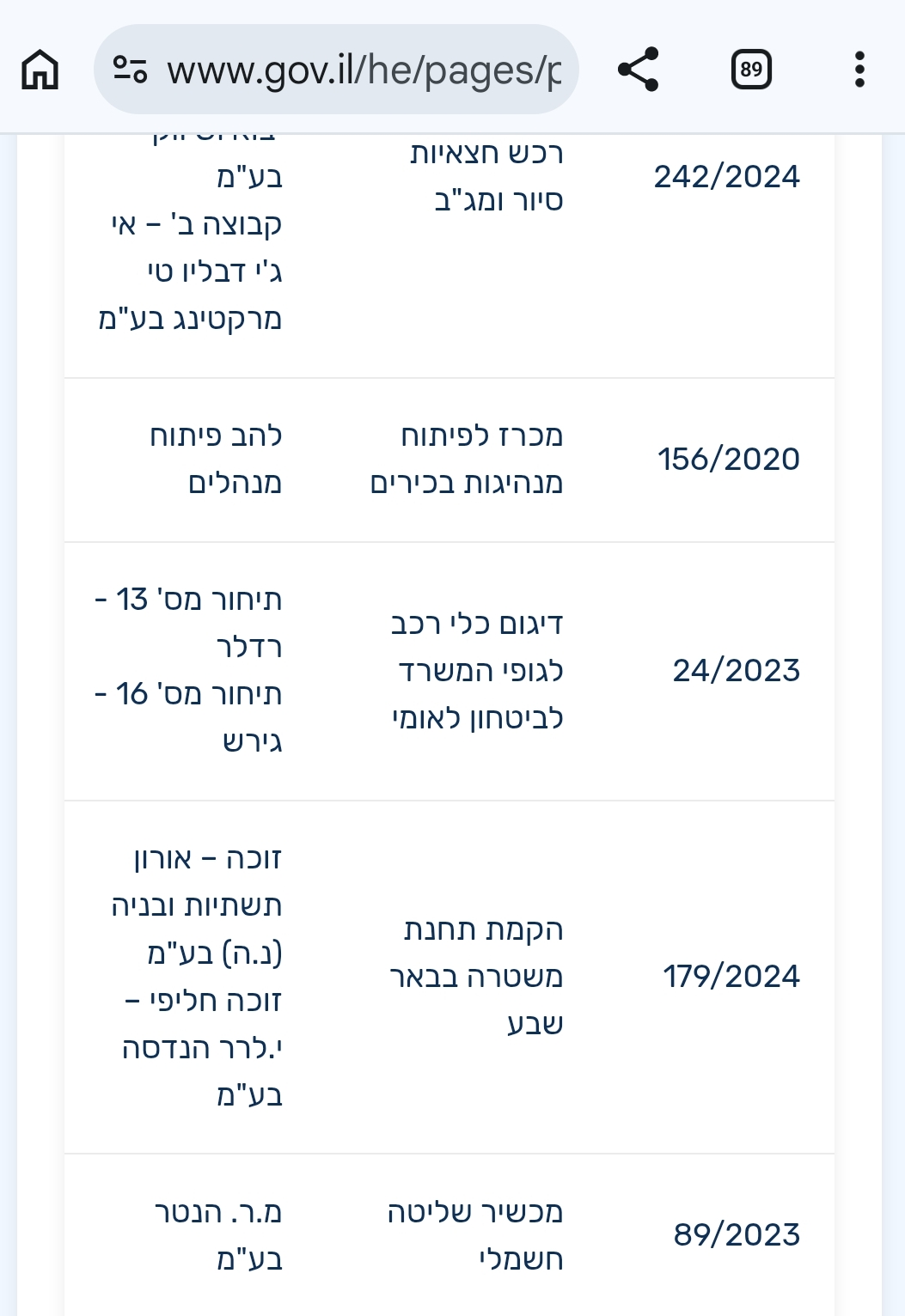
Tender documents for stun guns won by Axon’s distributors in Israel
Map data: Natural Earth
Axon’s ties to Israel date back to the 1990s, when a delegation from the company, led by its founder Rick Smith, attended a security trade show in Eilat in 1995 and then visited the Western Wall and the Church of the Holy Sepulchre in Jerusalem.
An official document from 2009 shows Contact International (Kalia) Ltd supplying the Israeli security services with X26 stun guns.
The following year, the Israeli Prison Service conducted a trial of Tasers in prisons, according to its 2010 report.
In 2014, the US State Department issued a report on human rights practices in the Occupied Territories, which noted that Israel’s police commissioner had announced a suspension of Taser use in 2013. Media reports indicated that the suspension came after a video was leaked showing an Israeli citizen being tortured with such a device.
Contact International won a contract to supply Israel with stun guns in April 2014. A month later, the Israeli authorities lifted the suspension on using Tasers.
M.R. Hunter – Axon’s Israeli distributor – signed a deal in 2016 worth 13 million shekels ($4.3 million) to supply the Taser X26P and accessories to Israeli security agencies.
In 2018, Palestinian human rights organizations – including Al-Haq, Addameer and Al-Mezan – condemned the arrest of Omar al-Kaswani, president of the Birzeit University Student Council. They also said that he had been shocked with a Taser during his arrest.
Despite these allegations of Taser abuse, the stun guns continued to be supplied to Israel. In 2018, the Dutch branch of Axon confirmed that M.R. Hunter was its exclusive distributor in Israel, and its products included the Taser X26P.
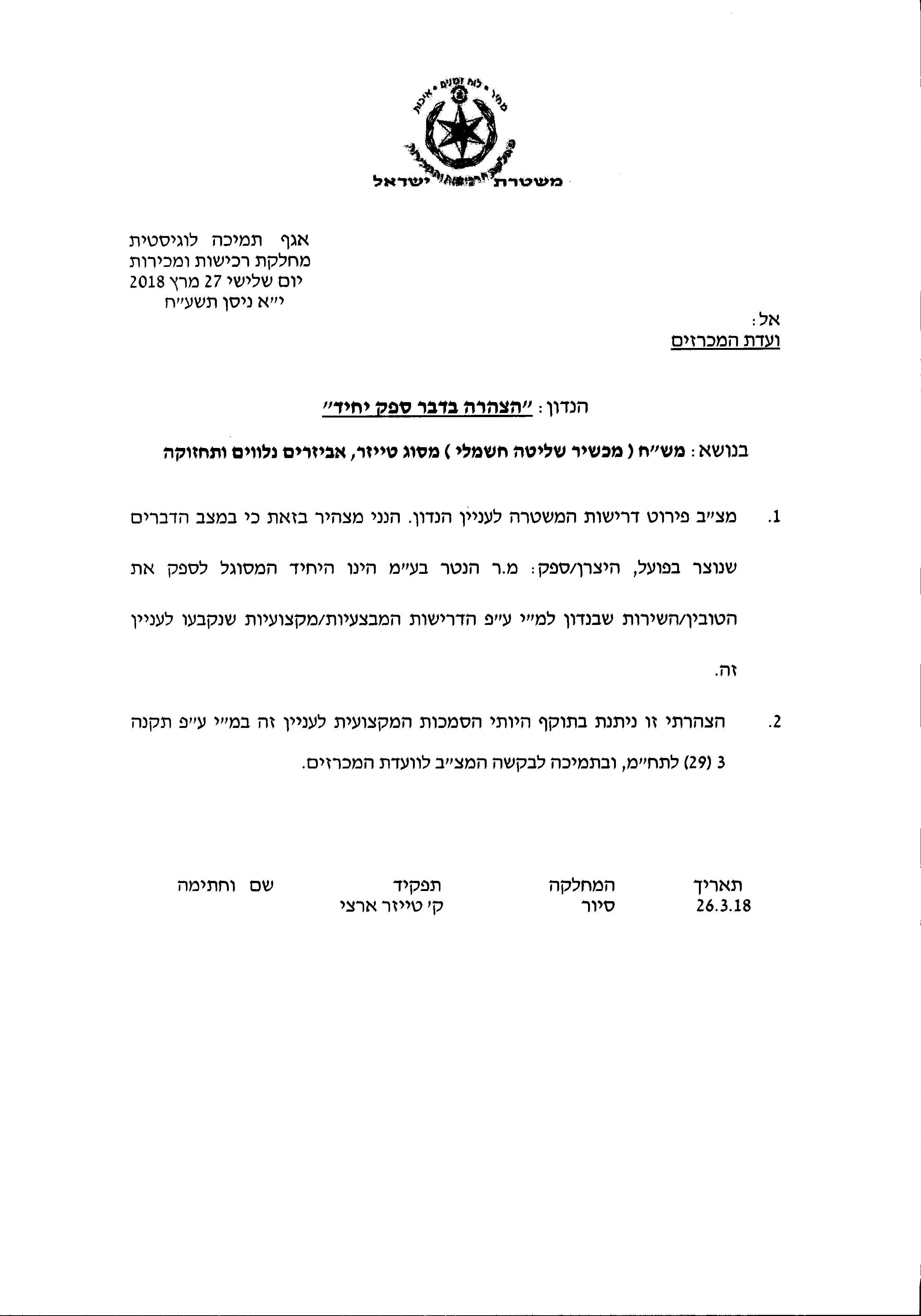
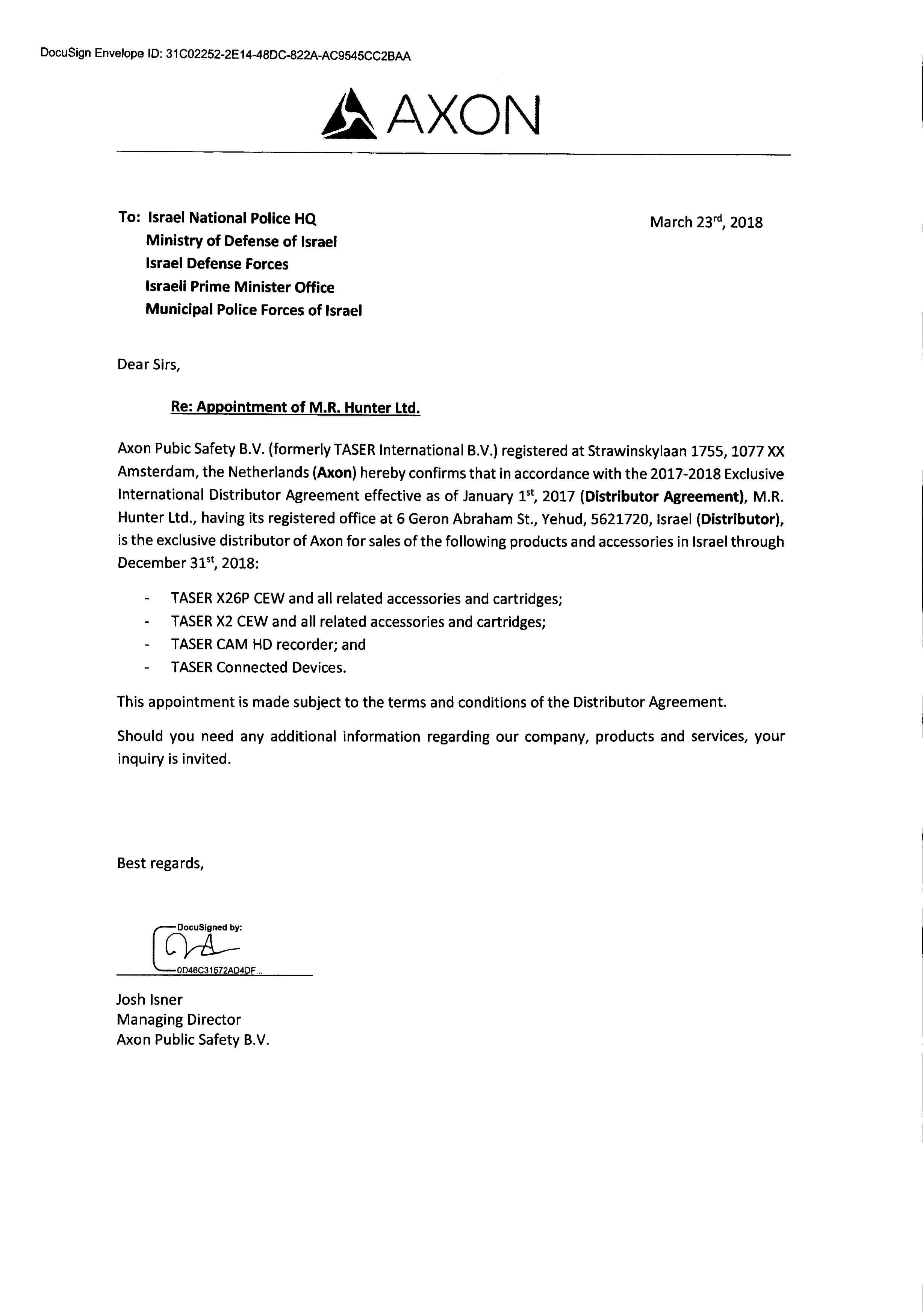
Axon’s Dutch branch confirms that M.R. Hunter is the company’s exclusive distributor in Israel
Through 2024, the company had at least three contracts with Israeli agencies to supply Taser stun guns or spare parts.
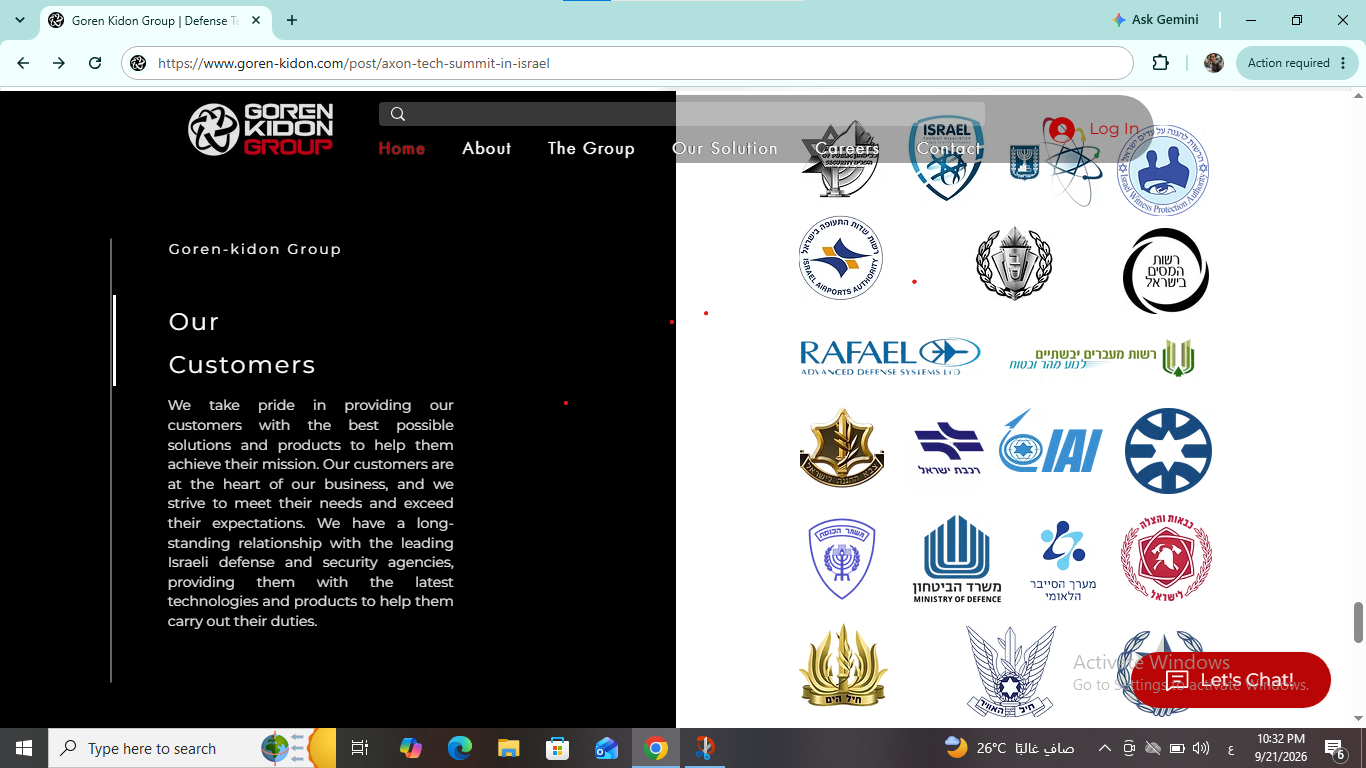
In 2025, Axon listed another Israeli company, Goren-Kidon Group, as a distributor of its products in Israel.
This company lists Tasers among its products, and lists the Israeli Police, the Ministry of National Security, the Ministry of Defense, and the Israel Prison Service among its clients.
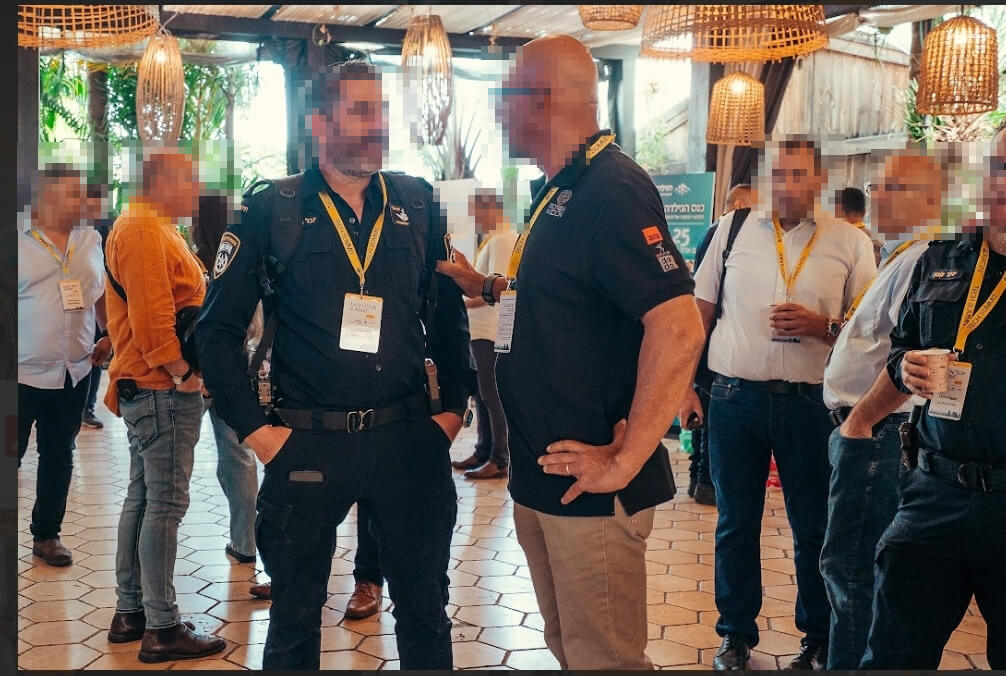
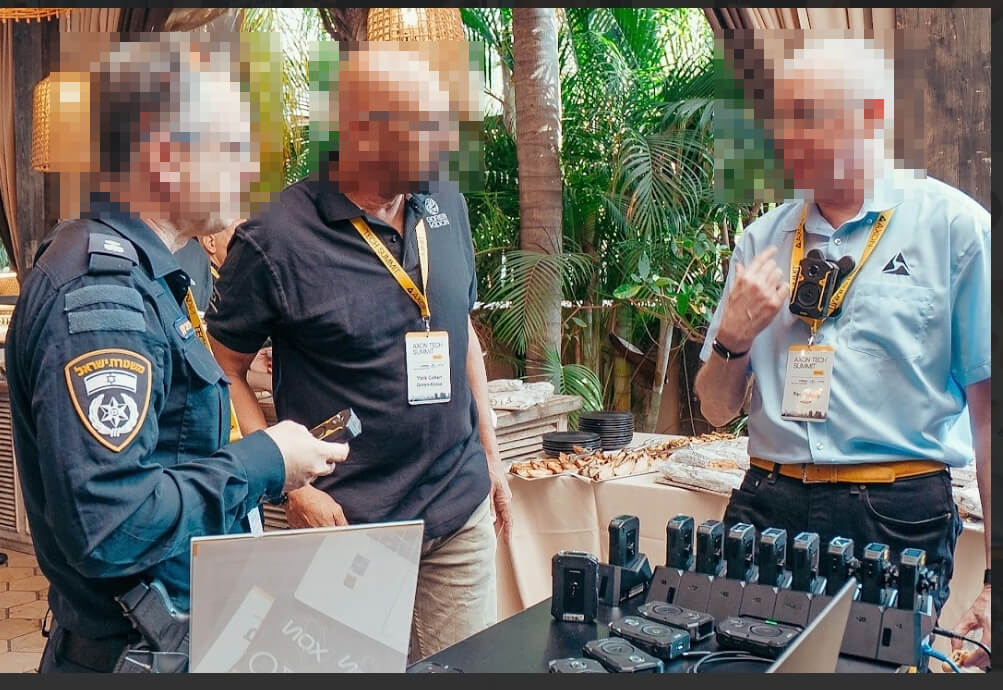
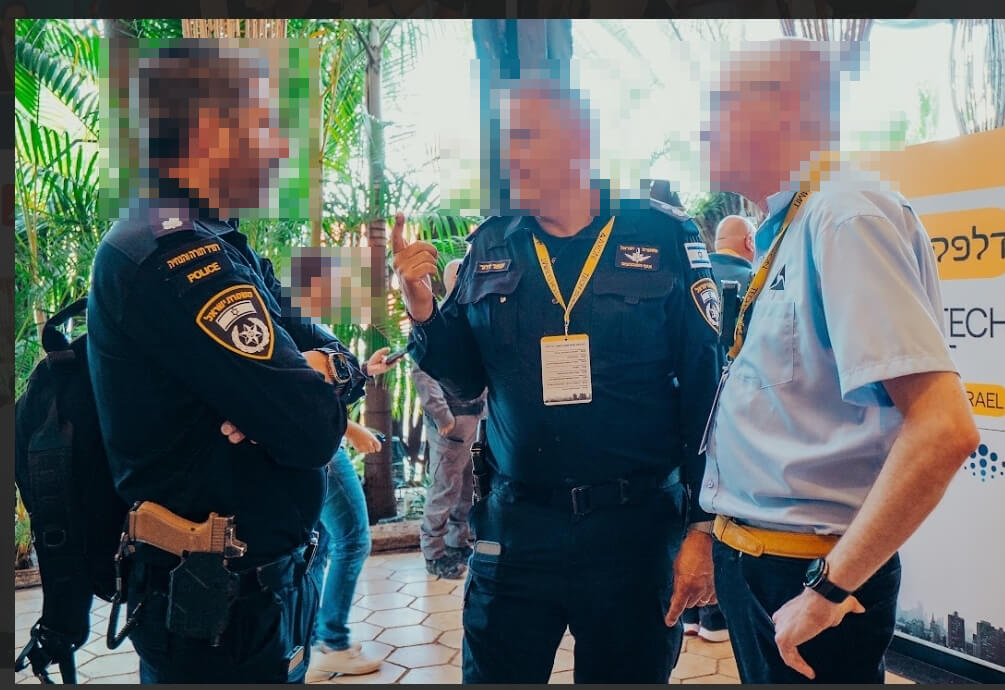
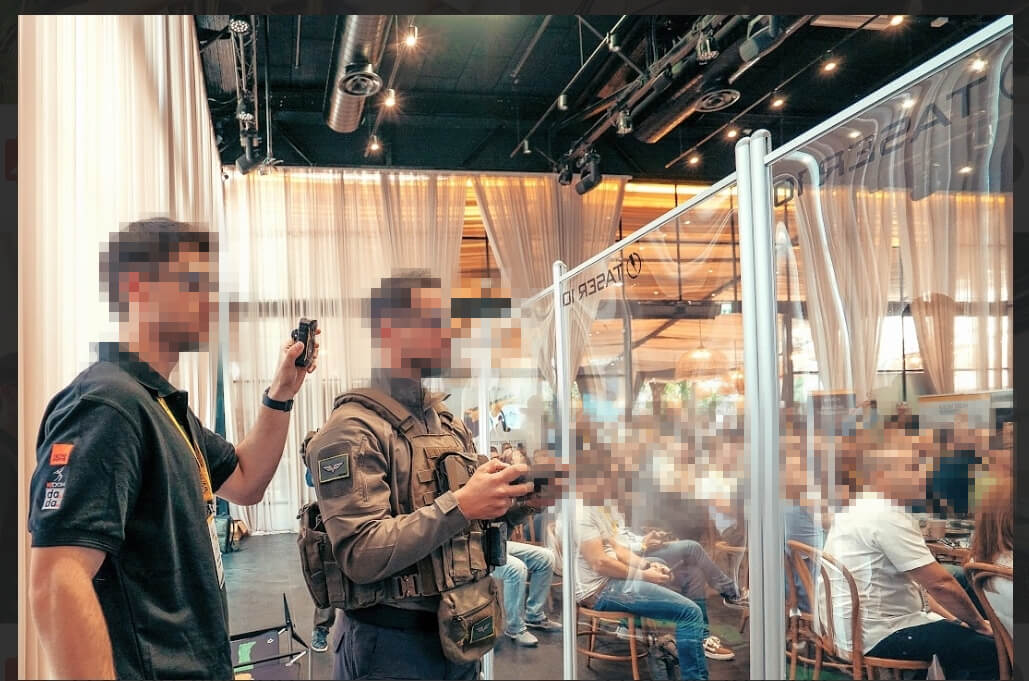
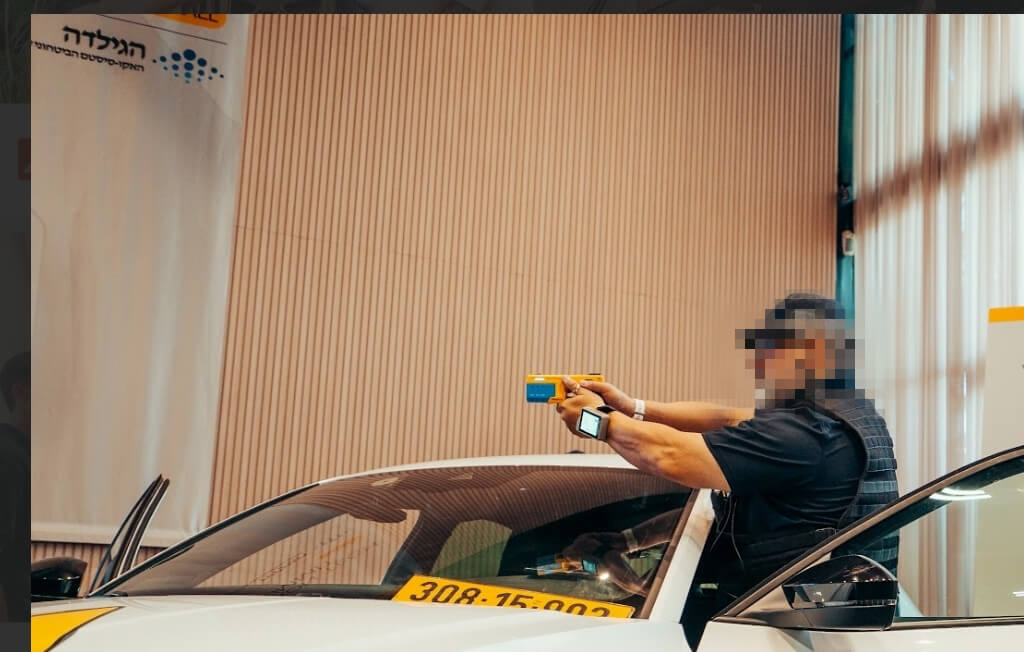
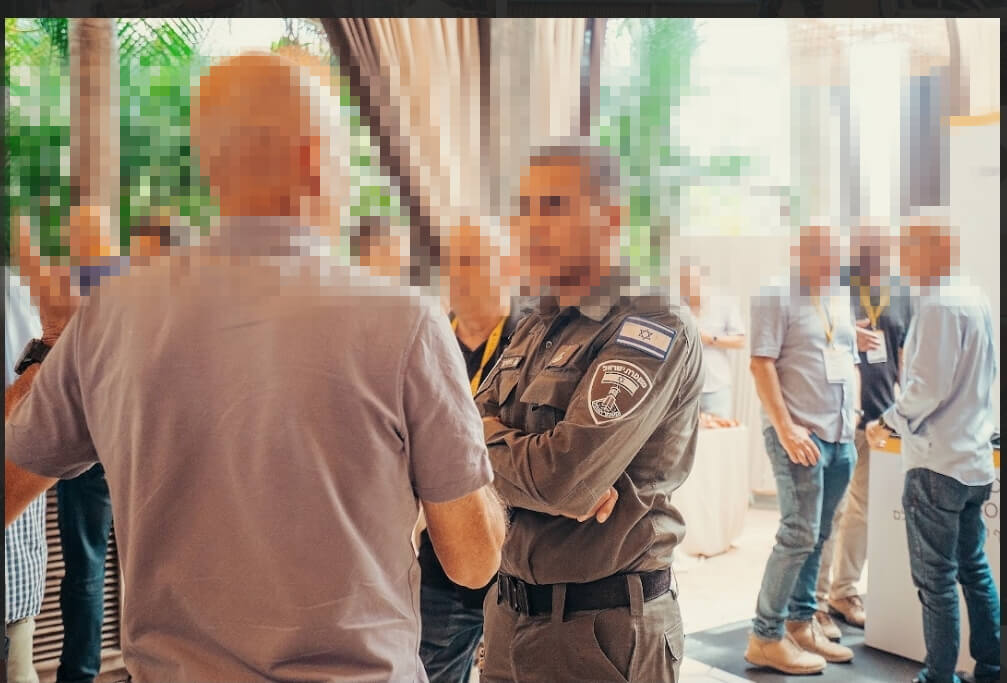
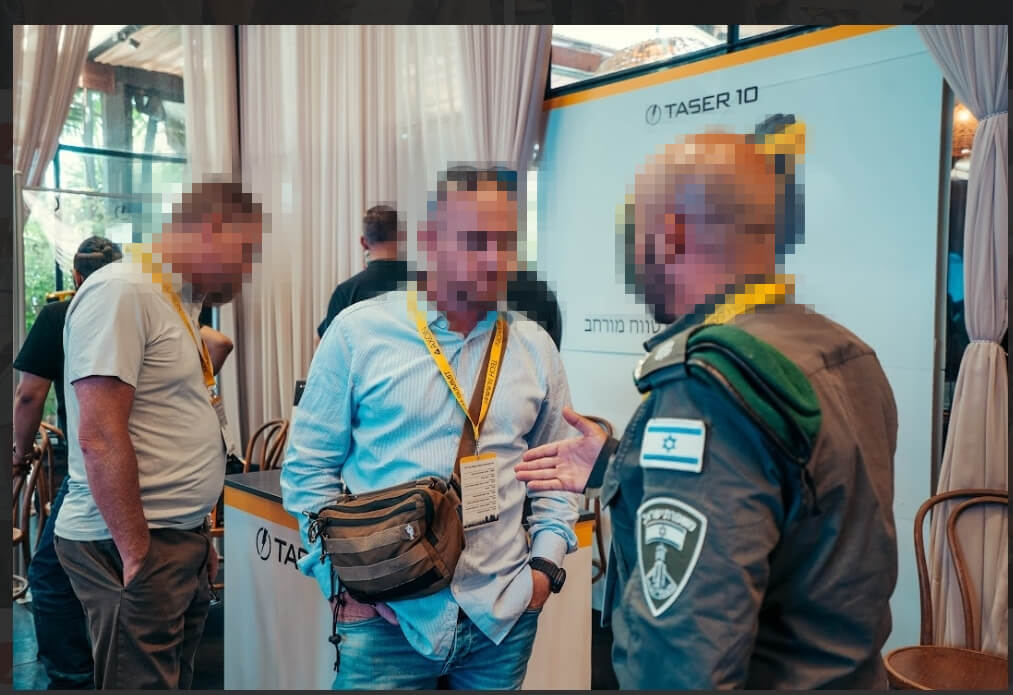
In June 2025, Axon, in collaboration with Goren-Kidon, held a conference in Israel to showcase the latest models of stun guns, attended by representatives from the Israeli security services. This followed the publication of the investigation by the Israeli Military Prosecutor documenting the use of Tasers in the abuse of a detainee at the Sde Teiman detention center.
The Axon and Goren-Kidon conference in IsraelJune 2025

01 / 08
Even as Axon products remain available in Israel, the UN Committee Against Torture expressed concern in 2025 over reports of torture within Israeli detention centers, including the use of electric stun guns. The Committee stated that such practices had increased significantly since October 7, 2023, and that the findings of the independent UN investigation concluded that they could constitute war crimes, crimes against humanity, and acts that constitute in part the crime of genocide.
In September 2025, Abdullah al-Zaghari, head of the Palestinian Prisoners’ Club, protested the supply of weapons to Israeli prisons, including stun guns.
Value of contracts through 202527,494,000shekels10 of 10 contracts with a disclosed valueAll21Contracts and Supply14Reports and Decisions4Violations and Accountability320092010201120122013201420152016201720182019202020212022202320242025
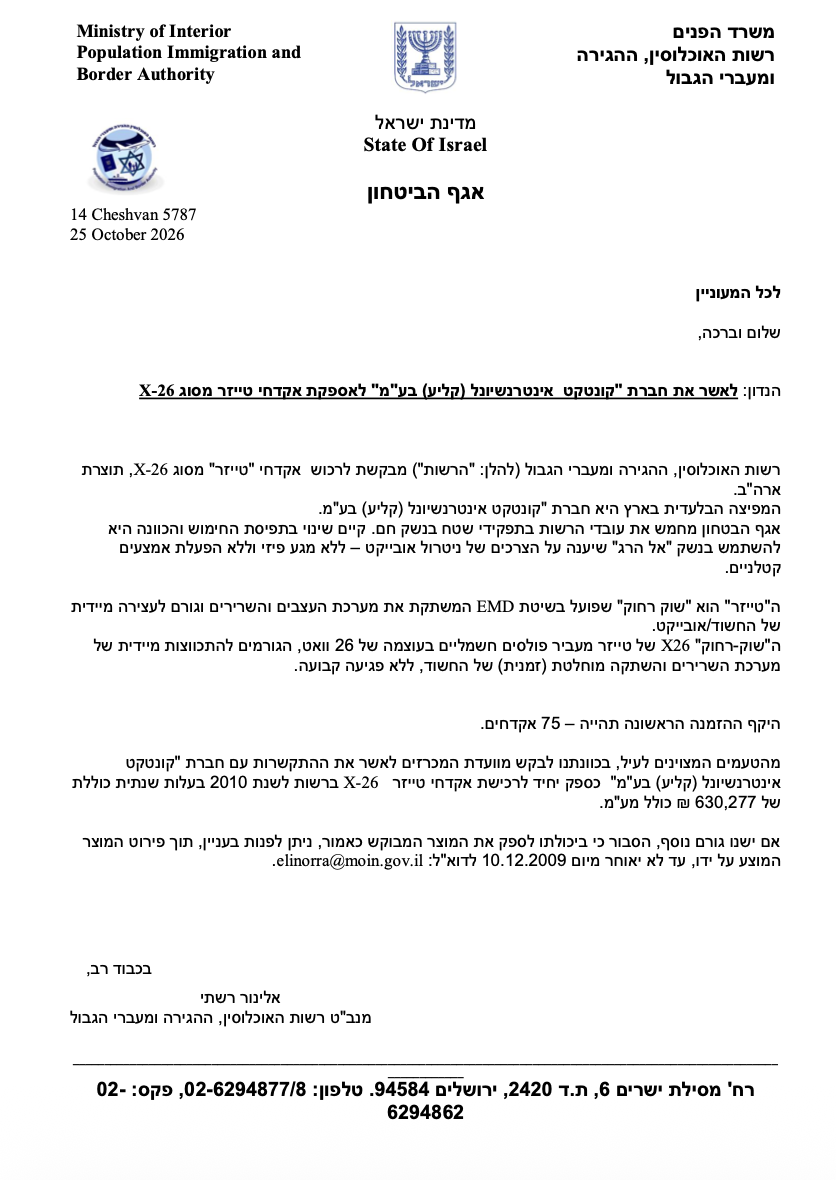 Full documentPDFX26Contact International
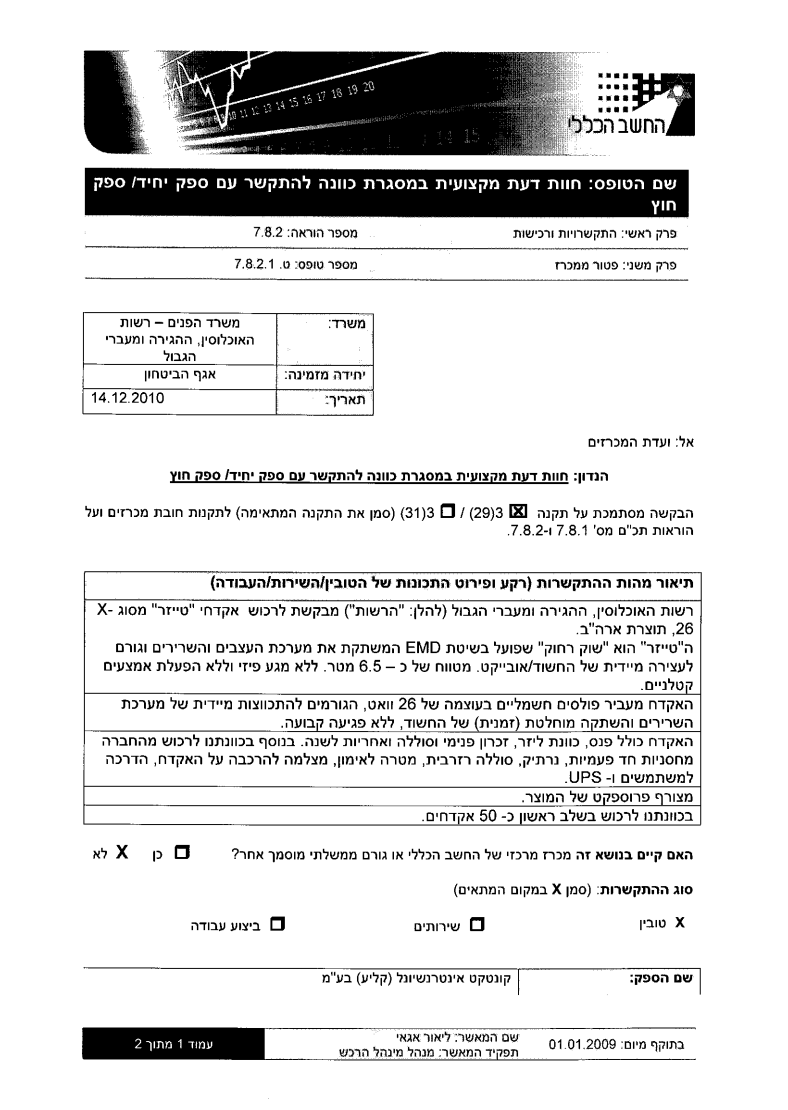 Full documentPDFM26
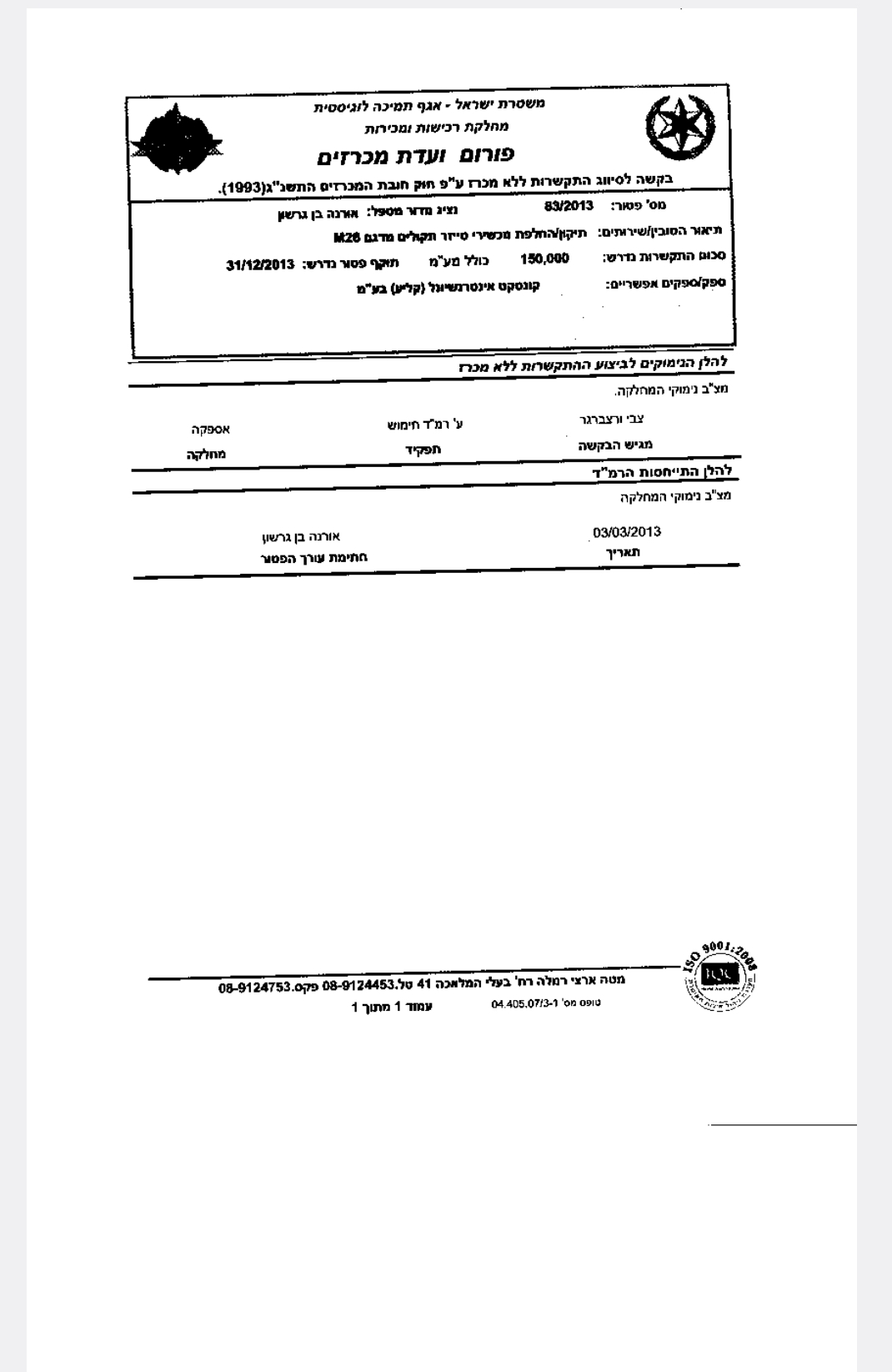
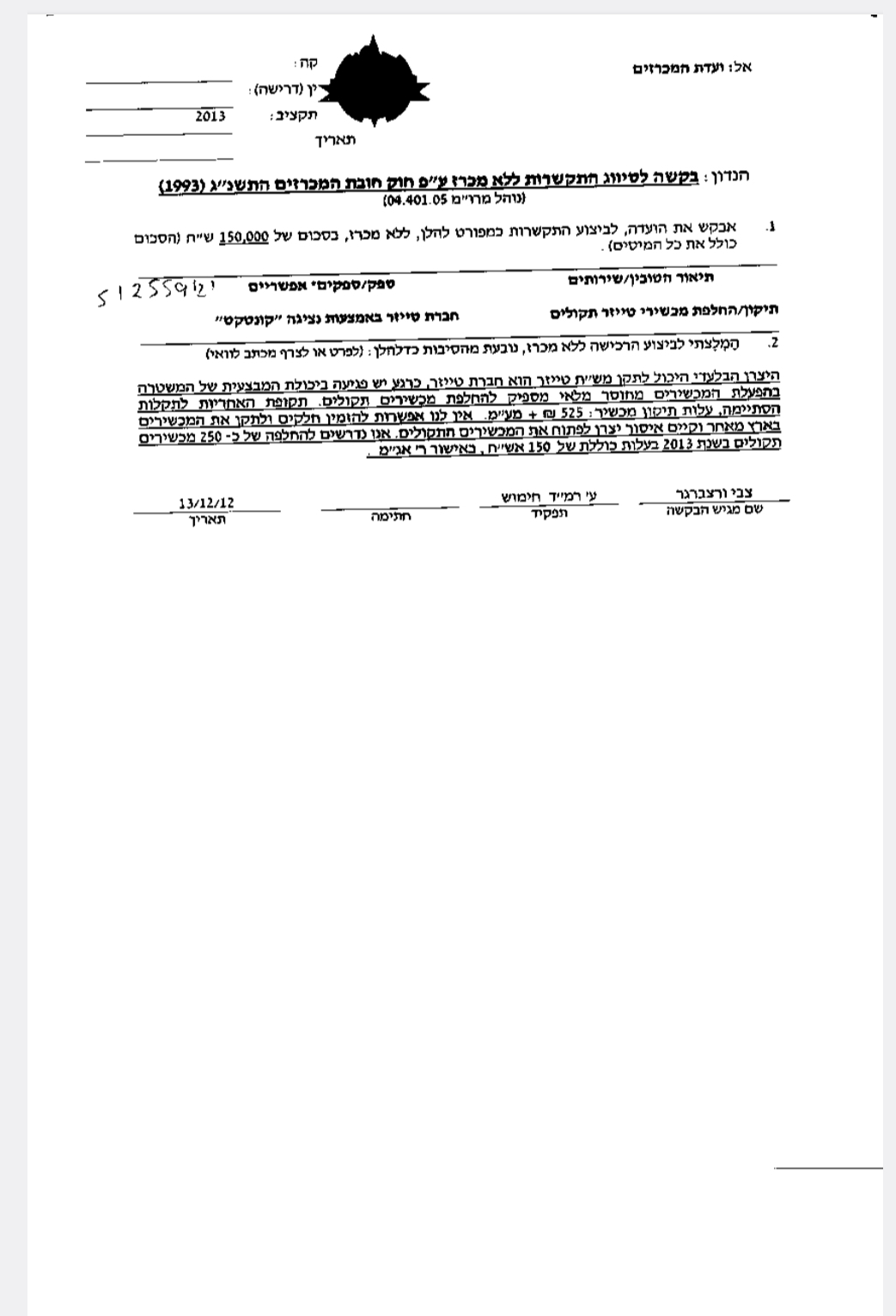 View documents2M26Contact International
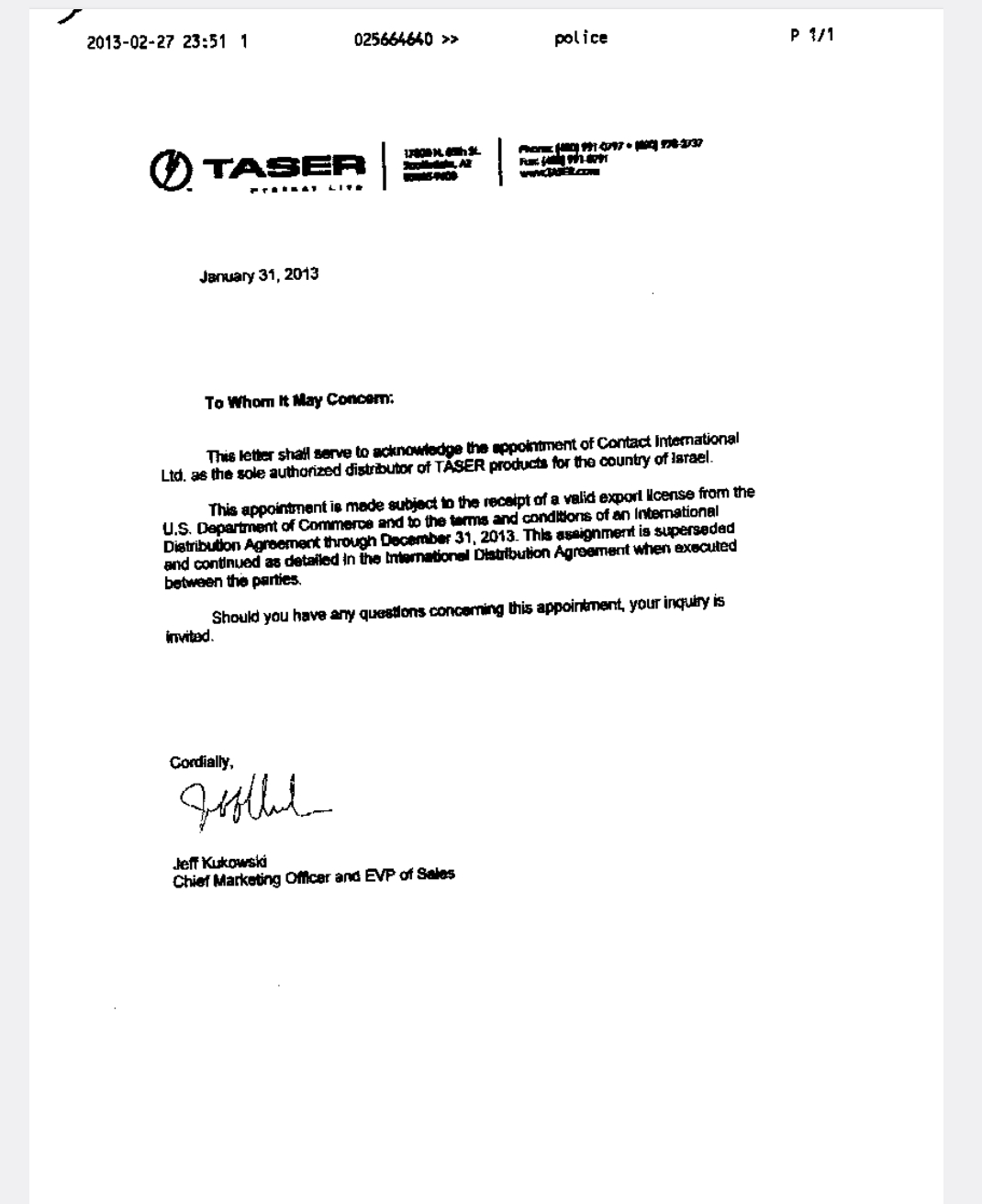 View document1Contact International
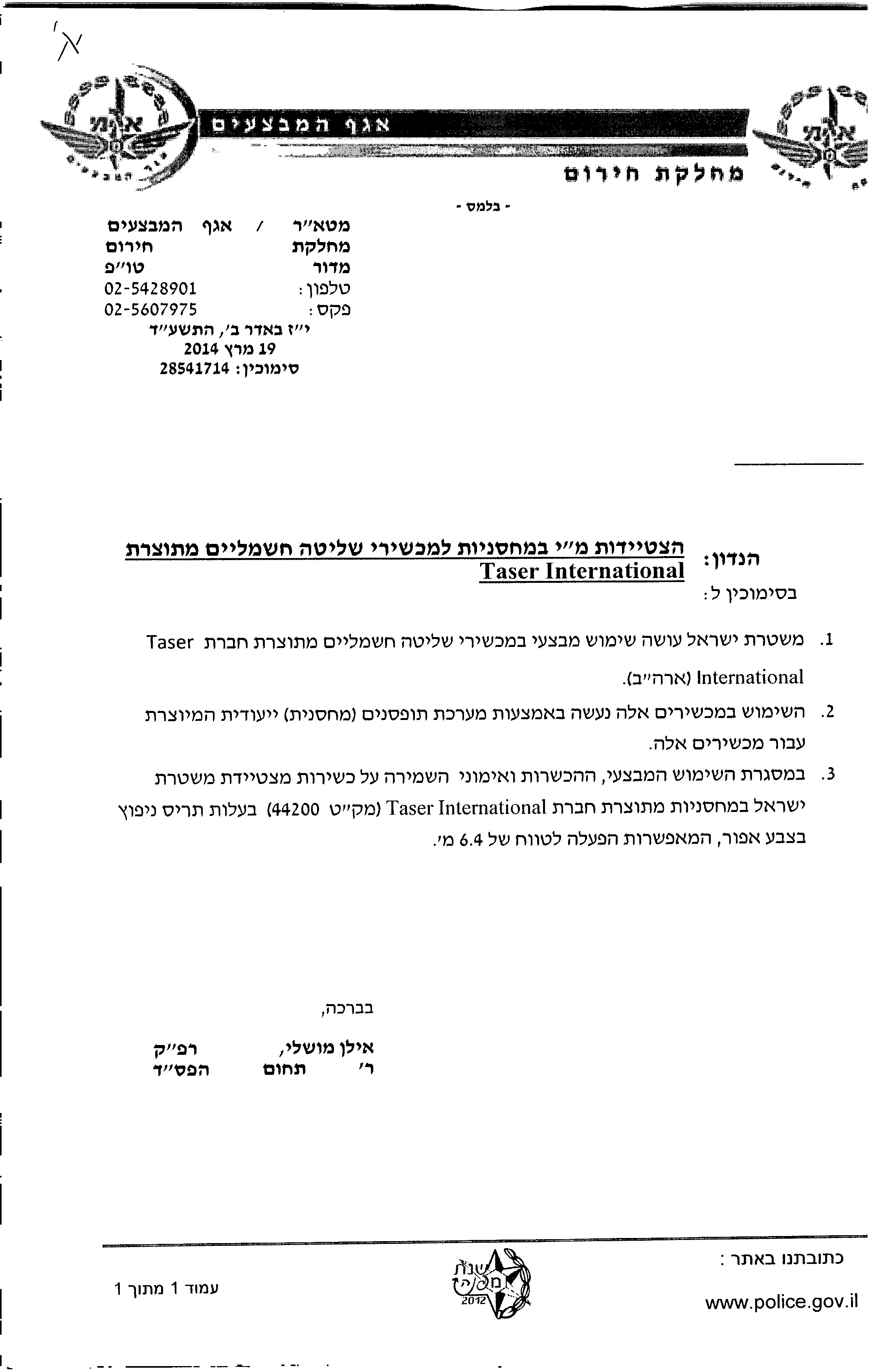
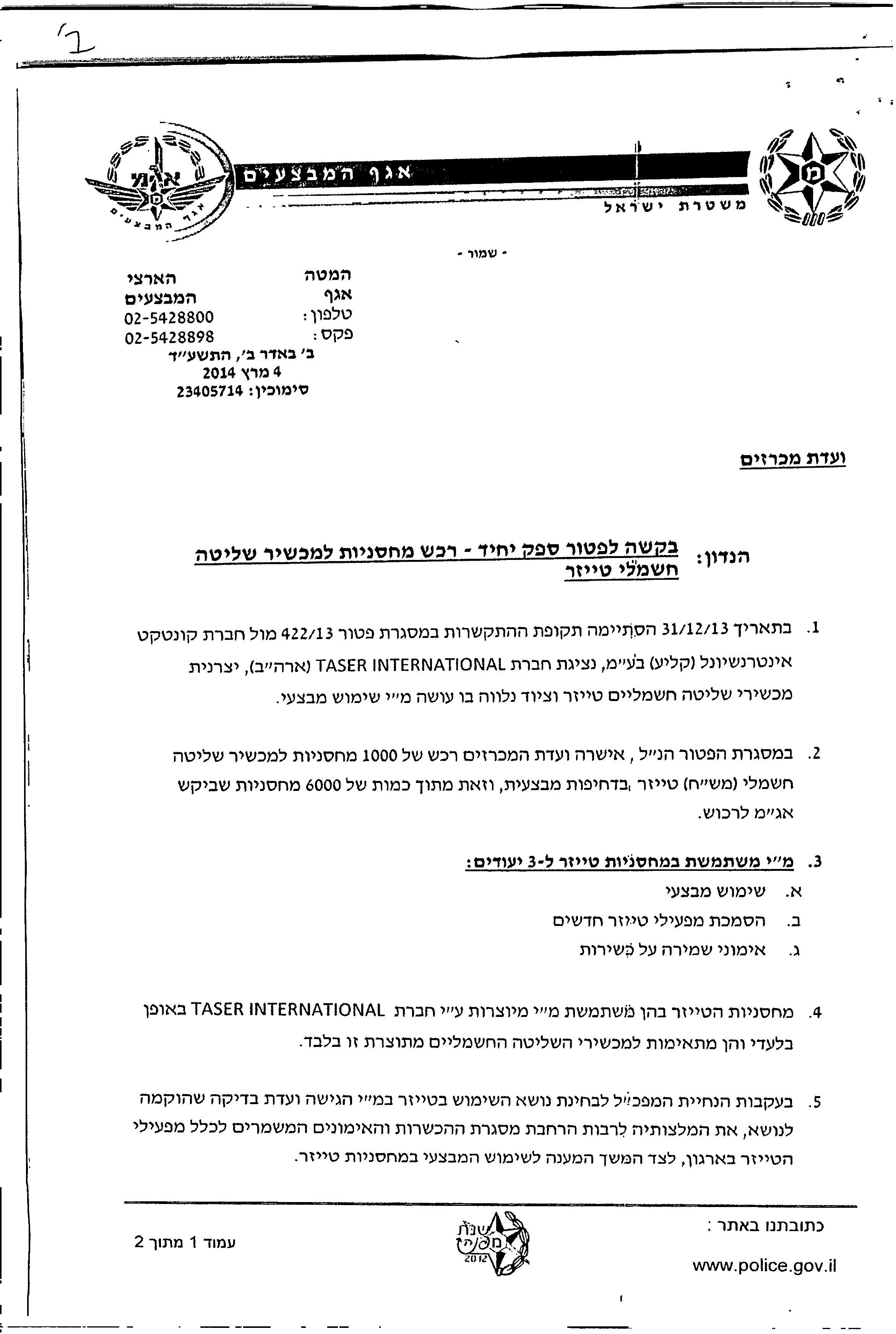
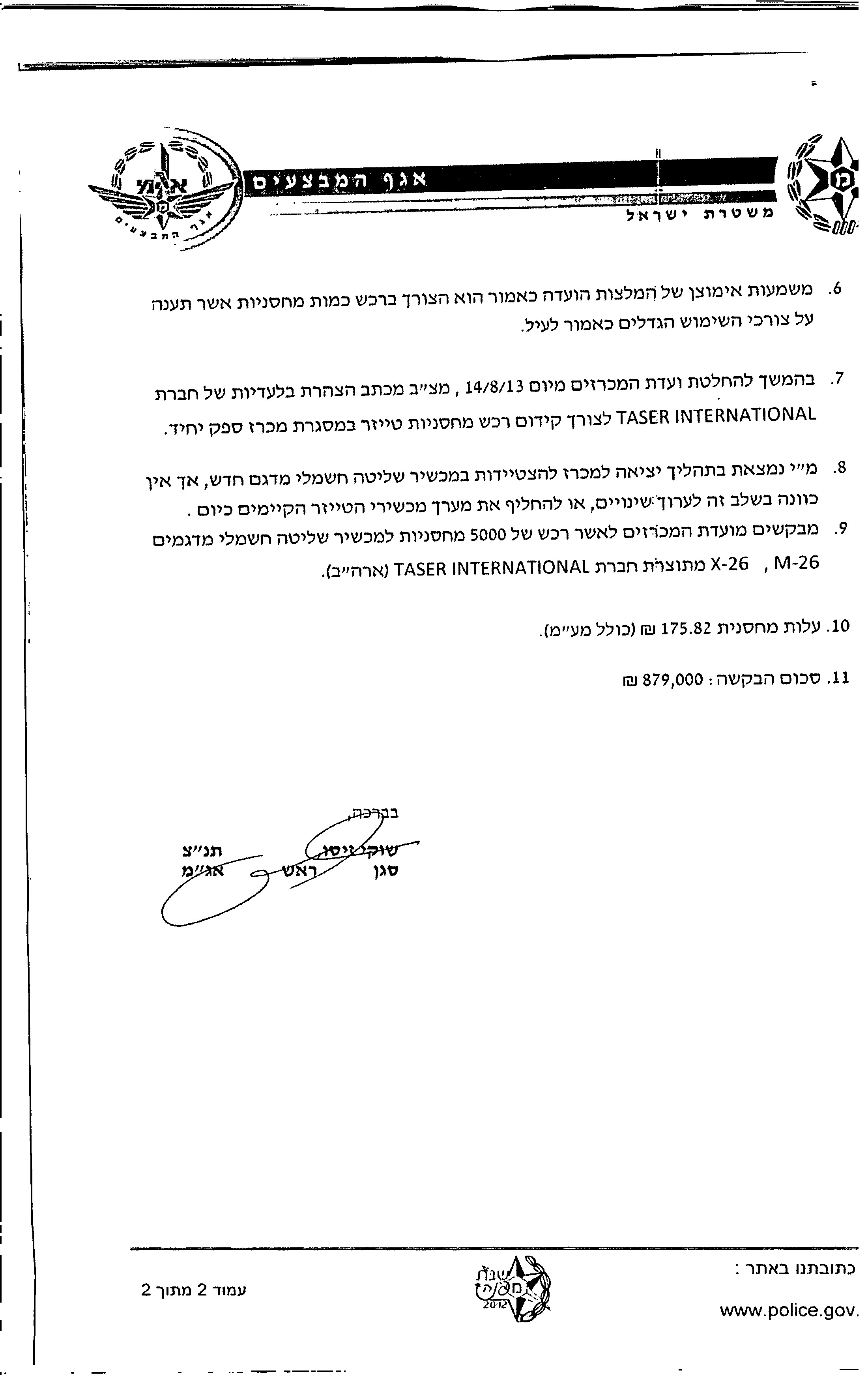 View documents3X26M26
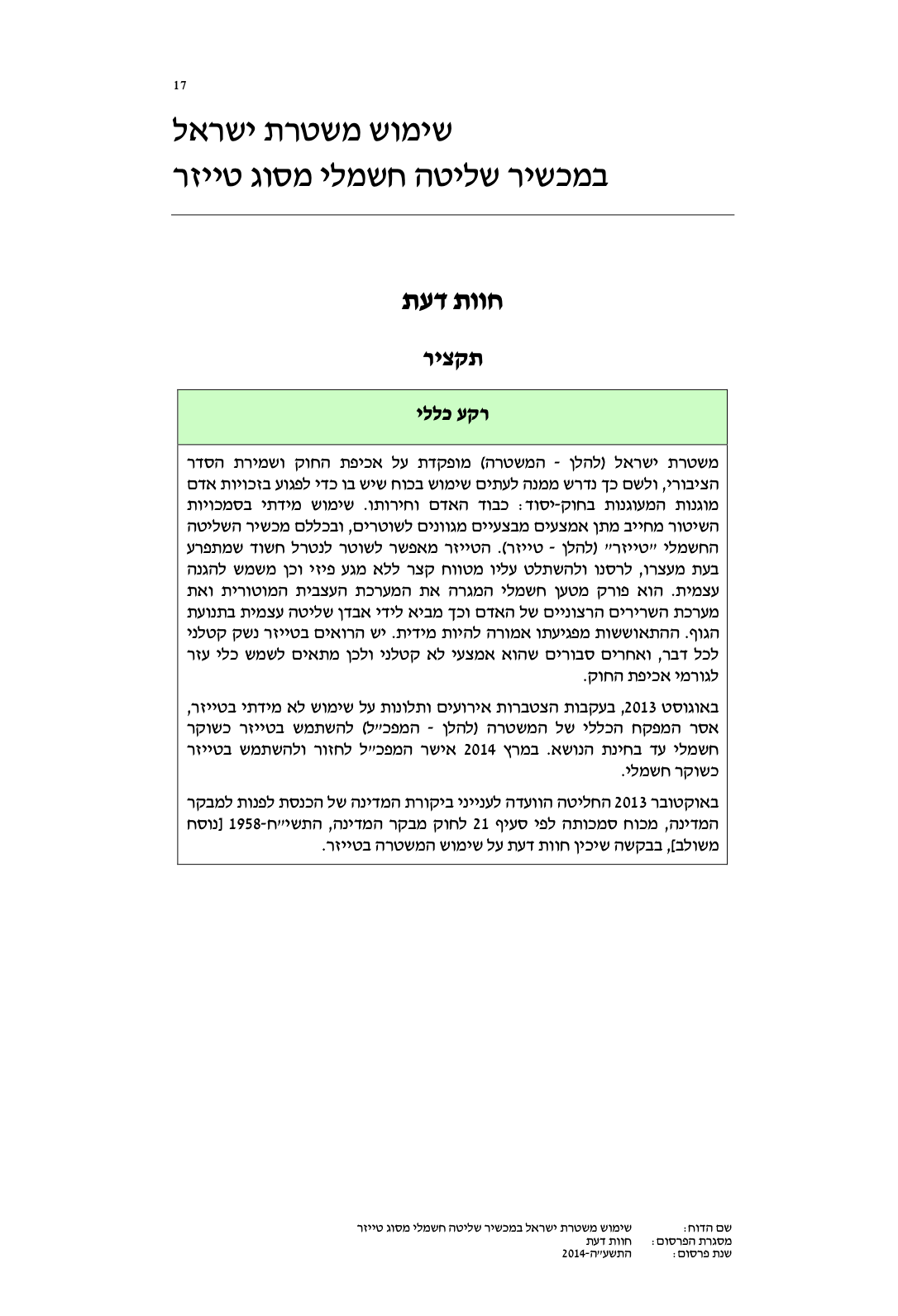 Full documentPDF
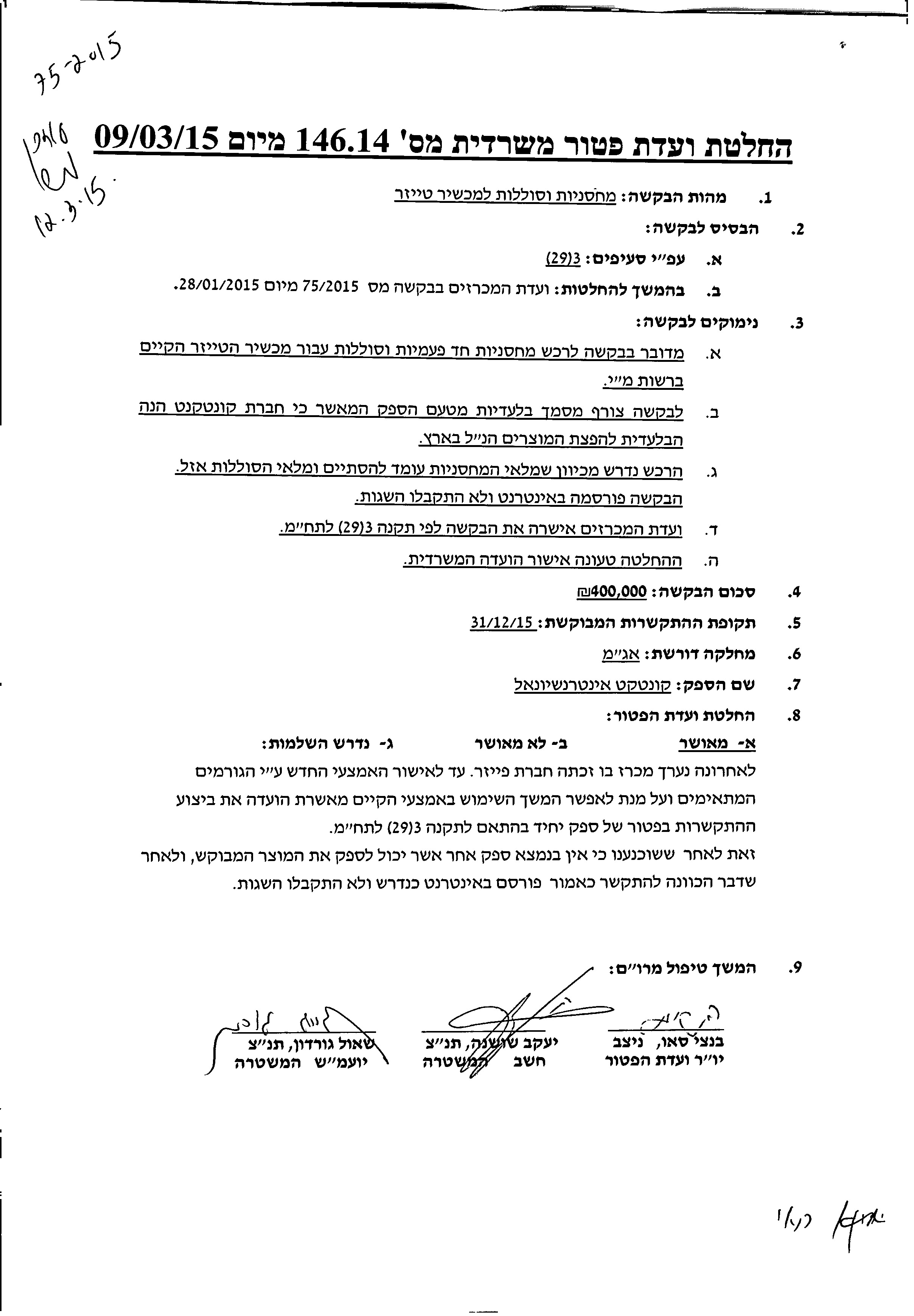
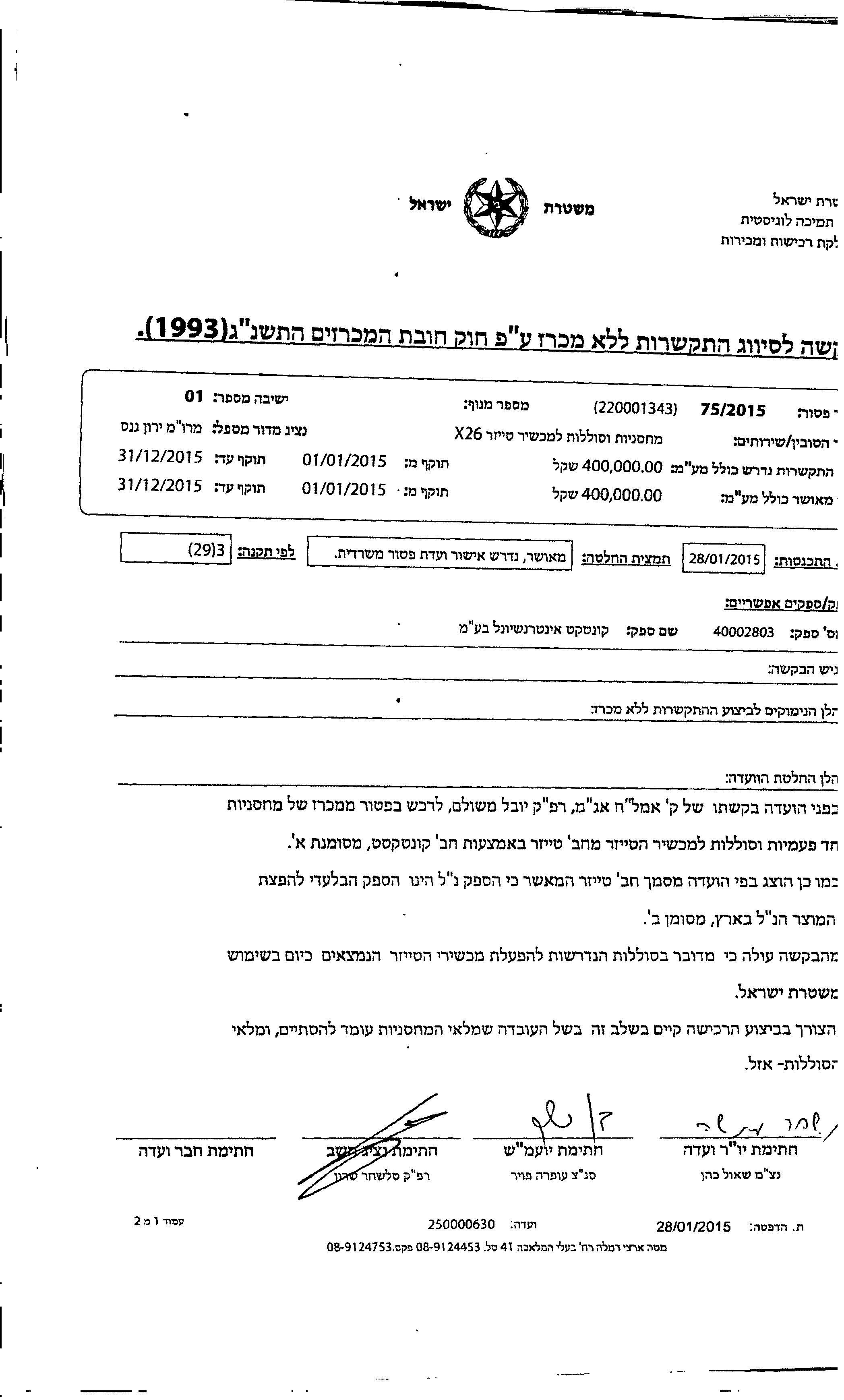
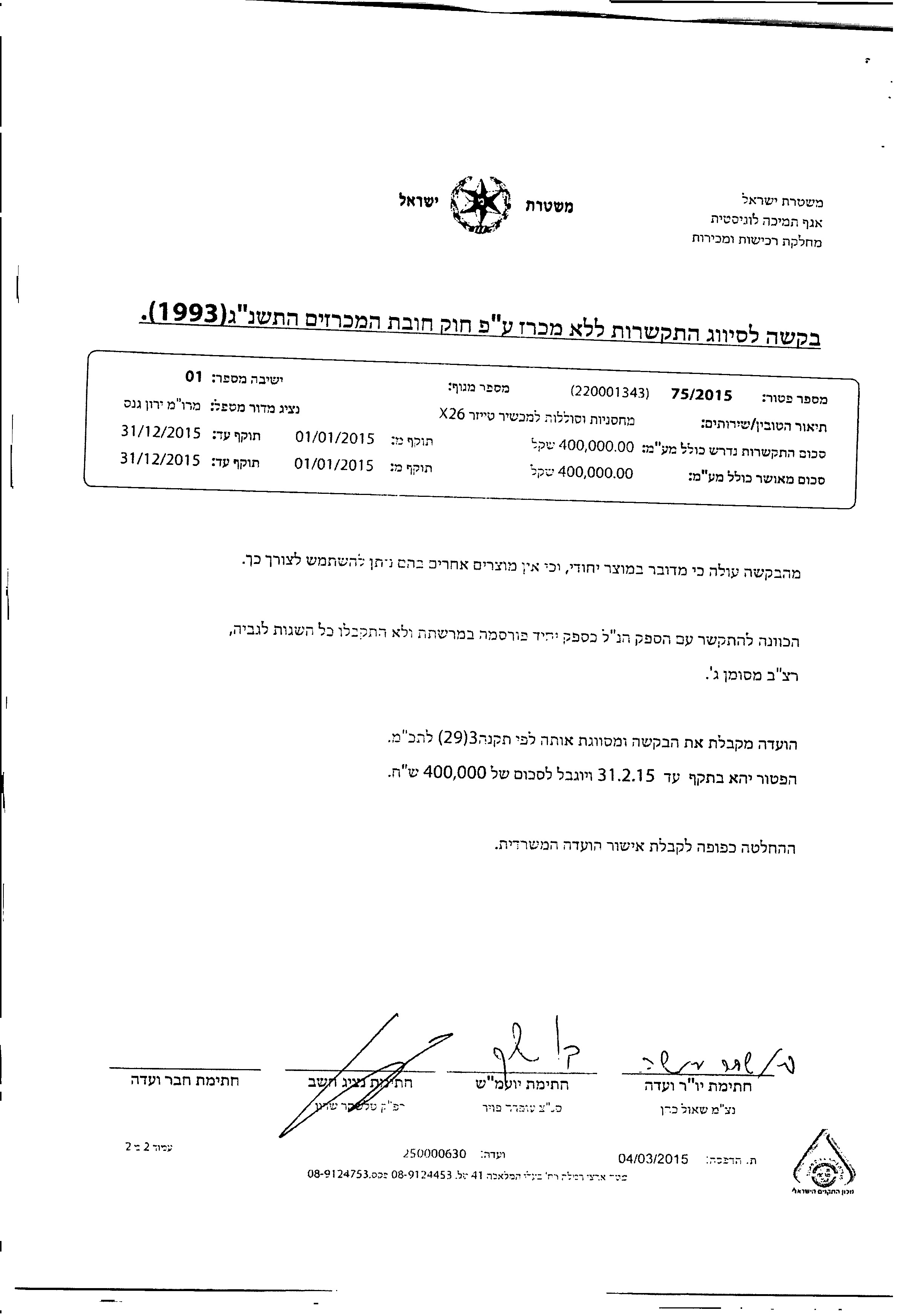
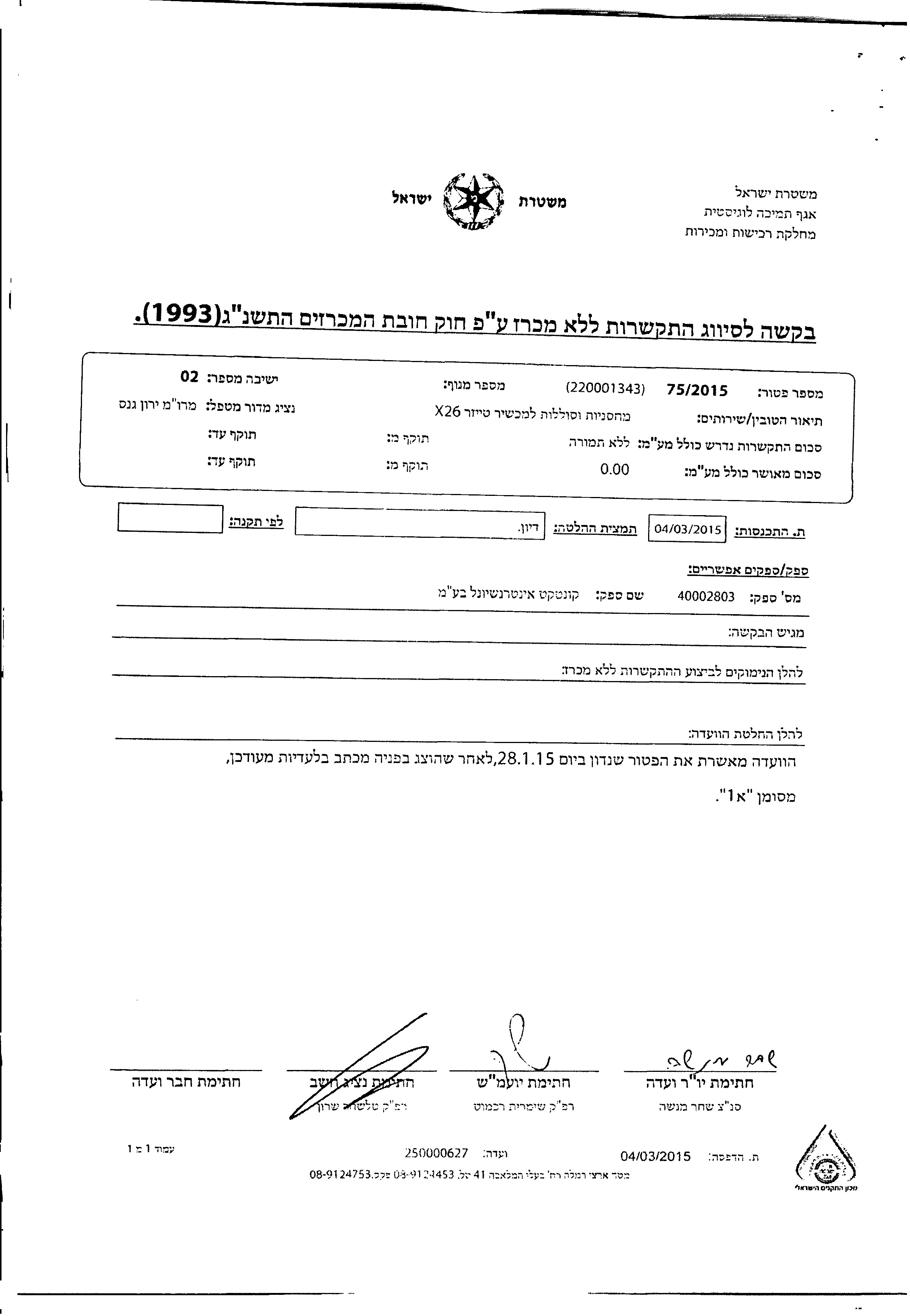
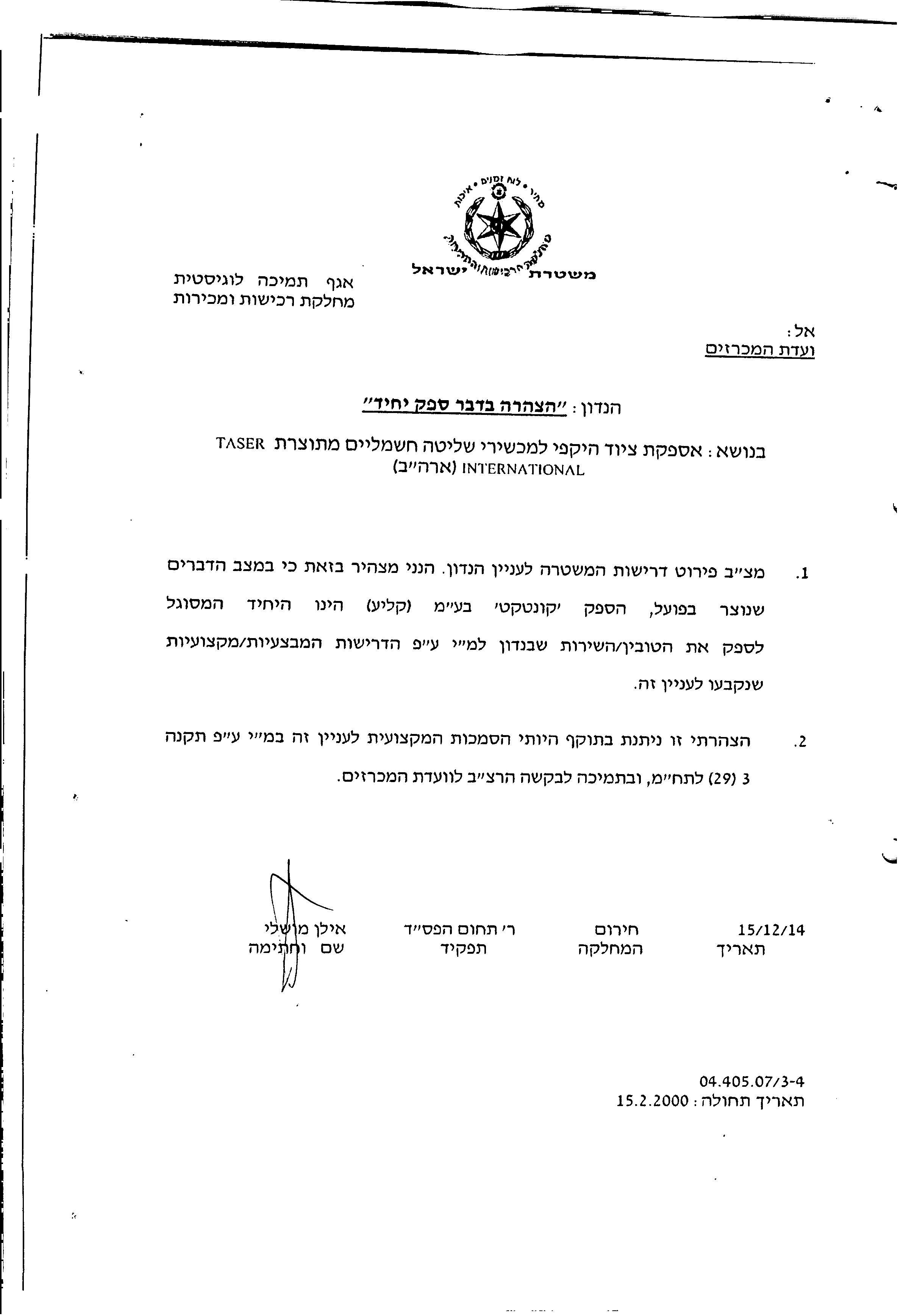
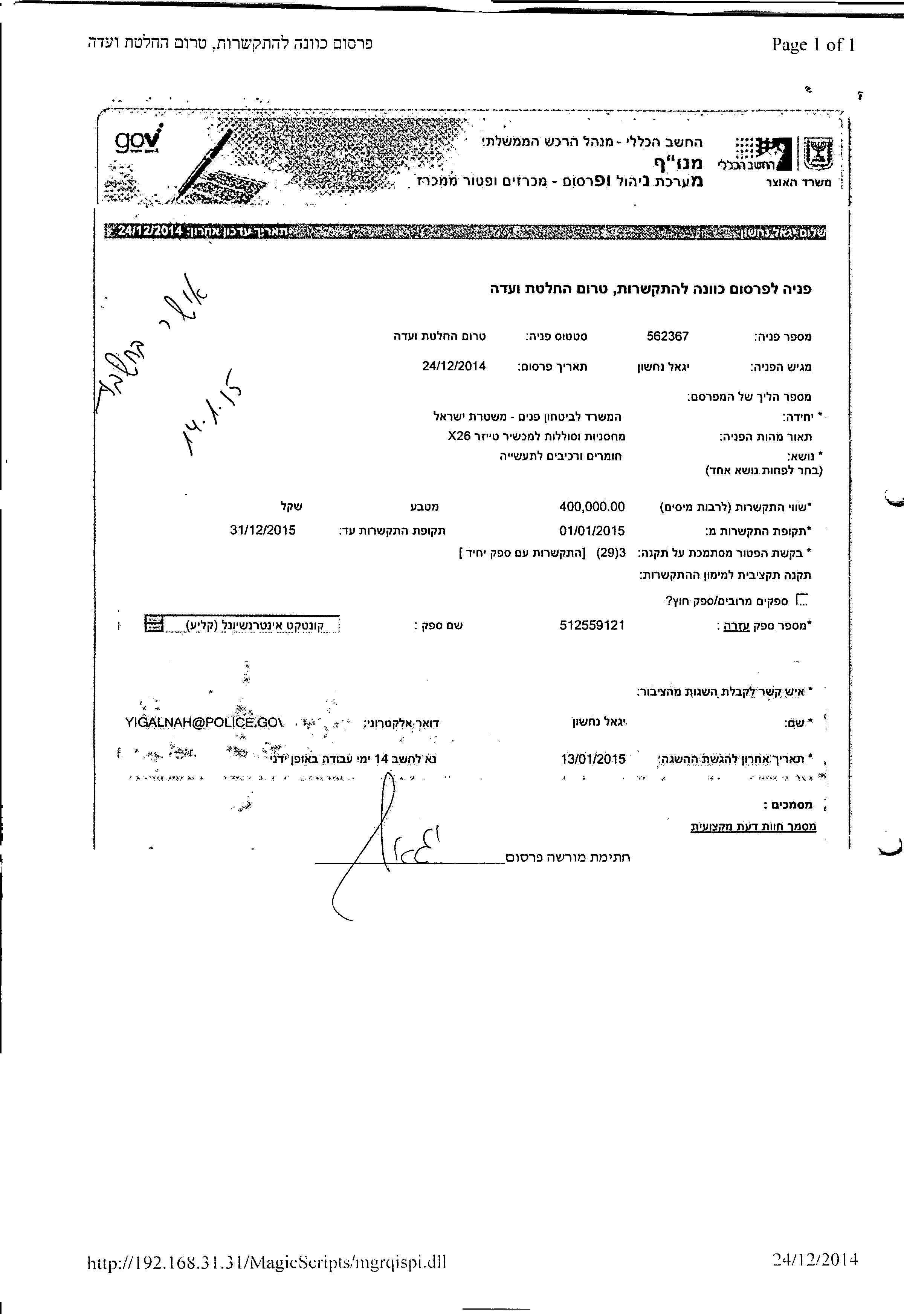 View documents6X26Contact International
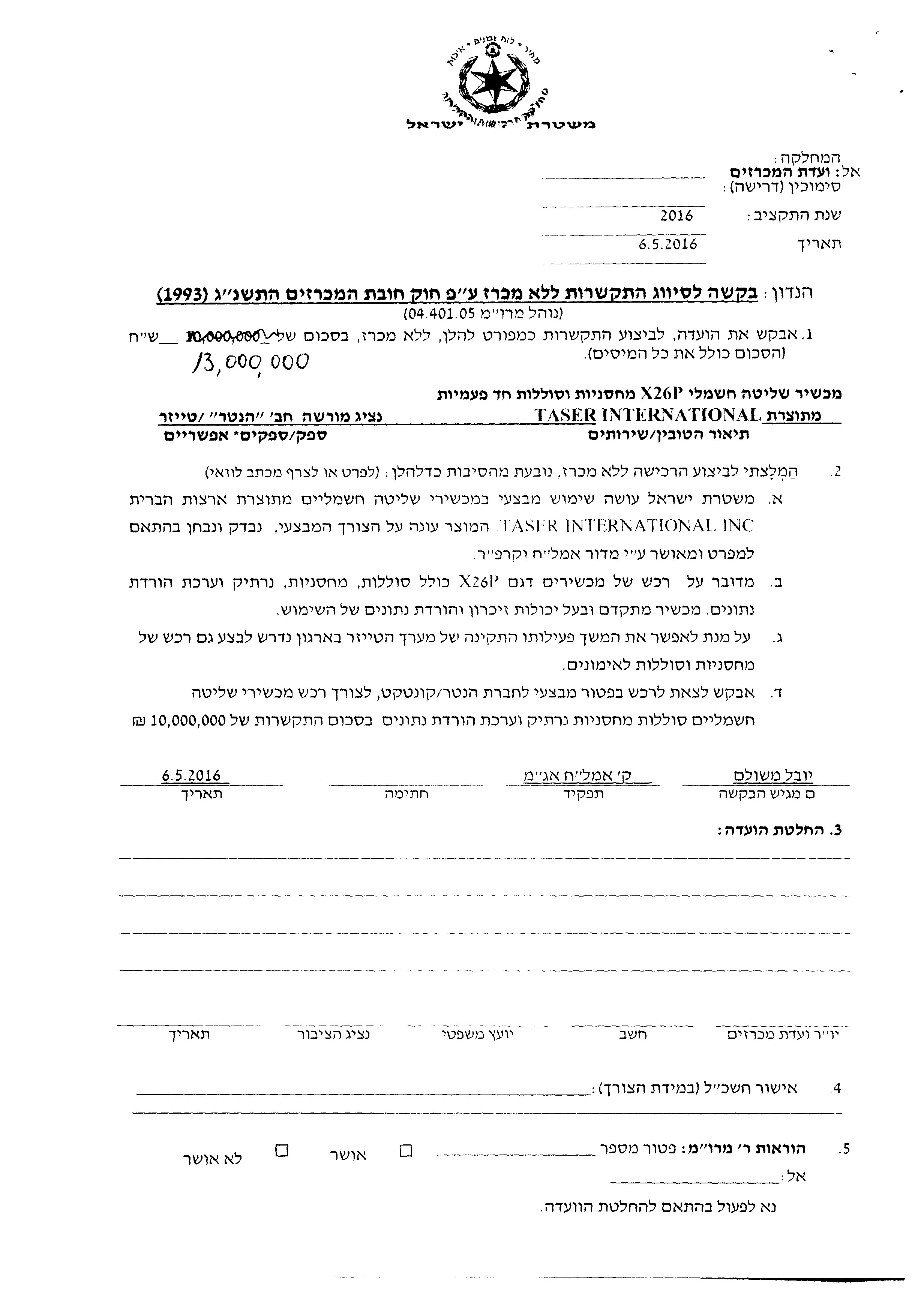 View document1X26PM.R Hunter Ltd
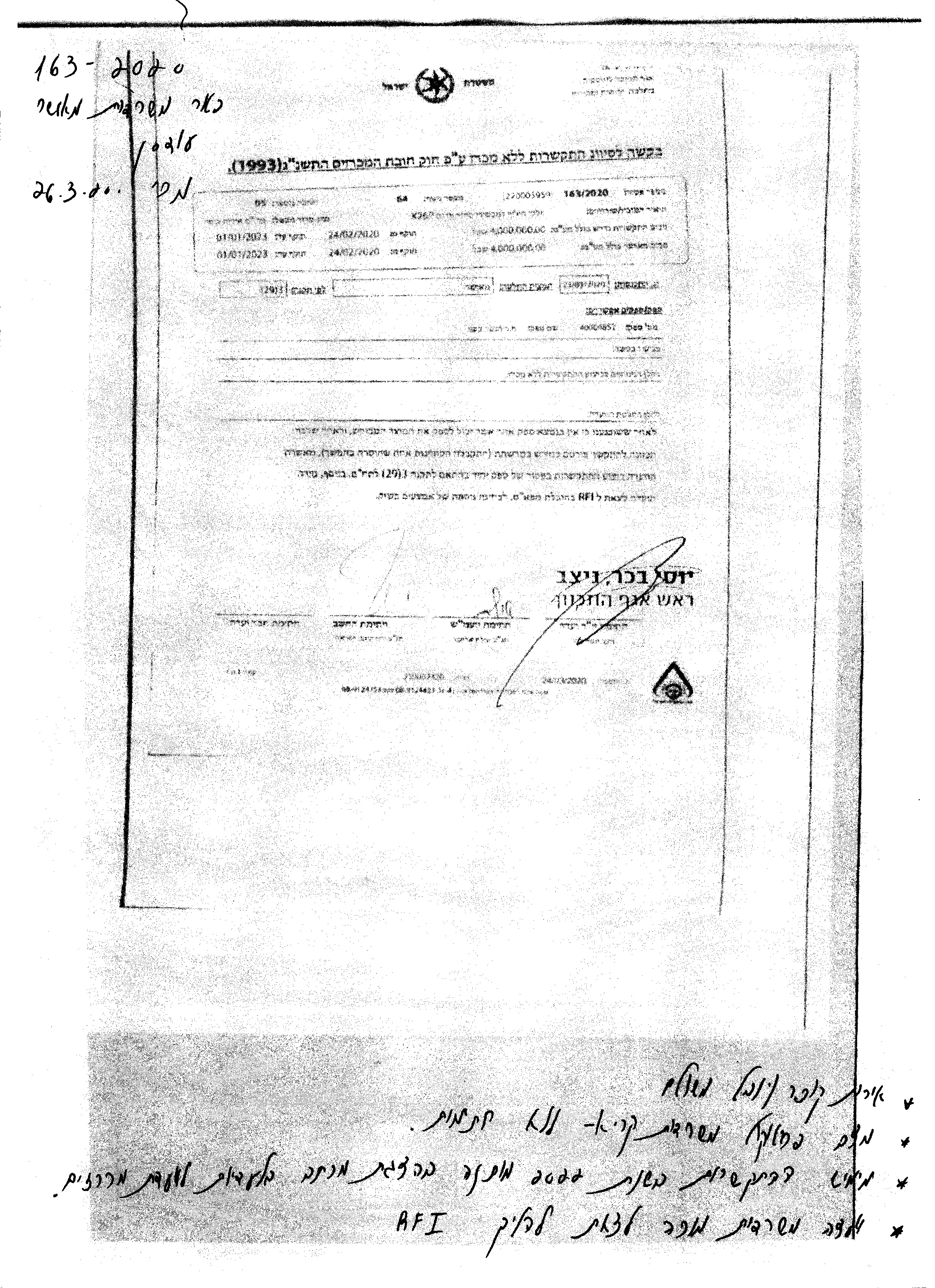 Full documentPDFX26PM.R Hunter Ltd
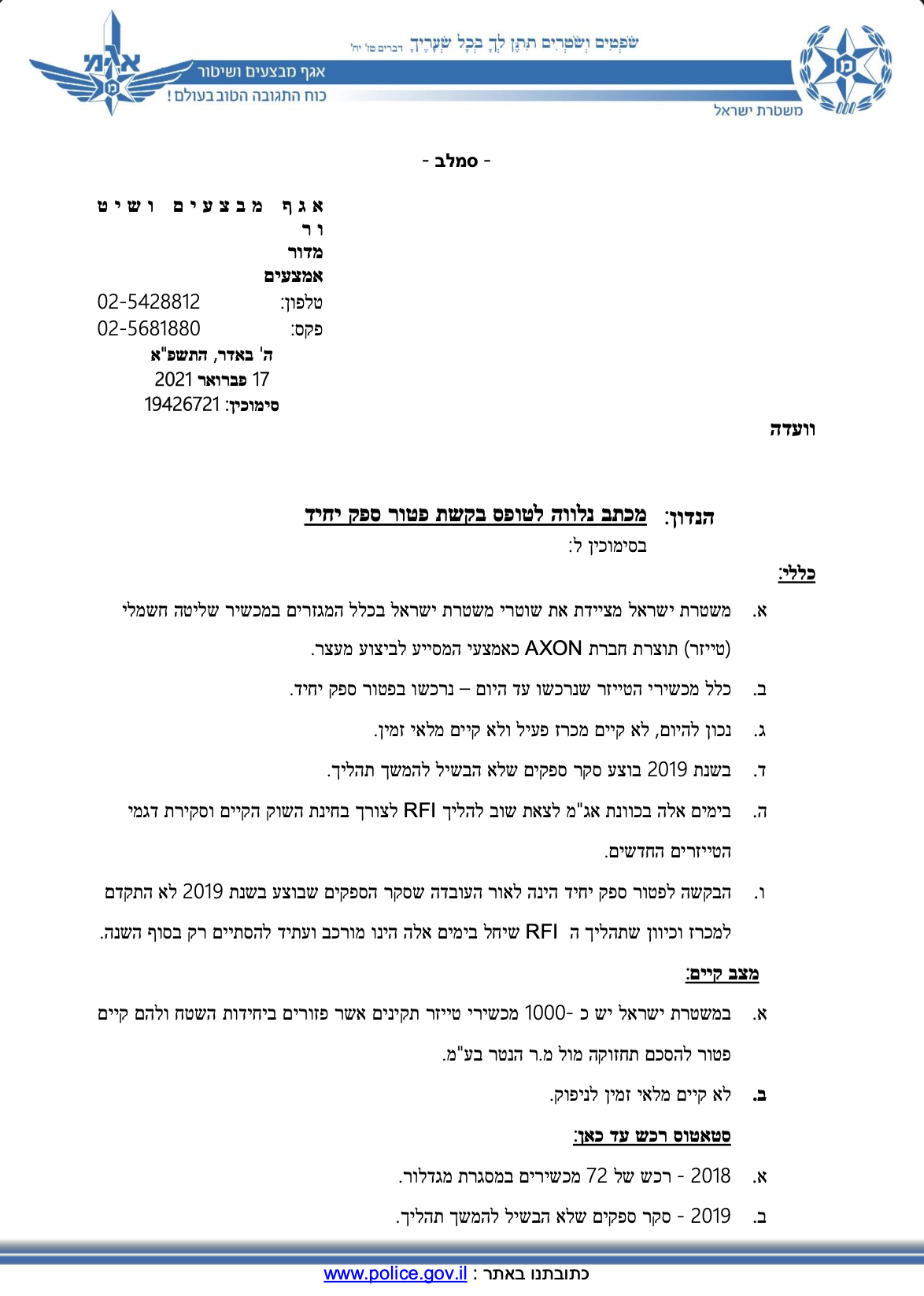 Full documentPDF
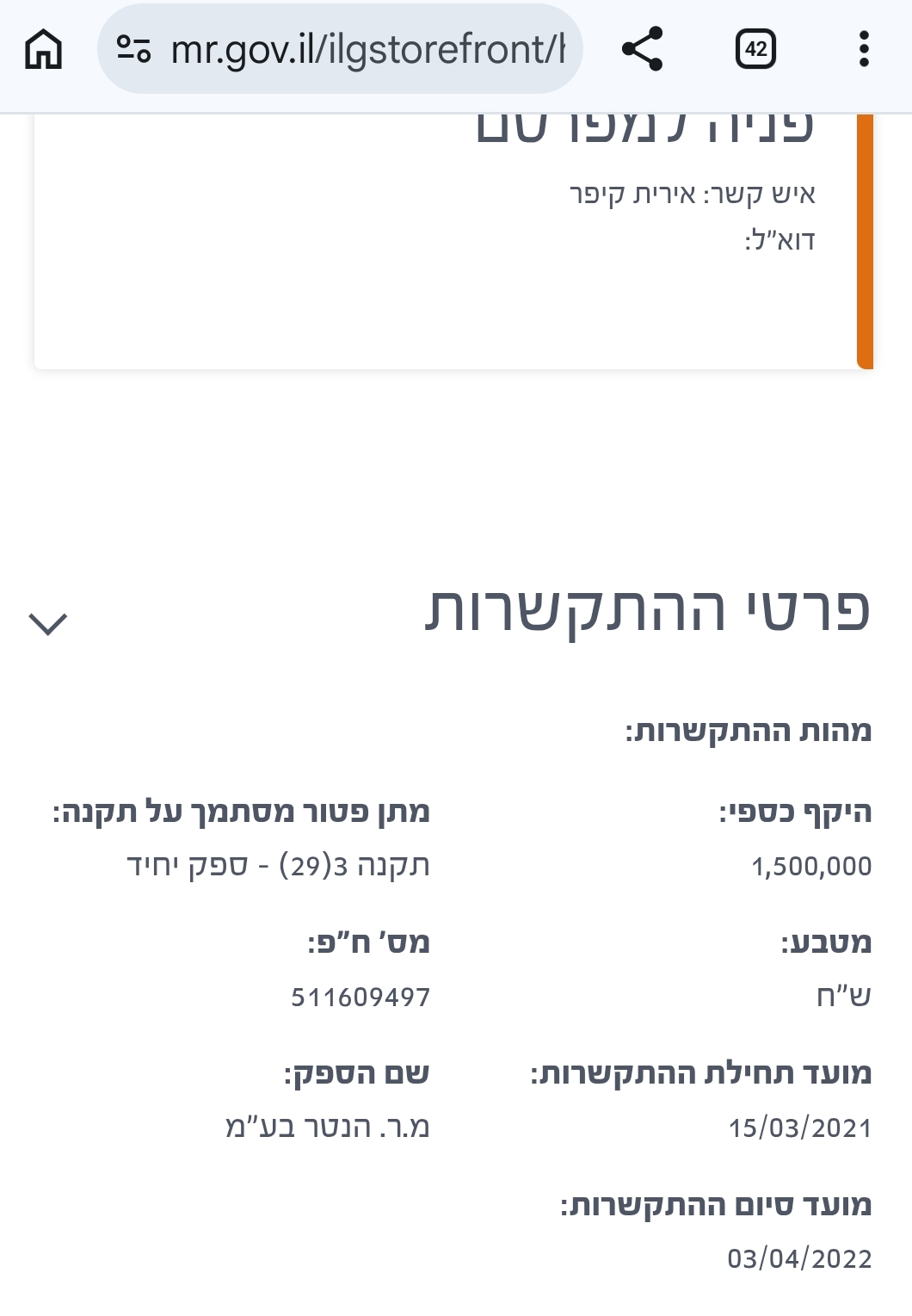 View document1X26PM.R Hunter Ltd
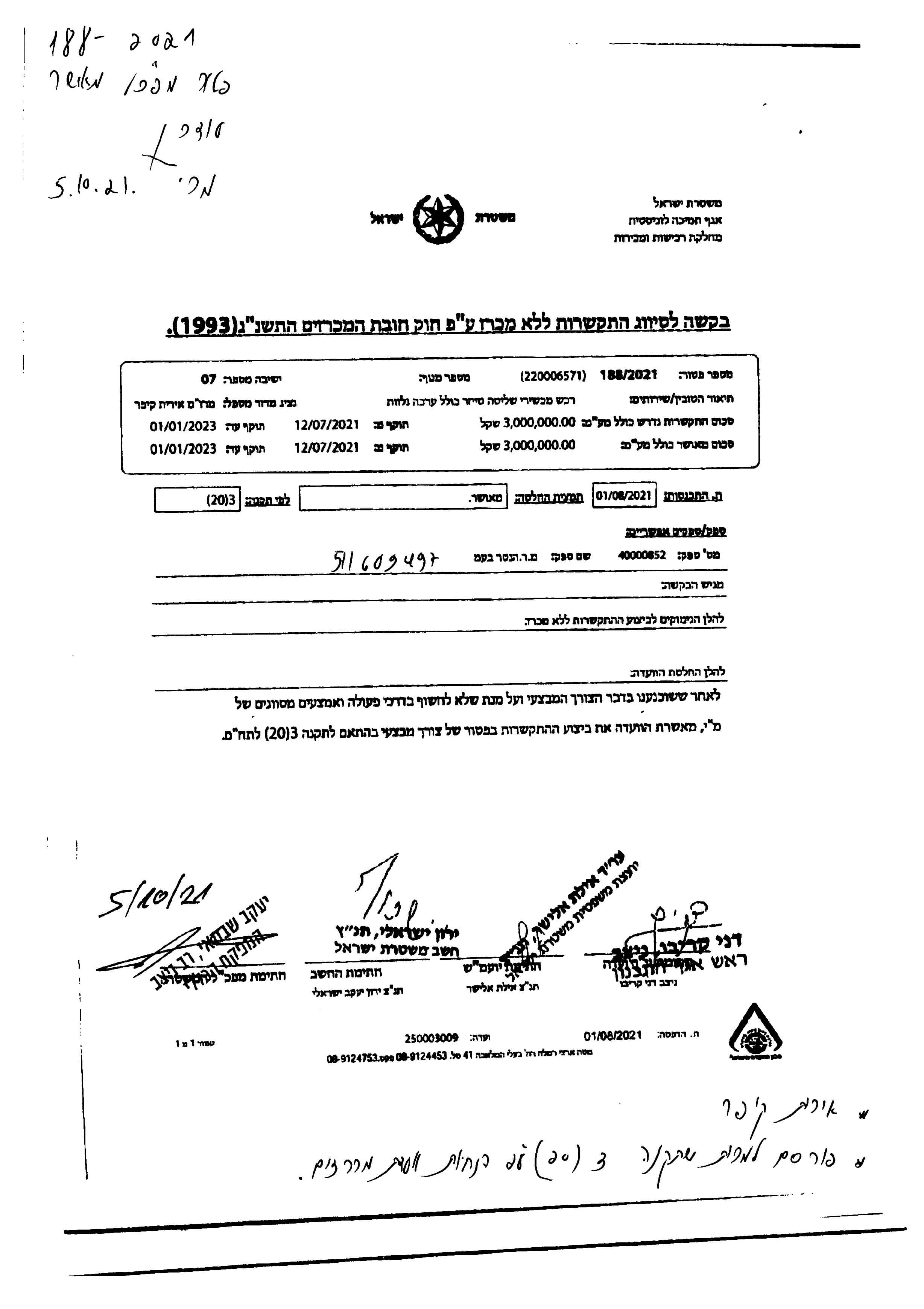
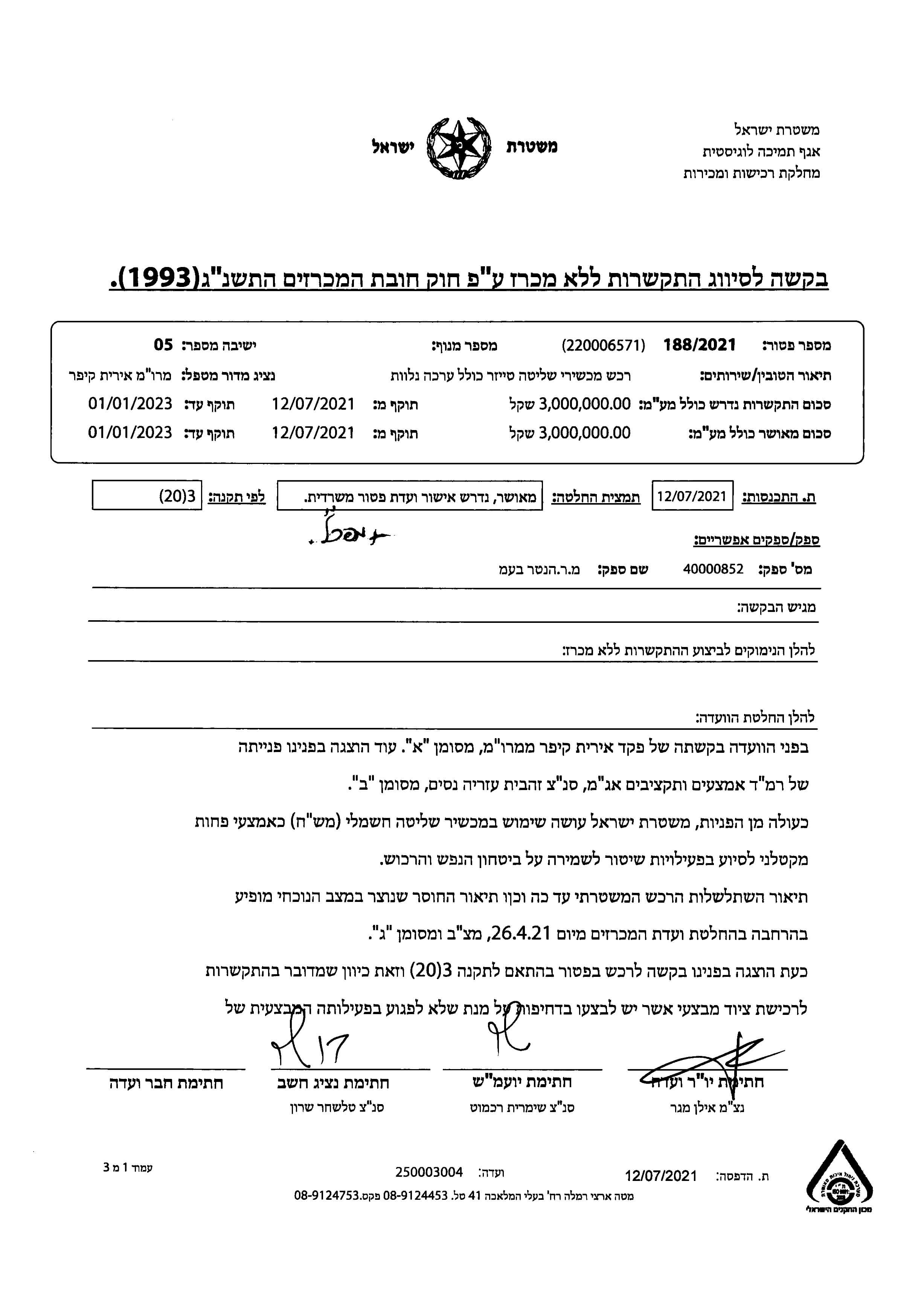
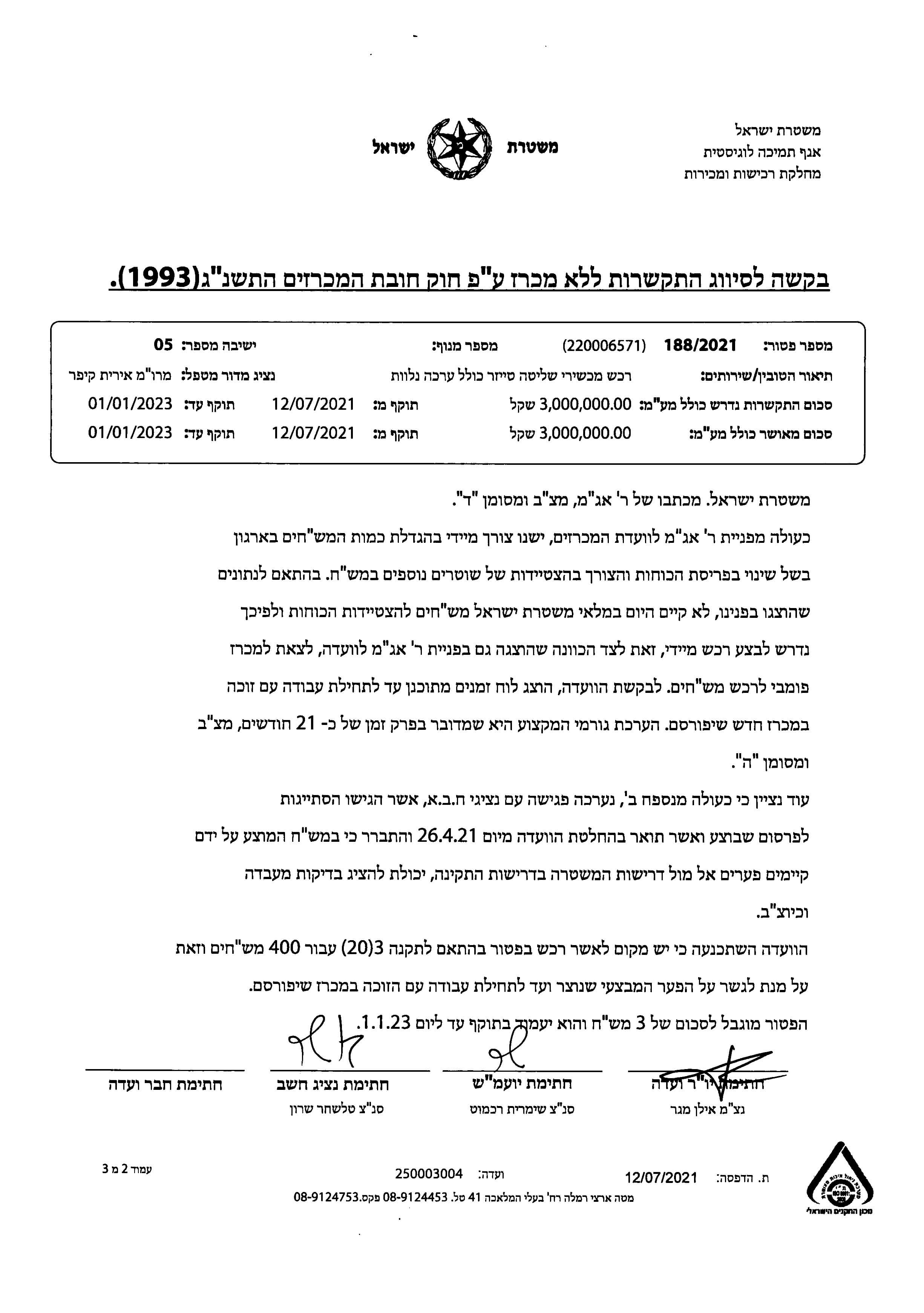
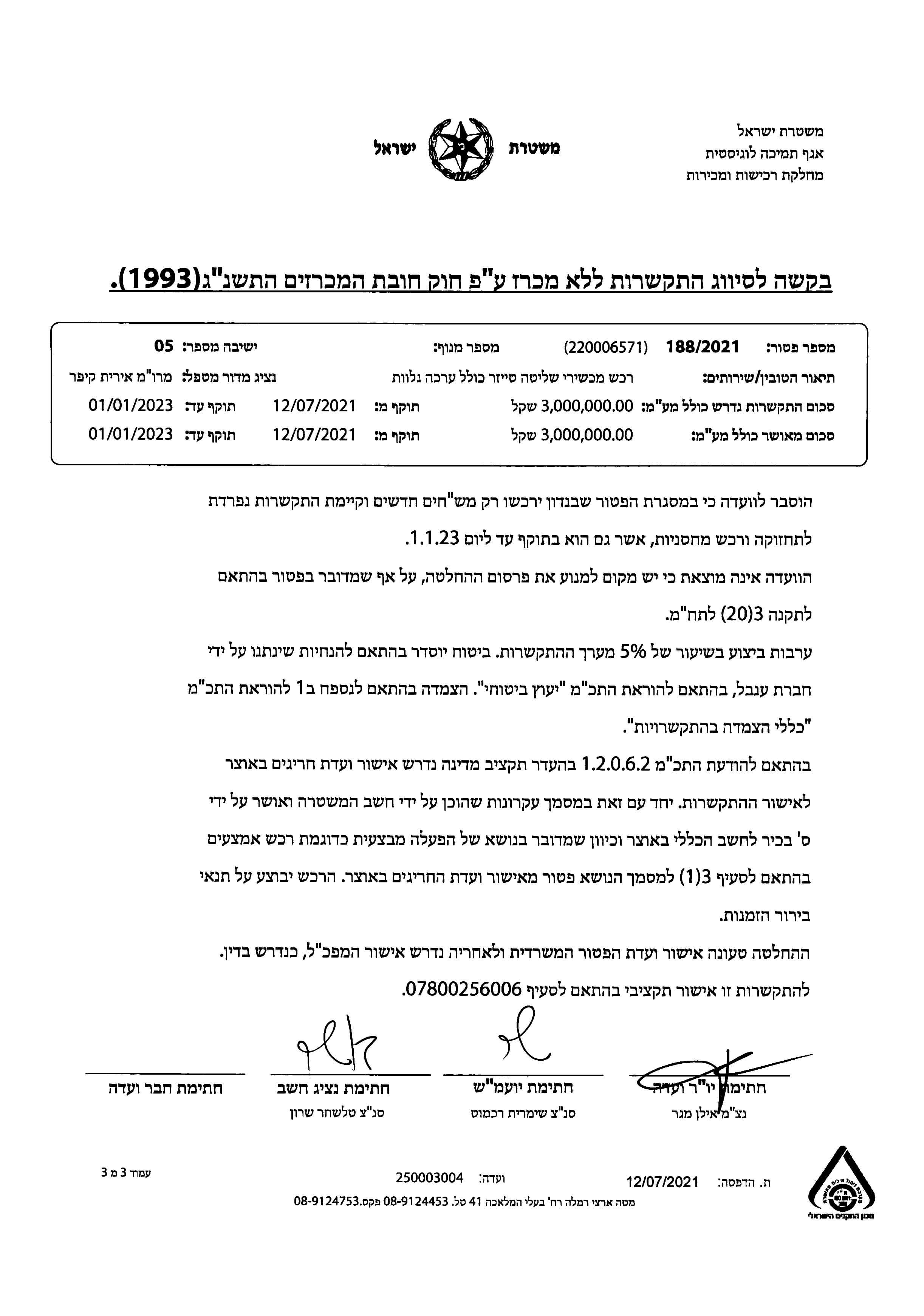 View documents4M.R Hunter Ltd
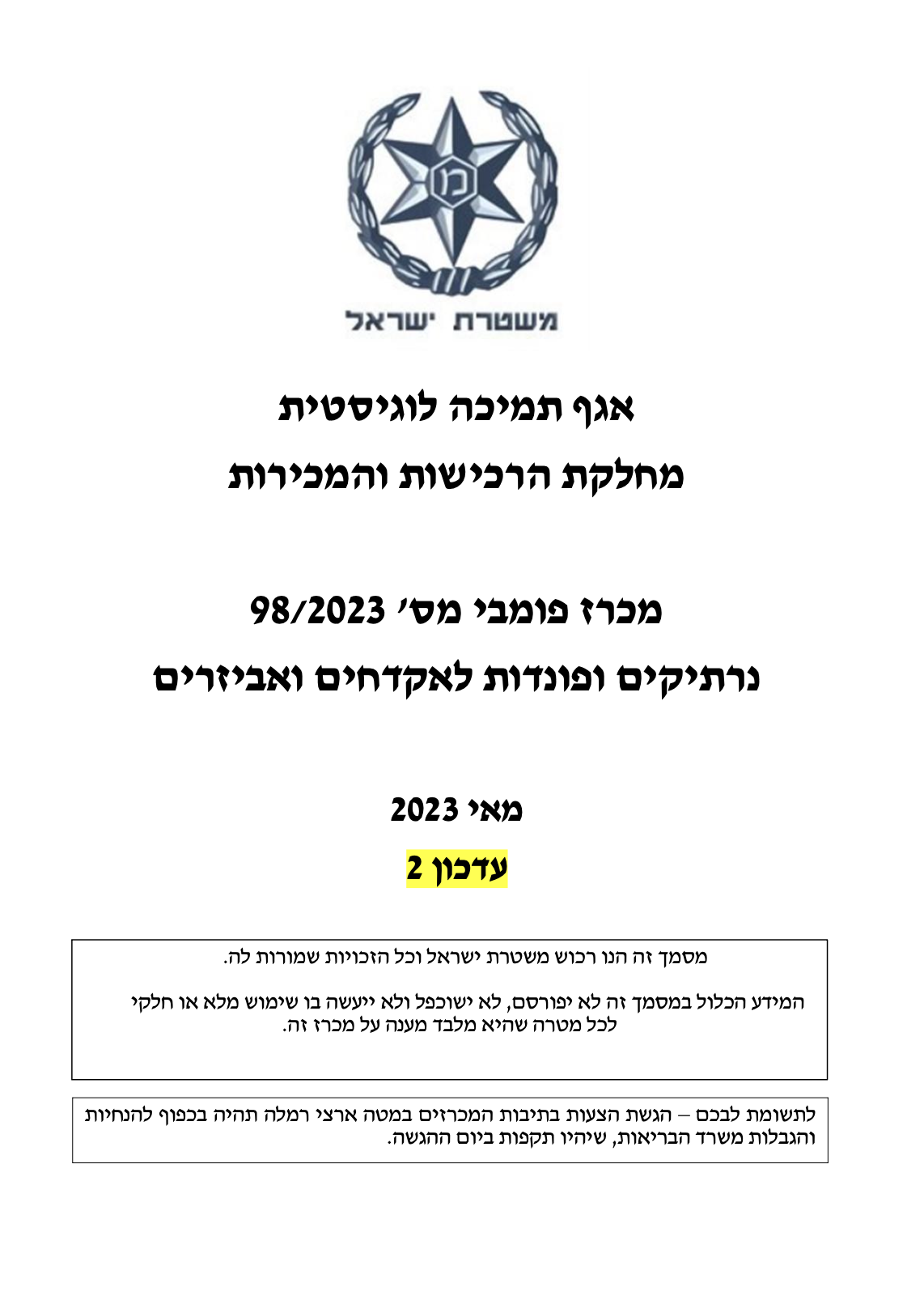 Full documentPDFX26P
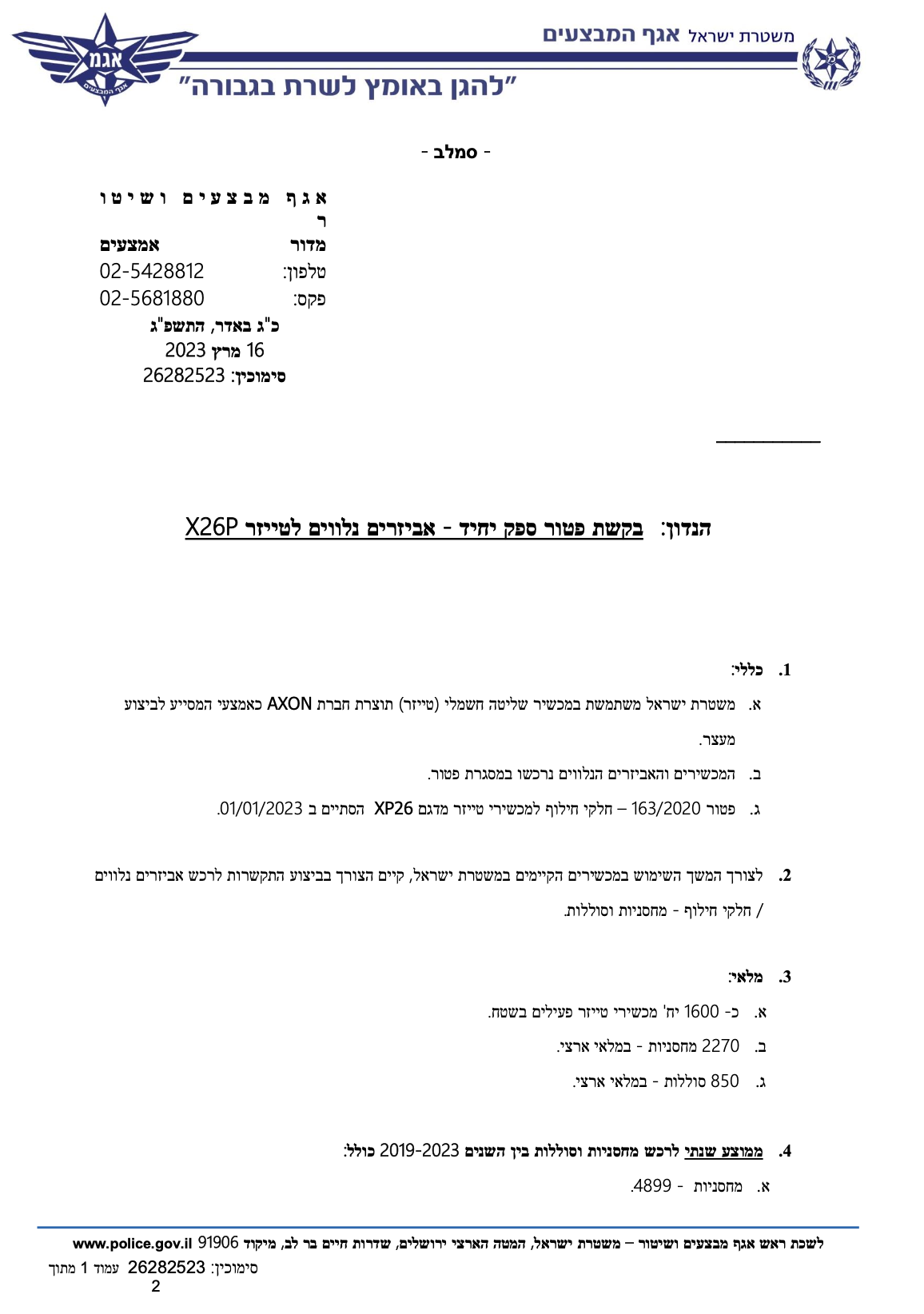 Full documentPDF
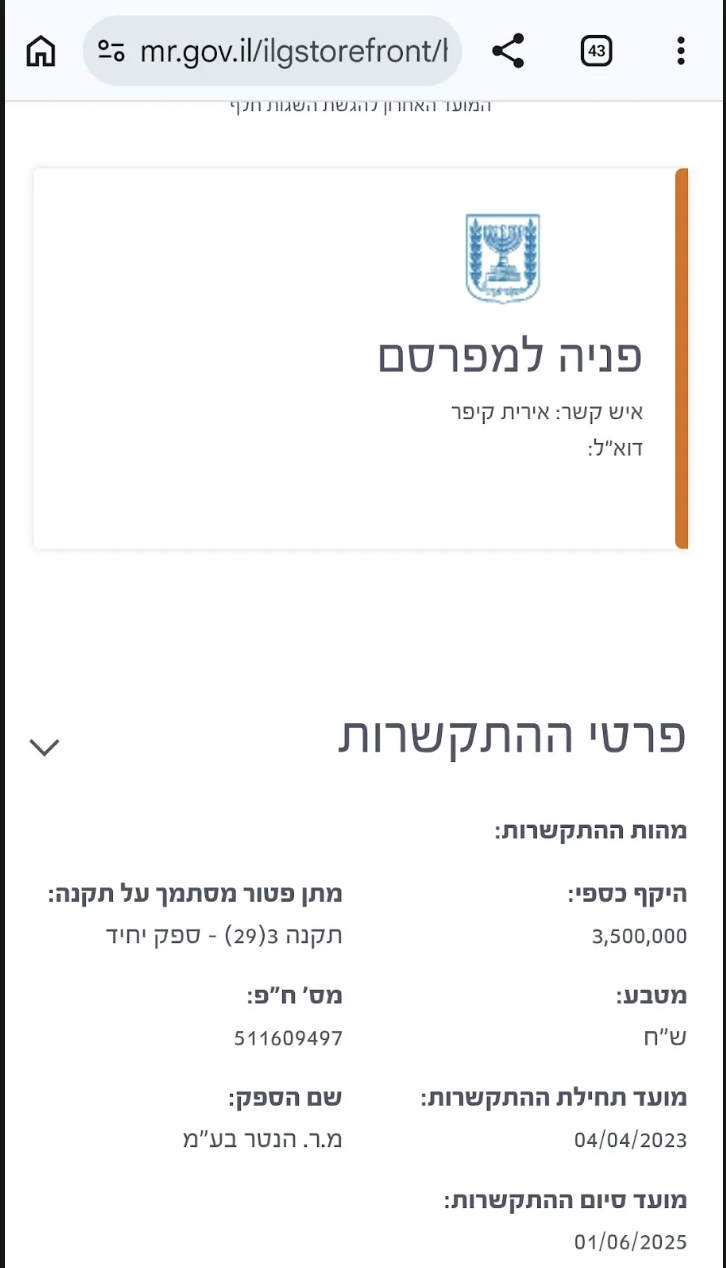 View document1X26PM.R Hunter Ltd
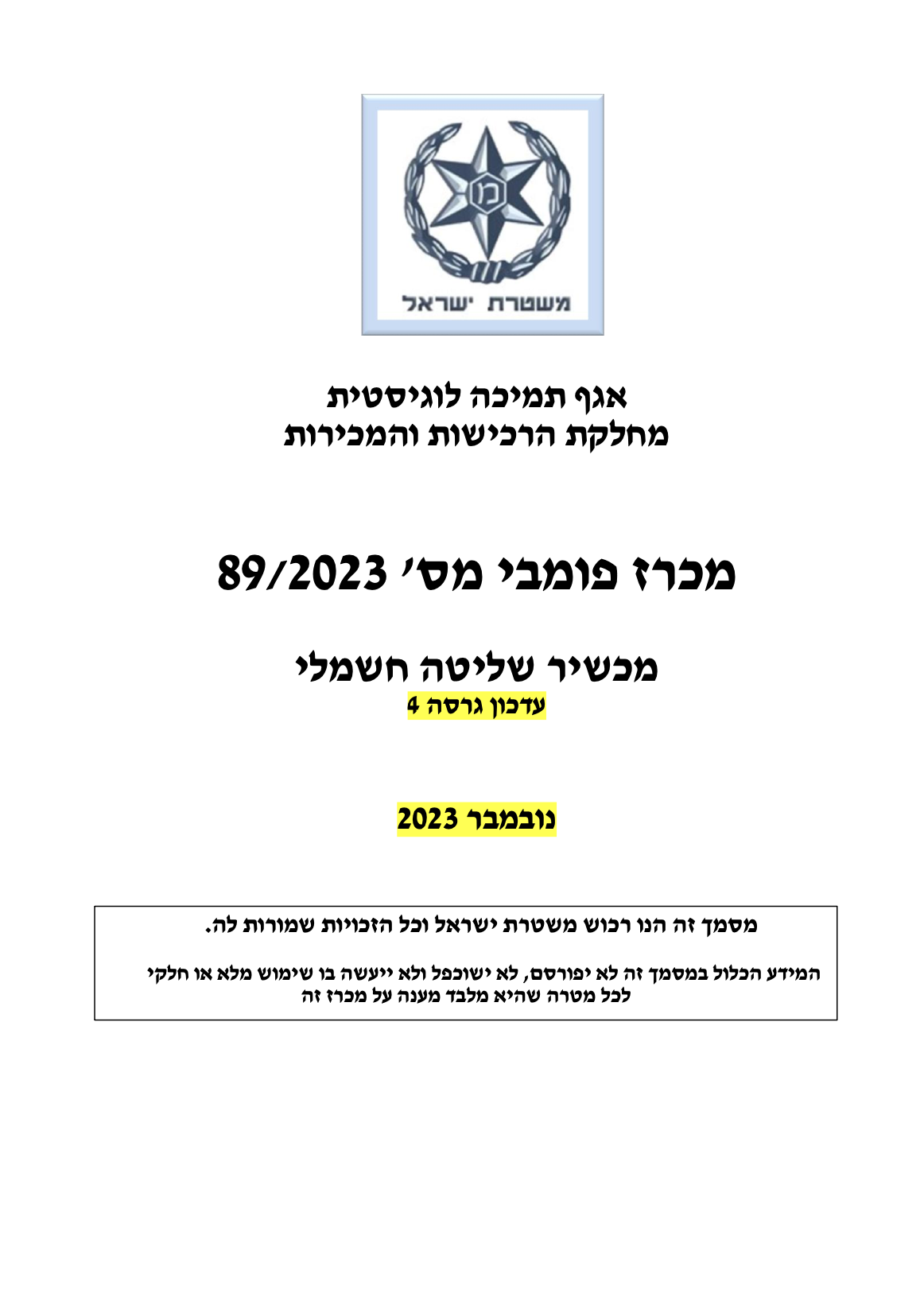 Full documentPDFM.R Hunter Ltd
 Full documentPDF
التحويل إلى الدولار تقريبي. يحتسب العدّاد القيم بالشيكل للصفقات المعلنة قيمتها فقط.
Axon products sold in Israel are manufactured, assembled and put through final testing at the company’s plant in the US state of Arizona, according to the company’s 2025 annual report.
This same report states that stun guns are exported as crime control equipment and are subject to classification and control by the US export authorities.
These authorities grant export licences based on specific criteria, including the absence of civil unrest in the importing country. These criteria are intended to “deter the development of a consistent pattern of human rights abuses.”
Patrick Wilcken, a researcher at Amnesty International, says there is a regulatory gap regarding the trade in projectile-based stun guns, since these items are not included in the Arms Trade Treaty, which still focuses exclusively on conventional weapons.
Wilcken says Amnesty International has documented many cases across the world in which electric shock devices were misused to torture and abuse detainees. He believes the dangers inherent in this type of equipment mean there needs to be international legislation to regulate how stun guns and other law enforcement equipment are manufactured and traded.
Water is poured over him, then a soldier pulls him violently, beats him and shocks him repeatedly. His body convulses and his chest feels so heavy he cannot breathe normally.
This is how Ibrahim says he was tortured 15 times a day in the cell block at Sde Teiman.
Ibrahim does not know what he was arrested for. He was spending the night at Al-Shifa Hospital in March 2024 when Israeli soldiers stormed in and hauled him off to prison. He was released in 2025.
Ibrahim’s testimony is in line with an August 2025 statement from the Palestinian Commission for Prisoners’ and Ex-Prisoners’ Affairs about torture at Gilboa Prison. It says detainees were shocked, dragged to “shower rooms” in the prison exercise yard, where they were drenched with water and then shocked again.
According to the Istanbul Protocol, published by the UN Office of the High Commissioner for Human Rights (OHCHR), those who torture with electric stun guns deliberately use water to intensify the torture and increase the flow of electric current into the body.
As of September 2026, the number of Palestinians detained in Israeli prisons, detention centers and interrogation centers stood at 9,350 – including 90 women and 350 children, according to the Palestinian Prisoners’ Club.
Since October 7, 2023, 92 detainees have died in Israeli prisons and detention centers, according to a Palestinian Prisoners’ Club press release.
9350Palestinian detainees up to September 2026AllWomenChildren
Each dot = 10 detainees
92deaths in prisons and detention centers since October 7, 2023
Each dot = one death
Source: Palestinian Prisoner Report, Palestinian Prisoners’ Club
In April 2026, the court acquitted the five Israeli soldiers accused of sexually assaulting a detainee using a Taser at Sde Teiman detention center.
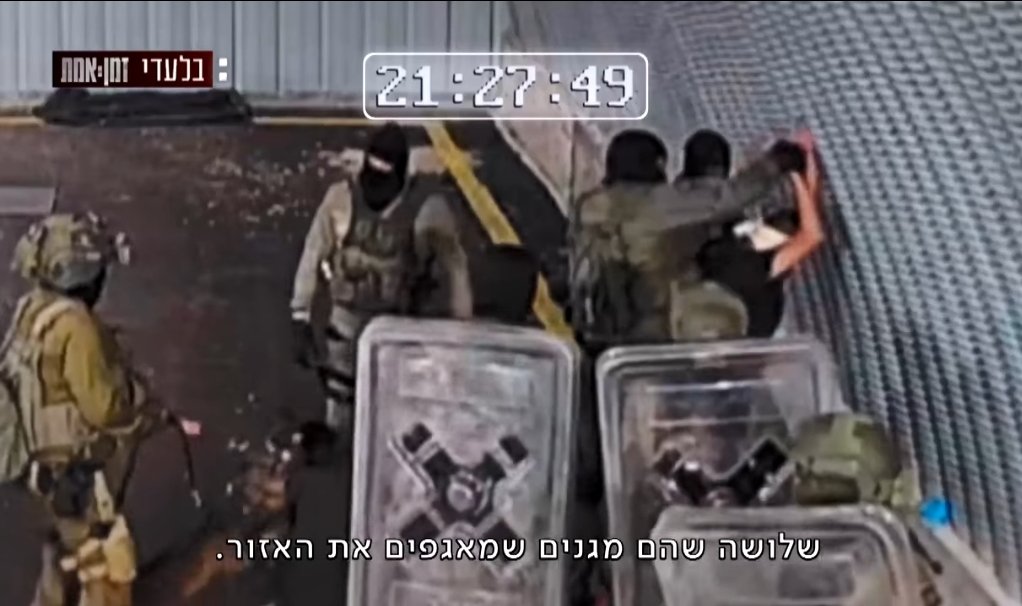
The verdict was handed down after the detainee had been released as part of a prisoner exchange deal in October 2025, so he could not testify. The verdict noted inconsistencies in his statements and his inability to respond to the defense’s arguments.
The court also considered that the broadcast of a television investigation into the case and the leak of a video of the assault to the media infringed the rights of the accused, especially because part of the incident was not captured on video.
The court concluded that these factors made it extremely difficult to prove the charges to the standard required for a criminal case.
Five Israeli soldiers were accused of sexually assaulting a Palestinian detainee at Sde Teiman; the assault involved using a Taser to shock the detainee in the head.
Only one Israeli soldier has been prosecuted for mistreating prisoners from Gaza since October 7, 2023, according to a report published in December 2025 by a group of Israeli NGOs.
Our partner in the investigation – the British newspaper The Guardian – sent all the evidence we had documented to the Israeli Ministry of Defense. The ministry responded via an Israeli army spokesperson, who said that mistreatment of detainees in custody is strictly prohibited, and that restraining them occurs “only in exceptional circumstances that would justify this, in accordance with Israeli law, international law and army orders.”
We also emailed Axon at its press inquiries address, asking it to comment on the findings of this investigation, but we have so far received no response.
Today, Issa sits in his tent in a wheelchair, in constant pain and with the electric shock marks on his neck a permanent reminder of the torture he endured.
Ibrahim, meanwhile, suffers from severe vision loss, frequent convulsions, and fainting spells, and post-traumatic stress disorder from repeated electric shocks.
Eman Al-Qaisi contributed to the investigation, which was carried out with the support of ARIJ.
Names have been changed to protect privacy.