



'/%3E%3C/svg%3E "Youtube")
Safaa Ashour and Tasneem Monir06 July 2026
62%
of female journalists surveyed have experienced some form of harassment
9%
Only of media organisations have put policies in place to protect against harassmen
7
complaints were lodged during two sessions of the journalists syndicate
This investigation reveals a lack of policies to protect journalists in Egypt from online harassment in the workplace and from their colleagues in media organisations. This is causing female journalists to hold back from reporting incidents of abuse for fear of stigmatisation, retaliation, and losing their jobs.
When “Warda” started working in corporate public relations she did not expect to bump into the newspaper editor she used to work for. When she did, her heart sank as she recalled her early years in journalism. She had started in the profession with enthusiasm, and thought this man would teach her the trade, only to discover that his mask of “experience” concealed unprofessional behaviour and dubious requests. These included urging her repeatedly on WhatsApp to meet up outside working hours and interfering in her personal decision making by telling her to wear fabric trousers instead of jeans.
Warda subsequently realised that such behaviour fell into the category of harassment, which also includes cyber harassment and online violence. At the time, she told no one and made no complaint; she just chose to walk away. Then, years later, she ran into him in her new job and discovered that her younger and less experienced female colleagues were being harassed by the same man.
Warda’s experience is similar to that of seven female journalists we interviewed, all of whom had suffered various forms of harassment, online violence and smears at the hands of male colleagues.
Only two of them reported or filed a complaint with the journalists’ union over what happened. The rest chose to remain silent for fear of social stigma, damage to their reputation, retribution, or losing their jobs. Our investigation shows that this is due to lack of policies at media organisations in Egypt that protect against online harassment and violence, and due to the journalists’ syndicate’s lack of similar protective mechanisms.
In the course of our investigation, it became clear that “global and local campaigns to expose harassment” have had little tangible effect on the Egyptian journalistic community. Victims often prioritise their own safety and survival, either by leaving their jobs or by keeping quiet, for fear of losing their livelihood, while some occasionally seek the help of third parties to try and resolve the matter informally. There is a clear divide between women journalists working in traditional media organisations and those who are not part of a union. The former enjoy union protection, though they prefer to remain silent for fear of being stigmatised, while the latter tend to stand up for their rights, even though they have no union protection.
Only three out of the 34 female journalists in our survey officially reported the harassment they had suffered. The others refrained from doing so for fear of social stigma and losing their jobs.
According to the International Labor Organisation Convention no.190, the term “violence and harassment” in the workplace refers to “a range of unacceptable behaviours and practices … that aim at, result in, or are likely to result in physical, psychological, sexual or economic harm.” Egypt is one of the countries that has not signed this convention.
There are various definitions of cyber harassment, a form of technology-facilitated violence against women. The European Institute for Gender Equality defines it as harassment through email, electronic messages or the internet. It includes, but is not limited to: unsolicited messages or emails of an explicitly sexual nature; inappropriate advances using social media or online chat rooms; and threats of physical and/or sexual violence via email or online messages.
Warda did not file a complaint at the time of the incident because she was not a member of the Egyptian Journalists’ Syndicate. Instead, she resigned from her job. Even now, she still has not told her family about what happened, fearing she would be forced to leave her job if they found out that her current colleague had previously harassed her.
Because of the lack of up-to-date statistics on cyber harassment of female journalists in Egypt, we decided to conduct our own survey. Out of 34 female colleagues, 62 percent had been subjected to some form of harassment, yet only three had reported it. The rest refrained from doing so out of fear of social stigma, of losing their jobs and of how hard it would be to find another one.
Our survey found that fear of social stigma, concerns about not being believed, and the potential damage to their reputations were the main reasons these women journalists were reluctant to file complaints. When asked about the existence of anti-harassment policies, only three respondents, 9 per cent of those surveyed, said that their organisations had such safeguards in place.
Ashraf Abbas, Executive Director of the Egyptian Observatory for Journalism and Media says: “During interviews we have held at our centre with candidates standing for the elections to the press syndicate over the last three years, we found there was glaring absence of any vision regarding adopting policies to prevent violence and harassment in media organisations. In fact our questions provoked anger and indignation: ‘How could a female journalist be harassed by her brother or father?’”
“Sarah” was subjected to a vicious online smear campaign by three of her journalist colleagues, including posting personal details online, after she made an official complaint of harassment against one of her managers. Sarah had made the complaint as there was no clear safeguarding policy within her media organisation, which is affiliated with the Supreme Council for Media Regulation (SCMR). When she complained to the press syndicate about the behaviour of her colleagues, she was told it would be difficult to hold an investigation, on the grounds that she had already initiated formal legal proceedings.
Sarah subsequently lost her job. The case was closed and she was unable to find a position in any other local media organisation. As the pressure mounted, she was forced to leave journalism altogether and find work in another field.
According to Eman Aouf, chair of the Women’s committee at the Egyptian Journalists’ Syndicate, none of the media organisations affiliated with the SCRM, nor any of the traditional newspapers, have any formal guidelines for tackling harassment and violence in general.
However, some organisations have unwritten policies that depend on decisions taken by management. A female journalist at one well-known daily newspaper said that the management there did not tolerate harassment, but dealt with it through an informal resolution process without publicly announcing any penalties.
This same journalist said that younger and less experienced female journalists were at greater risk of harassment. Yet, despite being experienced, she too was subjected to harassment at an event, where a colleague made some inappropriate jokes. She did not make an official complaint but merely informed the organisers, who then barred the man from attending.
We tried to contact officials in traditional newspapers to enquire about their protection policies, but received no response.
Private websites, which are relatively new, do not come under the Supreme Council for Media Regulation, and their staff do not have the opportunity to join the Egyptian Journalists’ Syndicate. Some of them have safeguarding policies, including Al-Manassa, Bab Masr (which is part of the ‘Welad ElBalad company), the Egyptian Observatory for Journalism and Media and Fekr Tany.
What the policies of these websites have in common is that they regard gender-based harassment and violence in the workplace as an organisational issue affecting the workplace climate and safety within the organisation, rather than being merely isolated incidents.
According to Editor-in-Chief Nora Younis, Al-Manassa has established a three-member investigative committee to handle harassment complaints. To protect her anonymity, a complainant may choose to report the incident to just one member of the committee. During the investigation, the accused has the opportunity to admit wrongdoing and apologise. If the victim accepts the apology, the disciplinary measures imposed are less severe.
Ahmad Hegab, an expert and trainer in digital safety, says that what the policies of these websites lack are clear provisions for online protection within media organisations to safeguard journalists from hacking, whether from inside or outside the organisation.
This is what happened to “Ruwaida,” a journalist working for a private company, who found evidence that the technical team there was monitoring her accounts. She chose to confront them directly, rather than make a complaint, since the company had no clear online safeguarding policy.
If female journalists suffer cyber harassment, they can take legal action. The Law on Anti-Cyber and Information Technology Crimes No. 175 of 2018, however, has no clear article dealing with sexual harassment, according to Hala Douma, a lawyer with the legal unit of the Egyptian Observatory for Journalism and Media.
This legal reality presents a conflict of jurisdiction in cases of cyber harassment and violence. Some cases are heard in ordinary Misdemeanour Courts and others in the Economic Court, which is better equipped to investigate such cases and gather proper technical evidence, according to Hala Douma. She says that the Misdemeanour Courts are already overstretched, “which means 90 percent of such cases are dismissed”.
90%
of cases relating to online harassment and violence are dismissed, because of bottlenecks in the Misdemeanour Courts and the poor quality of technical evidence, according to Hala Douma.
Additionally, the definition of harassment may not cover certain behaviour in media offices that leave female journalists feeling uncomfortable. This is because the division in newsrooms between the public and private sphere is blurred, according to Asmaa Fathy, who set up the “Moanas Salem” initiative and who argues that some journalists have started concealing harassment in more sophisticated ways.
Freelance journalist “Fardous” was subjected to online harassment by colleagues, and she simply blocked them. “It might not seem like harassment to some people, but it did to me. There’s no reason why a colleague I don’t know should keep trying to contact me.”
In another incident, one of “Camelia’s” journalist colleagues sent her an AI-altered photo with her appearance changed to make her look “prettier”. It left Camelia feeling uncomfortable, but the law does not regard such action as harassment. Instead, it classifies this as an information technology crime, which can carry a jail sentence, because the journalist obtained the image online and altered its details, according to human rights lawyer Abdelrahman Khogaly.
Khogaly believes that the Information Technology Law needs updating to keep up with developments, especially given the rapid advances in the use of AI.
Given this complex landscape, the Egyptian Journalists’ Syndicate (EJS) appears to be the most appropriate body to establish a code of conduct and protection mechanisms, particularly in light of the new Labour Law. According to human rights lawyer Abdul Rahman Khogaly, the law empowers the EJS to call on media organisations to adopt anti-harassment policies and establish procedures for handling complaints.
Although the Women’s Committee has been in place for the last two terms of the EJS council (2023–2025), the number of complaints it has received is still low. During the last two years of the previous council, only seven complaints were submitted. And “they were all just shelved,” says Eman Aouf, the current head of the Women’s Committee.
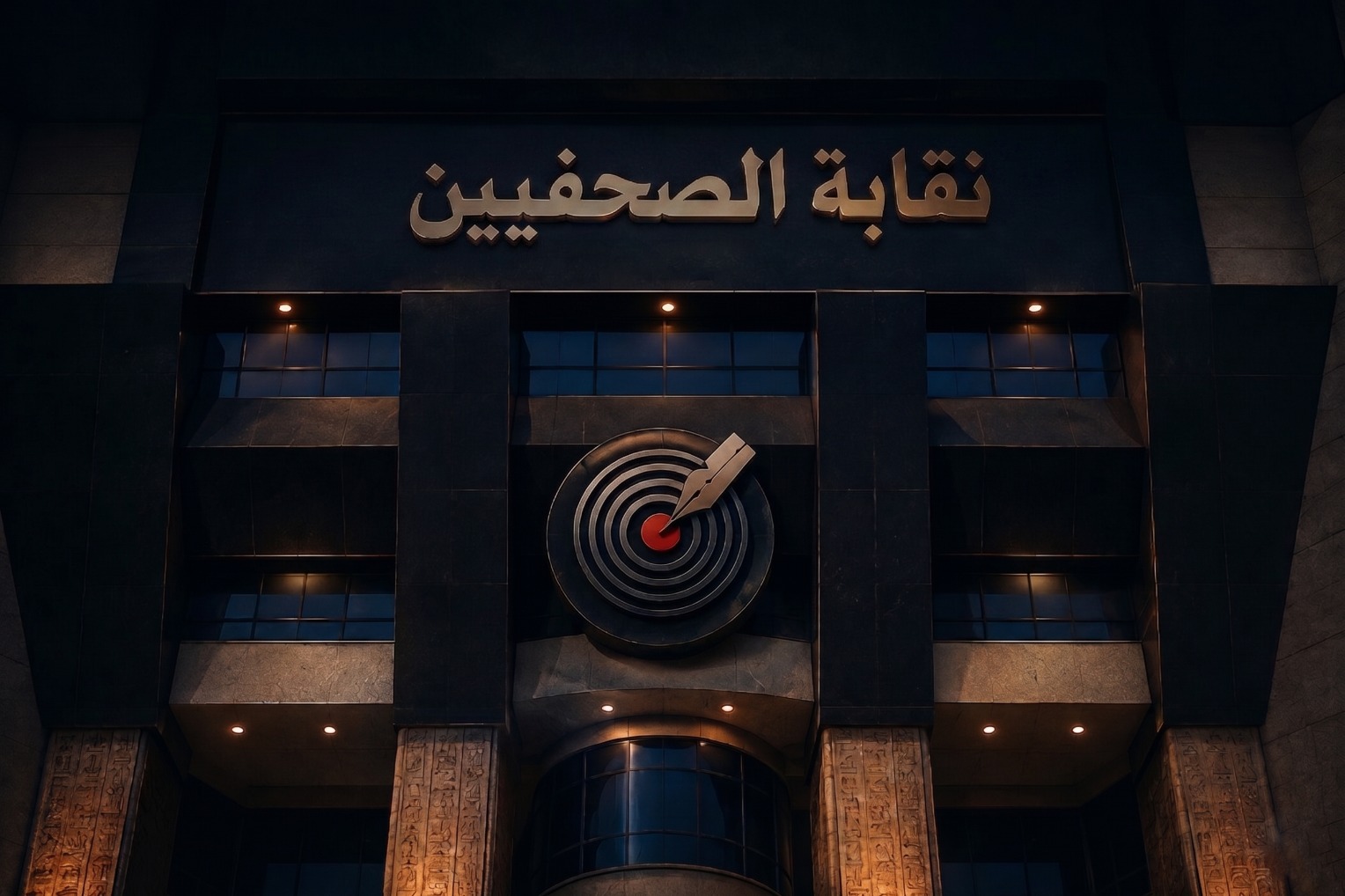
Eman says she has received just one complaint since taking over as the head of the committee in June 2025. In that instance, she secured the approval of the EJS president and secretary-general to allow workplace harassment complaints to be submitted directly to her, without anyone else being notified—a departure from previous practice.
An independent EJS investigation committee has also been formed. It was composed of a member of the syndicate’s Administrative Prosecution Authority, Eman herself, two journalists, one female and one male, who are members of the General Assembly and known for their integrity, and a female lawyer.”
Eman acknowledges there is a clear disparity between the way complaints are handled if submitted by journalists who are, or who are not, EJS members. While non-members can be provided with psychological and legal support, a complaint can only be pursued if the accused is a member of the syndicate.
In contrast, Warda’s case reveals that she was unaware of these conditions at the time the harassment occurred.
Eman Aouf, the current head of the Women’s Committee, makes clear that the EJS does not handle complaints of harassment if the journalist has already filed an official report. It was this that led to the closure of the investigation into Sarah’s complaint, despite her being an EJS member.
In both Warda’s and Sarah’s cases, the result was the same. They were unable to go on working as journalists – caught between the lack of safeguarding policies within the media organisations where they worked, and the procedural complexity within the journalists’ syndicate.
At the sixth general conference of the EJS in December 2024, three codes of conduct on a safe working environment were put forward. The code submitted by the Women’s Committee included a requirement for media organisations to put in place measures to deter harassment, bullying and discrimination, and to encourage women to exercise their legitimate right to take legal action against perpetrators of harassment.
Khaled El-Balshy has a similar view and always tries to frame the code of conduct as the general policy of the state, to avoid any accusation from the General Assembly that the union is imposing an external agenda. He notes the lack of consensus within the EJS council over the code of conduct: “It’s difficult to defend something that amounts to a genuine crime.”
El-Balshy recalls that in 2025 some women journalists tried to block the introduction of a code of conduct. They were fearful of causing concern to their husbands and of admitting the existence of harassment within media organisations. The EJS president responded at the time by saying: “We’re putting protective mechanisms in place for when a crime occurs.”
El-Balshy makes clear that the code of conduct, once approved, would apply to new organisations but would not be binding to those already established. He acknowledged that the union’s current constitution does not contain any articles clearly addressing women’s rights, since it dates back as far as the 1970s.
As it stands,it seems unlikely that we will see protection policies implemented within traditional organisations in the near future. The journalist union’s code of conduct, in contrast, seems to have come about through individual efforts rather than institutional policy. This is a reality where it is hard to make a complaint of online harassment, and where silence and fear of stigmatisation and job loss prevail.
We contacted various media organisations – Youm7, El-Watan, Al-Shorouk, Al-Masry Al-Youm, Al-Gomhuria, Rosa El-Youssef, Dar al-Maaref and the Al-Ahram Foundation – to ask if they had a clear safeguarding policy for female journalists working for them, and what mechanisms they had in place to ensure their protection should they face abuse like harassment. So far we have received no response.
Names of victims and details of their experience have been altered to protect their privacy.