




'/%3E%3C/svg%3E "Youtube")
 Yemen
Yemen
 October 26, 2025
 Technology

Mohammed Al-Hamdani – Journalist and fact-checker from Yemen
Fake social media accounts are spreading rapidly across the digital space in Yemen. These accounts, which purport to be political and media figures, gain popularity as their content is reposted. It is a phenomenon that is part and parcel of the wider conflict and the intense polarization that the country has gone through for years.
In this report, we tracked a fake account on X called Moshi Gradi which has artificially gained credibility and widespread popularity due to its content being circulated by Arab media outlets, without them checking the identity of the account holder. This has given the account a veneer of legitimacy in the digital space.
The “Moshi Gradi” account was created on X on February 28, 2022, and he identified himself as a “Yemeni Jew.” By October 2025, the account had more than a quarter of a million followers. Favikon, which specializes in reporting on activity across different platforms for each country, ranked it among the top 20 influencers on X in Israel for 2025.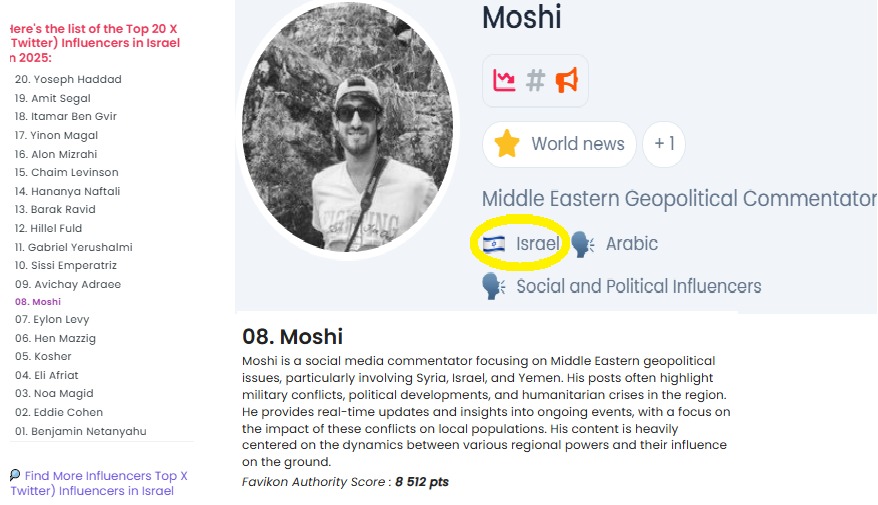
Favikon’s ranking of Moshi Gradi as one of the most influential figures in Israel in 2025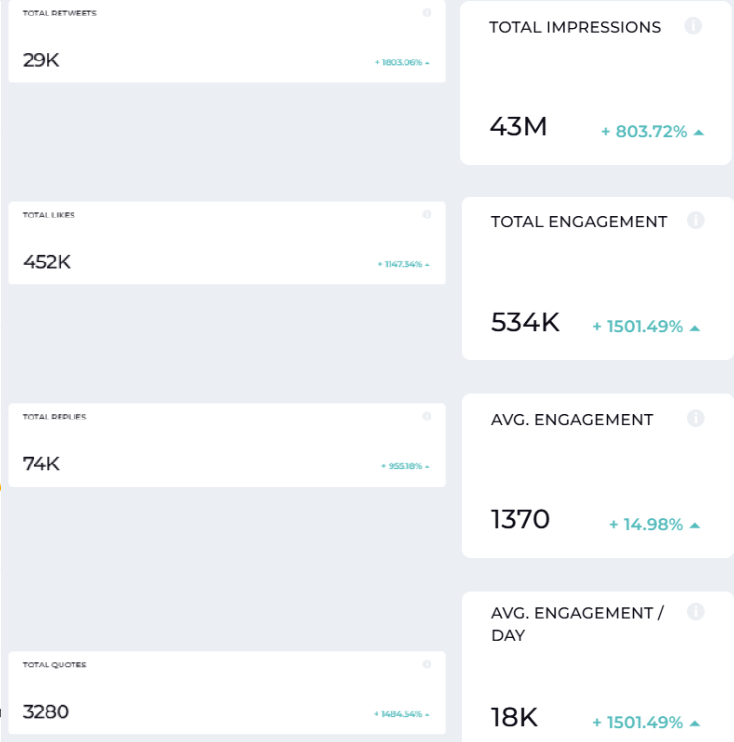
The Social Insider tool, which shows the performance of and interaction with accounts across social media platforms, including X, shows that, between July 2-31, 2025, the Moshi Gradi account received a total of 43 million views and 534,000 interactions, including likes, comments, and reposts.
The account has undergone several name changes since it was created in February 2022. Archive data shows that the account was initially registered under the name “Zou Ridan” with the ID: @rydan711. It was then changed to Ridan, then Marwan Ridan, with the ID: @reidan711. Then the name changed radically to Yair Moshe, with an ID beginning : @wn7, then to Moshe Yair with the ID @Yair840, then ID: @mosha3324. In March 2025 it changed to Moshe Gradi , then Musa Gradi , then back on September 4, 2025, to Moshi Gradi , with the same ID.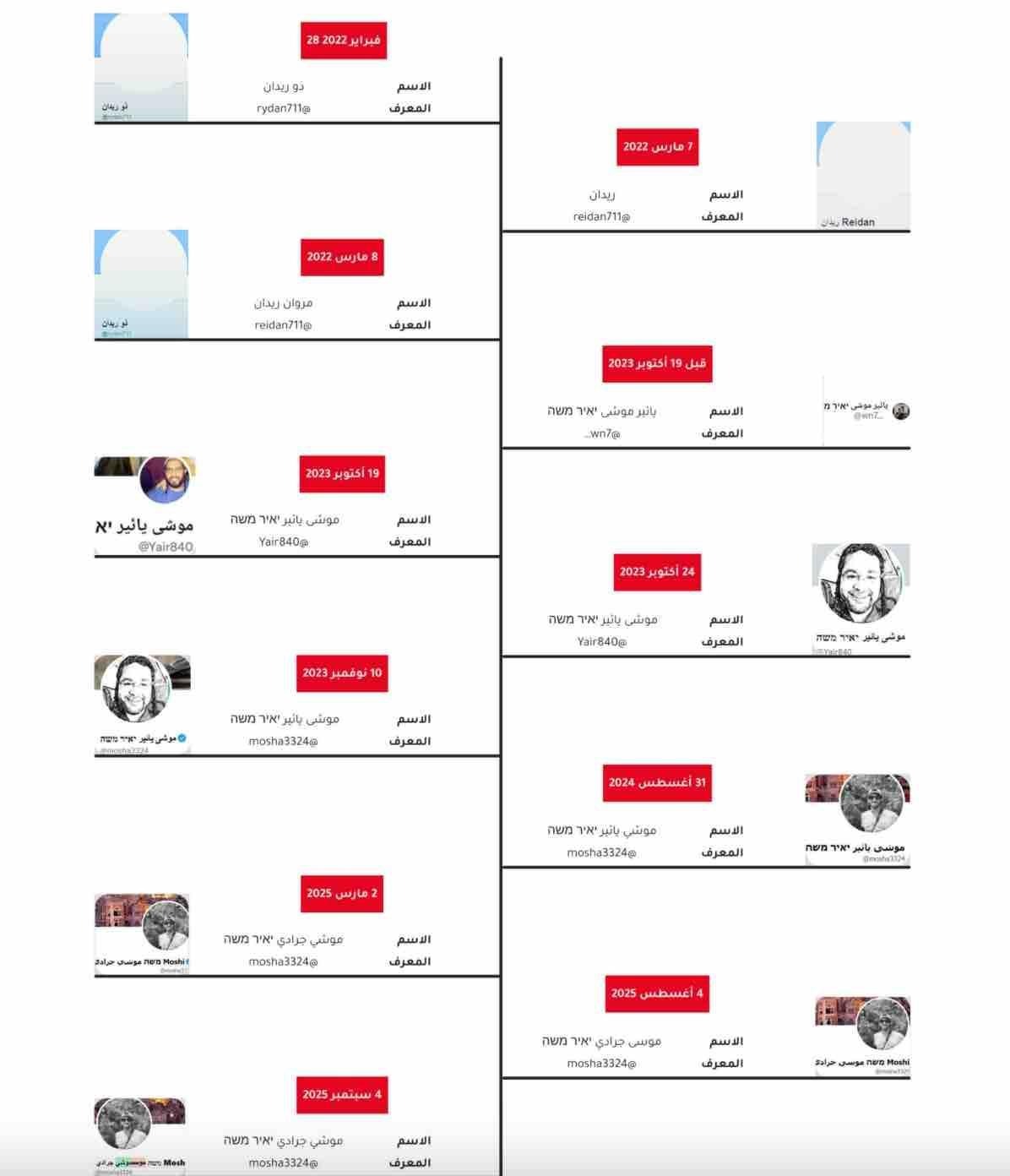
Changes over time to the account name and ID since its creation in February 2022
Apart from the changes in name and personal ID, an archive search showed that the account holder initially identified himself as “Moshi the Yemeni, a journalist with an interest in Arab affairs,” as well as being a Jew of Yemeni origin. He used a photo for the account that could suggest this, but the information was later deleted, which could be considered manipulation.
Looking through the account archive, we found videos that the holder claimed to be of people he knew socially. However, a reverse search of one of the videos posted by the account led us to a Facebook group called “Yemenis – The Official Team” (in Hebrew תימנים – הקבוצה הרשמית) which includes Yemenis with Jewish roots. This group was the starting point of our quest to scrutinize the account.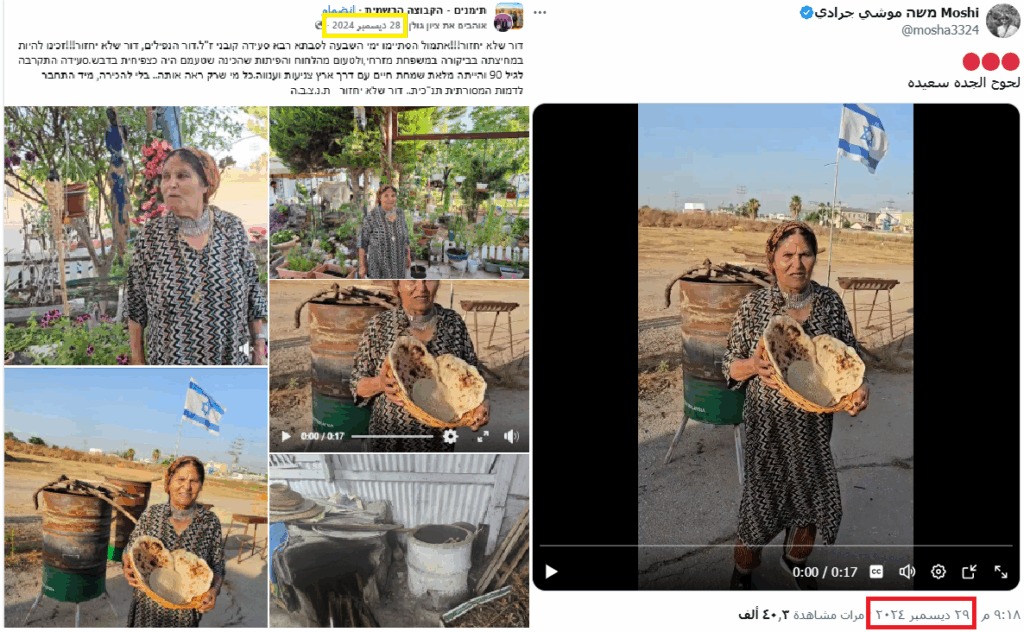
Screenshot from video posted by the account of an elderly woman displaying bread she had made.
On October 21, 2023, the account posted a photo, claiming it was of him with his grandmother, Shama Sharabi. But a search through the Facebook group showed that the same photo had been posted only the day before by “Eyal Terem” (in Hebrew אייל טרם) on his page, with the comment: “They pamper the soldiers with qat so they will be alert in battle… Blessed is Israel, as they do everything they can for our dear soldiers.“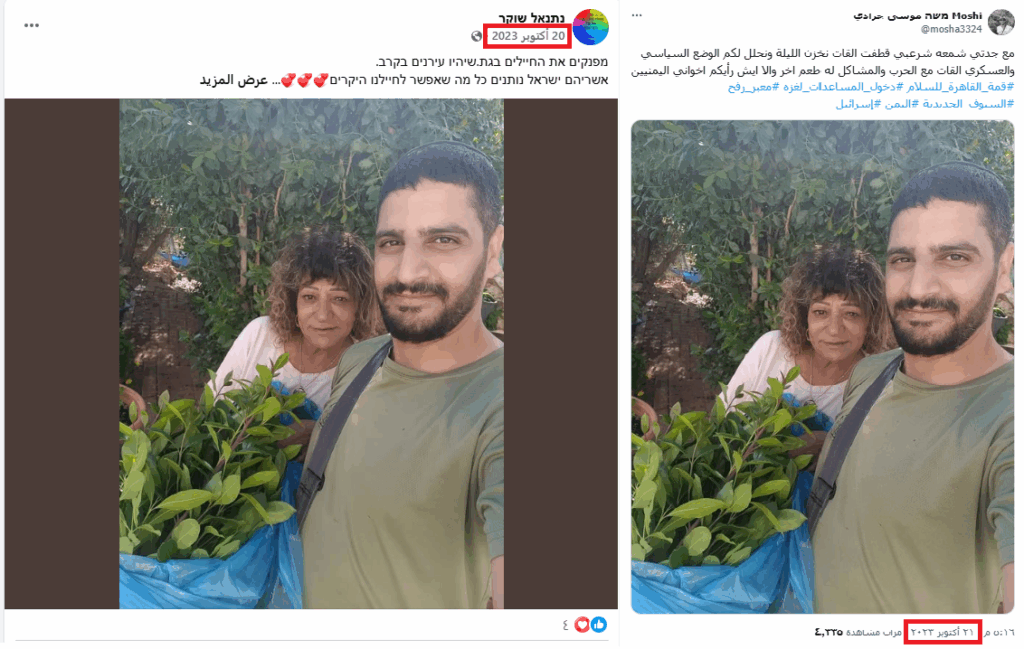
Misleading photo claimed by account holder to be of him and his grandmother
The account also posted a tweet on October 19, 2023, which included a video showing an elderly woman preparing the popular Yemeni dish asid, and claiming she was his grandmother. Searching the group using the keyword asid (In Hebrew עָסִיד), we found the video posted on December 31, 2021, by a member called Edi Ahrek (in Hebrew אדי אחרק) who reposted it in the group on October 16, 2023, with the caption: “There’s nothing in the world like having a mother.”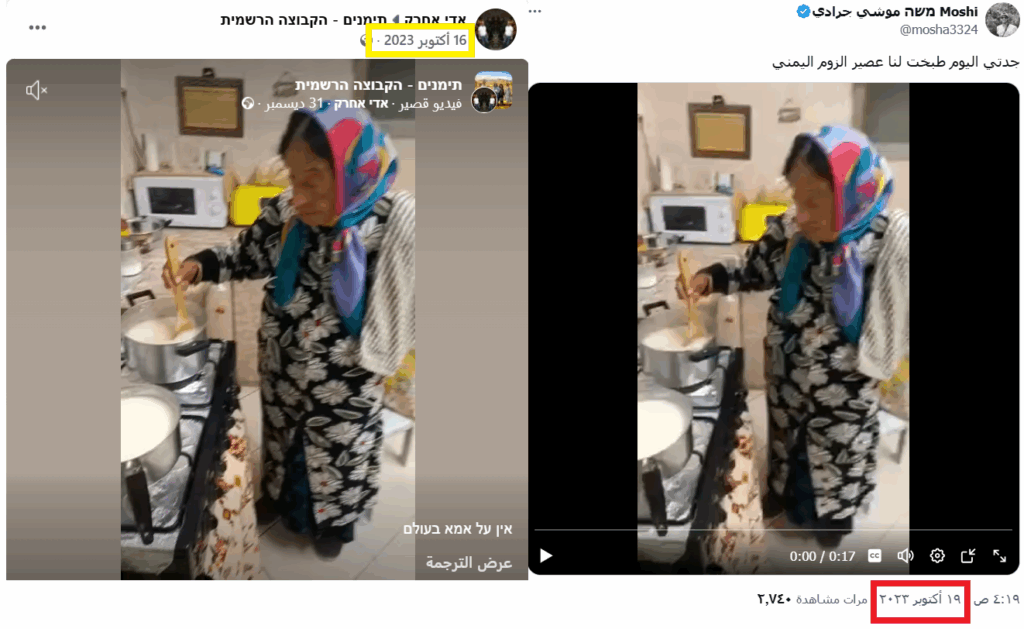
Screenshot of video showing an elderly woman whom Grady said was his grandmother.
He posted another video on October 22, 2023 claiming that it showed his friend Cohen and daughter Esther. But it turns out that the video was posted in the group by someone named Avishag Dahari. We looked deeper into the group’s archive and found several videos posted by a user named “Shmuel Haddad” (In Hebrew שמואל חדד) showing the same child. Later clips confirmed she was Haddad’s daughter.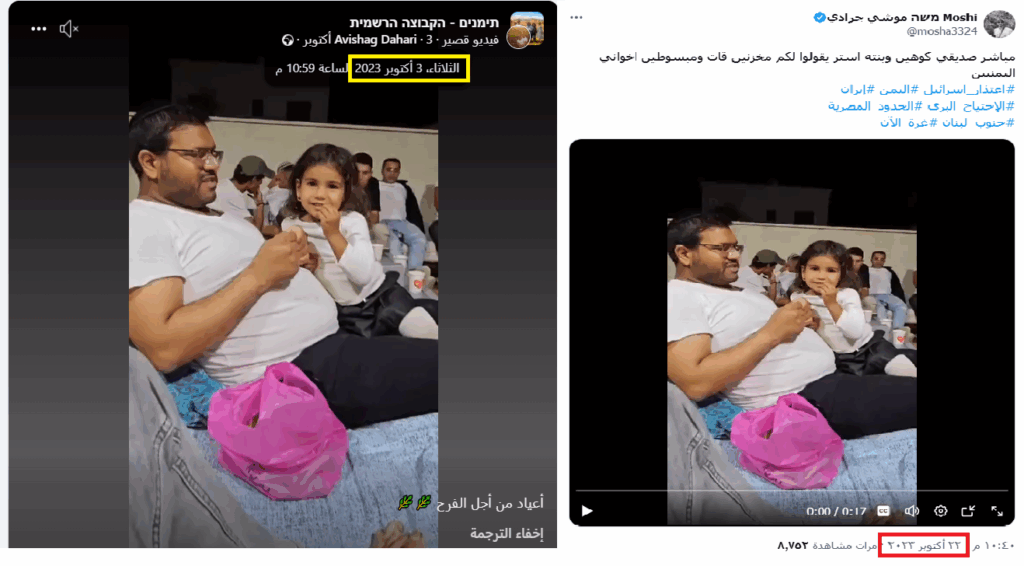
Screenshot of video Gradi claims show his friend Cohen and daughter Esther
We noticed that the account holder’s profile picture changed, with a difference in features that indicated he was not the same person. Even by using paid-for reverse search tools, including PimEyes, we were unable to find the source of these images, since they had been taken with filters or from a particular angle.
We tried to find the answer as to where the image was from by looking at accounts posted in the group during the time when the account holder had changed his profile pictures. Using the same principle, and by narrowing down the time frame of our search, we found a post published on September 22, 2023 by “Harel Saad” (In Hebrew הראל סעד) and found that the oldest profile photo of the account had been posted on October 18, 2020, over a year before the creation of the Gradi account.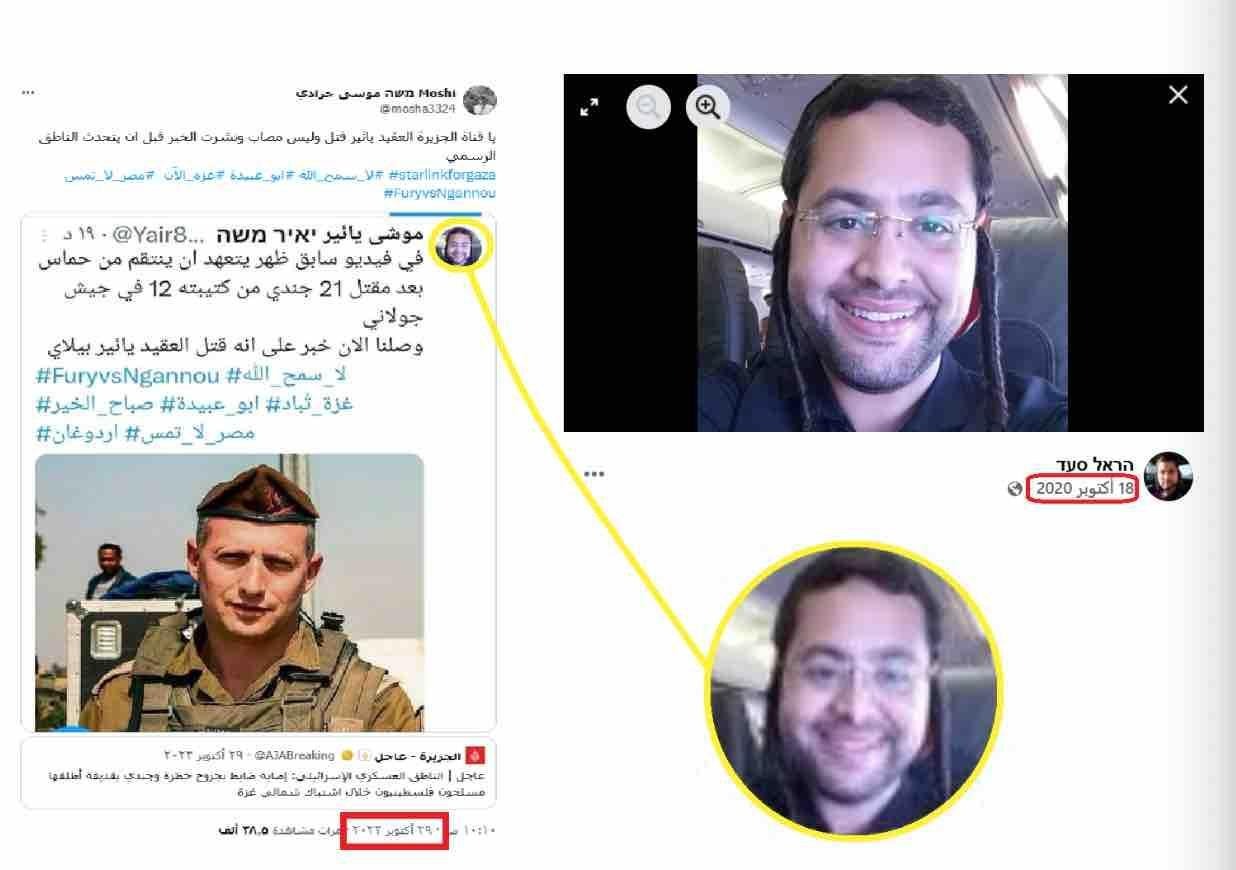
Photo of person called Hared Saad, previously impersonated by Gradi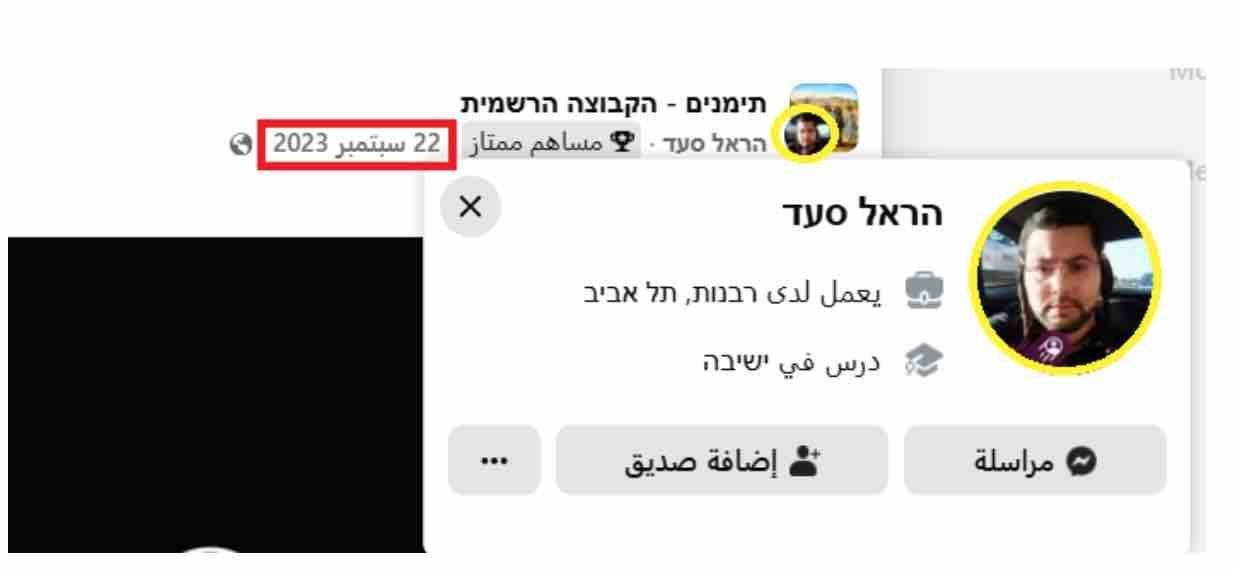
Screenshot of post that led us to the image used by Gradi as his profile photo
When the account was in the name of “Yair Moshe,” we found that the profile picture also belonged to a person named Guy David. He was a member of the same group, and commented that the photo was taken at the opening of the “Meir Nissim” synagogue in the city of Rosh Haayin.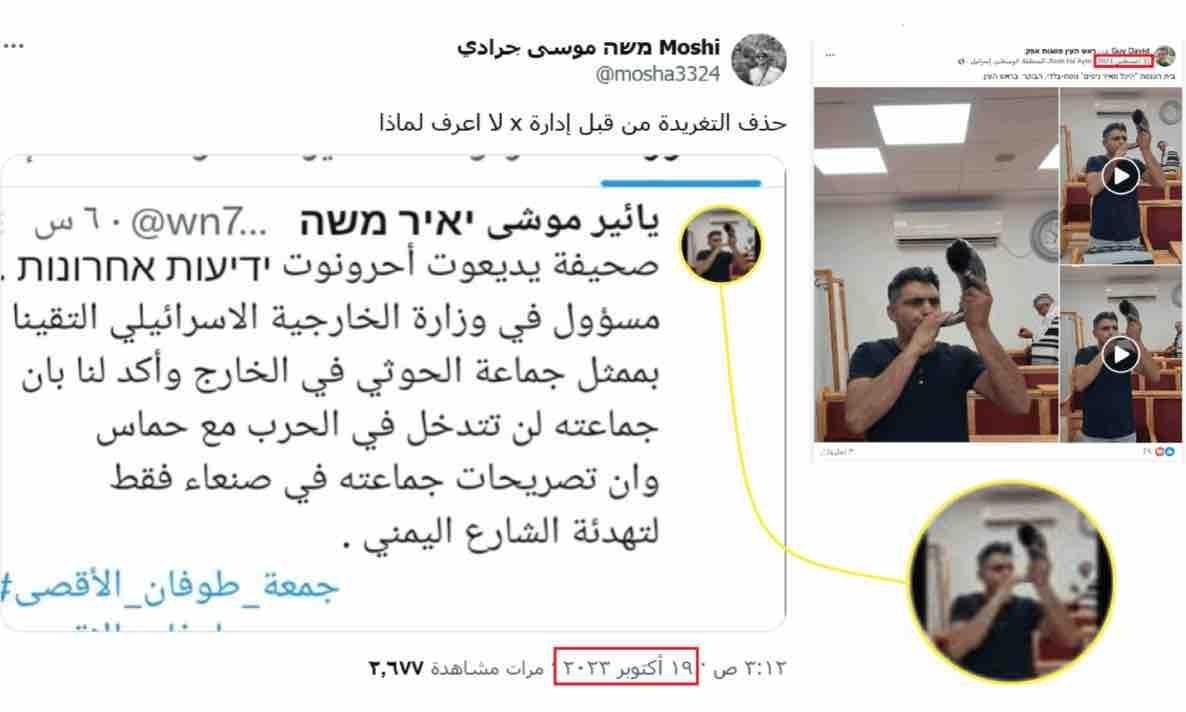
Photo belonging to a person named Guy David, which the account previously impersonated.
As for Moshi Gradi’s current profile photo , we found a photo that had been used by group member Ben Ishay Sharabi since December 21, 2021. There was a strong resemblance between the person in the photo and Gradi’s own profile photo. Looking through Sharabi’s profile, we found the same photo , which he had posted in early May 2016 saying it was of his last stop in Vietnam, specifically in the Sa Pa area of Lào Cai province.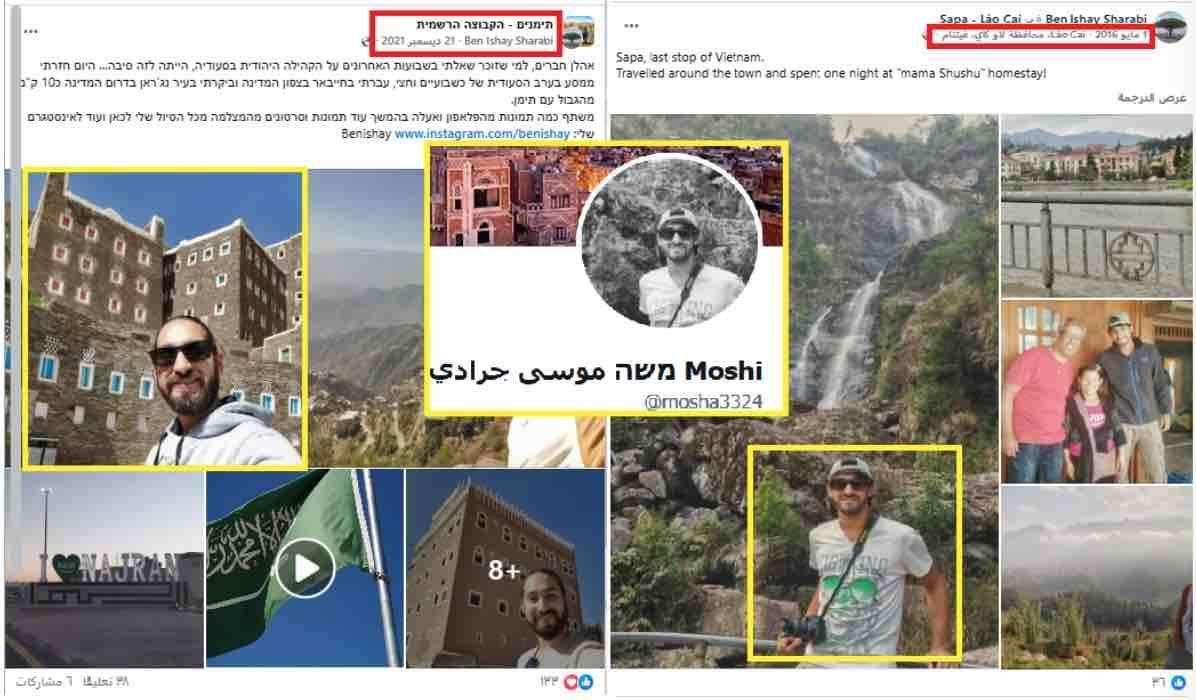
Grady’s current profile picture in fact belongs to a person named Ben Ishai Sharabi.
An analysis of the content of the account, under its current name, shows that tweets focus on severe criticism of Iran and the Houthis, and support for Israeli strikes on Iran and assassinations of its leaders, which it calls intelligence successes . The account also regularly attacks those it describes as Iran’s allies in Lebanon, Iraq, Yemen, and Syria. It describes Houthi bombardment of Israel as mere “troublemaking” and yet a calamity for the Yemeni people.
On the other hand, the account praises the United Arab Emirates, highlighting its role in providing humanitarian and development aid and its positions on the Palestinian issue. It also glorifies Tariq Saleh, commander of the so-called “Republican Guard Forces” on Yemen’s western coast, portraying him as a great leader and liberator of Yemen, and praising his role in “thwarting Iranian plans” in the country.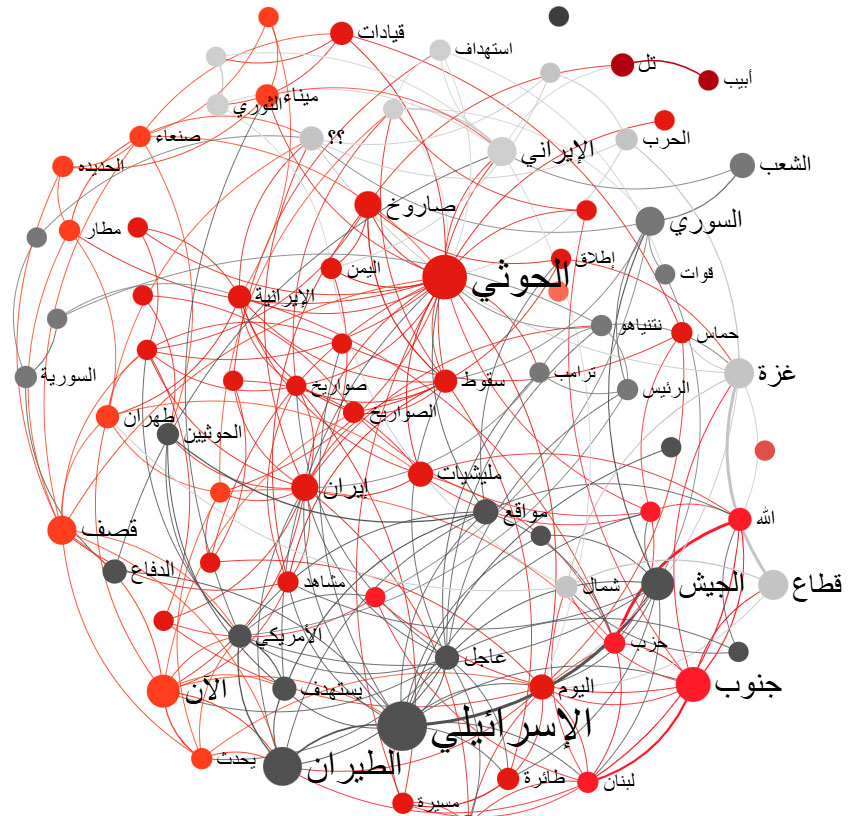
Cloud map showing most frequently used words in the account’s tweets
When the account first became active, it had only a few dozen followers, but within a few weeks it had grown remarkably. An archival search showed that the account had 442 followers on October 24, 2023, but nearly 20,000 by November 9, 2023 – an unusual leap in numbers for a new account. Five months later, on March 27, 2024, the total number of followers had reached around 167,000, rising to over 238,000 in July 2024.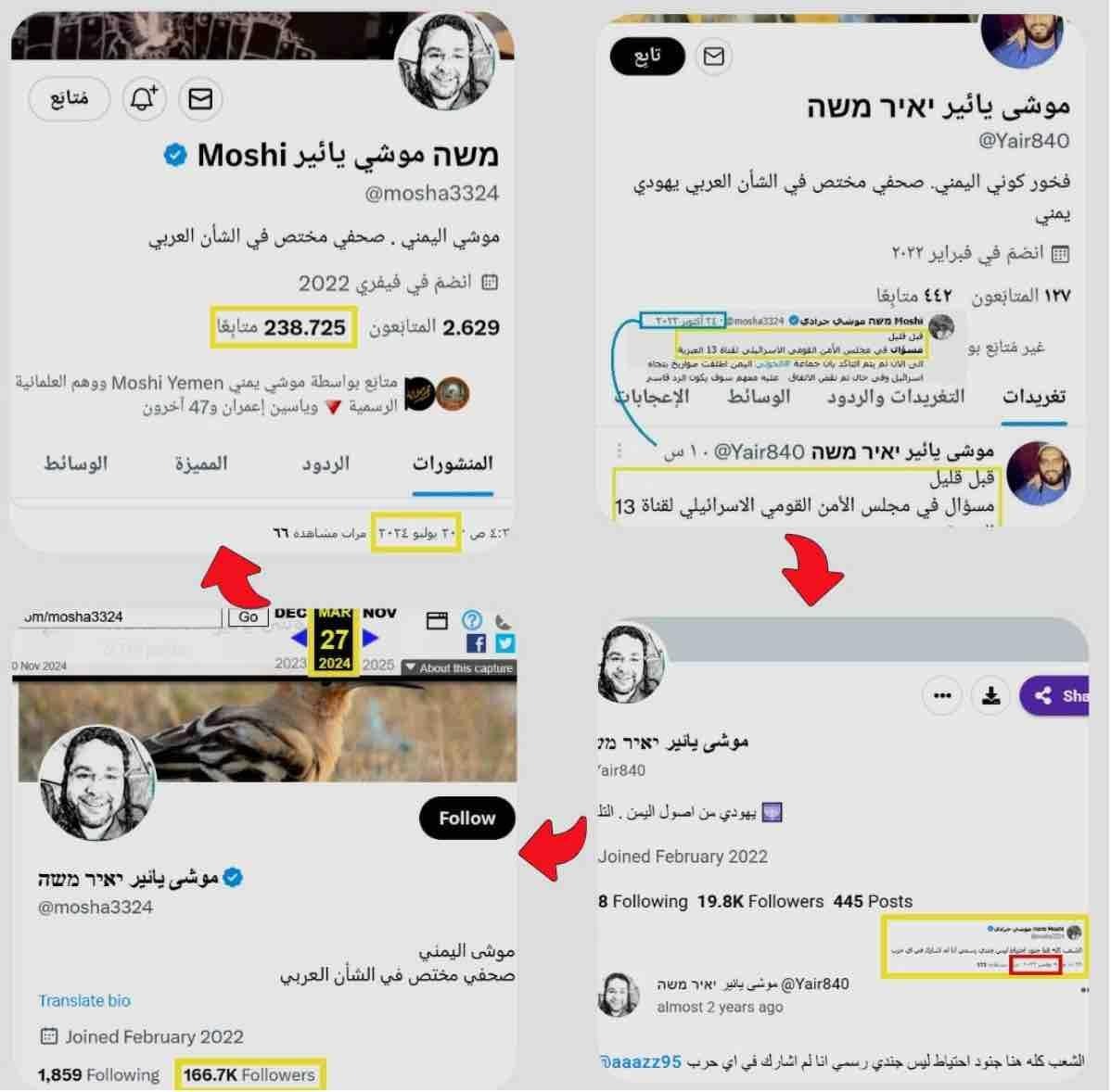
Separate archival screenshots showing the growth in the number of followers of the account between October 2023 – July 2024
Made with Flourish • Create a chart
Data extracted using Circle Boom, a tool that helps analyze the nature of accounts following on the X platform, shows that Gradi has a large percentage of followers who created their accounts on X between 2024 and 2025, which may indicate a possible link between the activity of this account and the emergence of a large number of new accounts on the platform, with the aim of increasing the number of followers or supporting similar accounts. By analyzing a random sample (50,000 followers), Circle Boom showed that more than 21,000 of them (42 percent) were fake accounts.
Made with Flourish • Create a chart
Made with Flourish • Create a chart
Looking deeper, we noticed similarities in the IDs of 7,431 follower accounts, with closely matched characters and names, to which random numbers were added. For example, the most frequently repeated group included the username Mohamed, which occurred 239 times (Mohamed8403518, Mohamed8671281, etc.) This strongly suggests that these are bot accounts, managed by a single unit or group of interconnected units.
The administrators of Sidq, a local Yemeni platform that has played an active role in exposing fake accounts and dismantling their narratives, point out that “hundreds of fake accounts have been active for years, some short-lived but others long lasting. They are professionally managed to look like accounts of real people with the aim of influencing local and regional public opinion and creating misleading narratives that serve political or military agendas. They are also designed to hoodwink the media and international organizations by presenting themselves as journalists or researchers.”
An analysis of more than 200 news articles that shared posts from the X account of Moshi Gradi shows that multiple Arab and regional media outlets have effectively given it “circulatory credibility” and a prominence far in excess of its real importance. They did this in three ways: quoting as an Israeli journalist; technical inclusion of the posts as a primary source; and repetition across various outlets, which helped to confer professional status on the account as an “identity in circulation.”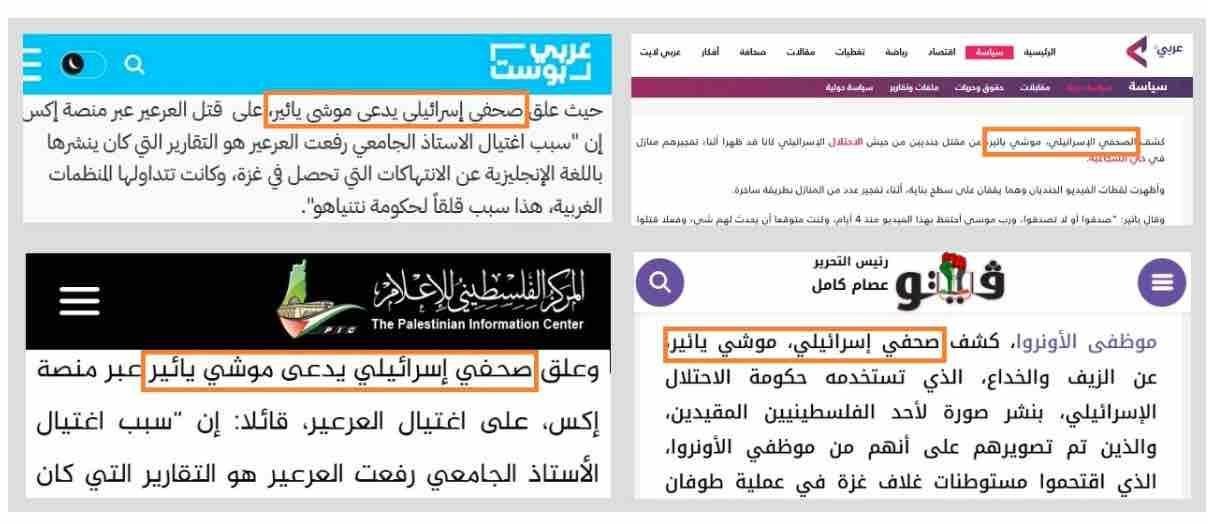
Examples of how media outlets handle account content, giving it professional attribution
The Yoopyup open-source investigative platform from Yemen categorically refuses to use accounts with a history of spreading misinformation, regardless of the justification. It emphasizes that treating such sources as primary or secondary sources for confirming a news story is unprofessional, even when these accounts publish correct stories.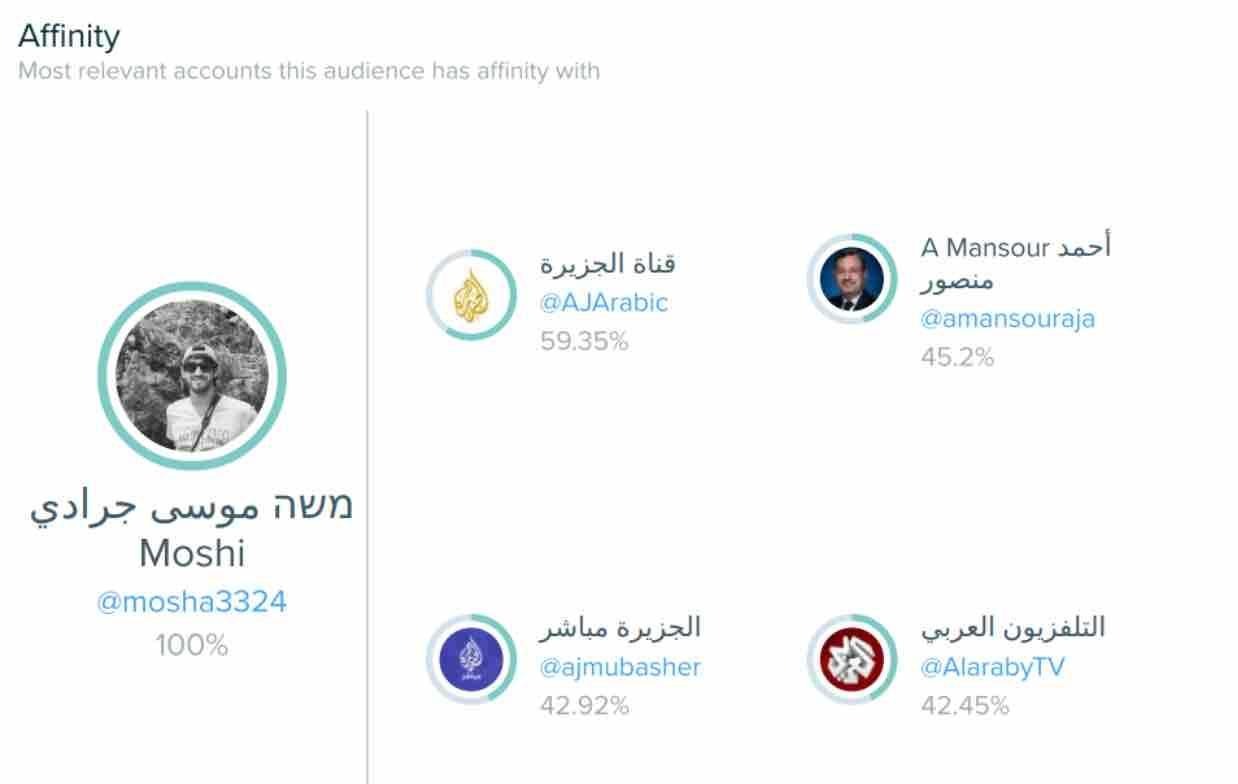
Accounts most associated with Moshi Gradi’s audience
The creators of the Sidq platform argue that when a media outlet refers to a fake account as a “journalist” or “researcher,” it dispels doubts about its identity and presents it to the public as a genuine voice, making the job of exposing it more difficult. If the fake account is repeatedly quoted across different media it gives the illusion of “natural dissemination,” which increases the likelihood of it being accepted as an authentic account. And including posts from fake X accounts in news reports also multiplies their reach and presents them to a new audience.
The Ethical Journalism Network (EJN) blog urges journalists to be aware of the “risk of being duped” by false information published on social media platforms. The EJN underlines the need to check account profiles to avoid using fake information, and to question whether they know the account holder and it has proved to be a reliable source in the past.
It is true to say that legitimacy online is not acquired solely through content, even if it is authentic, but also by how that content is circulated. The media, without intending to, may be playing a major part in lending artificial credibility to fake accounts that have no one behind them.
This report was produced as one of the graduation projects for the Arab Fact-Checkers Network’s (AFCN) “ARIJ Fact-Checking Diploma 2025.”