



'/%3E%3C/svg%3E "Youtube")
 Iran
Iran
 August 11, 2026
 Policy
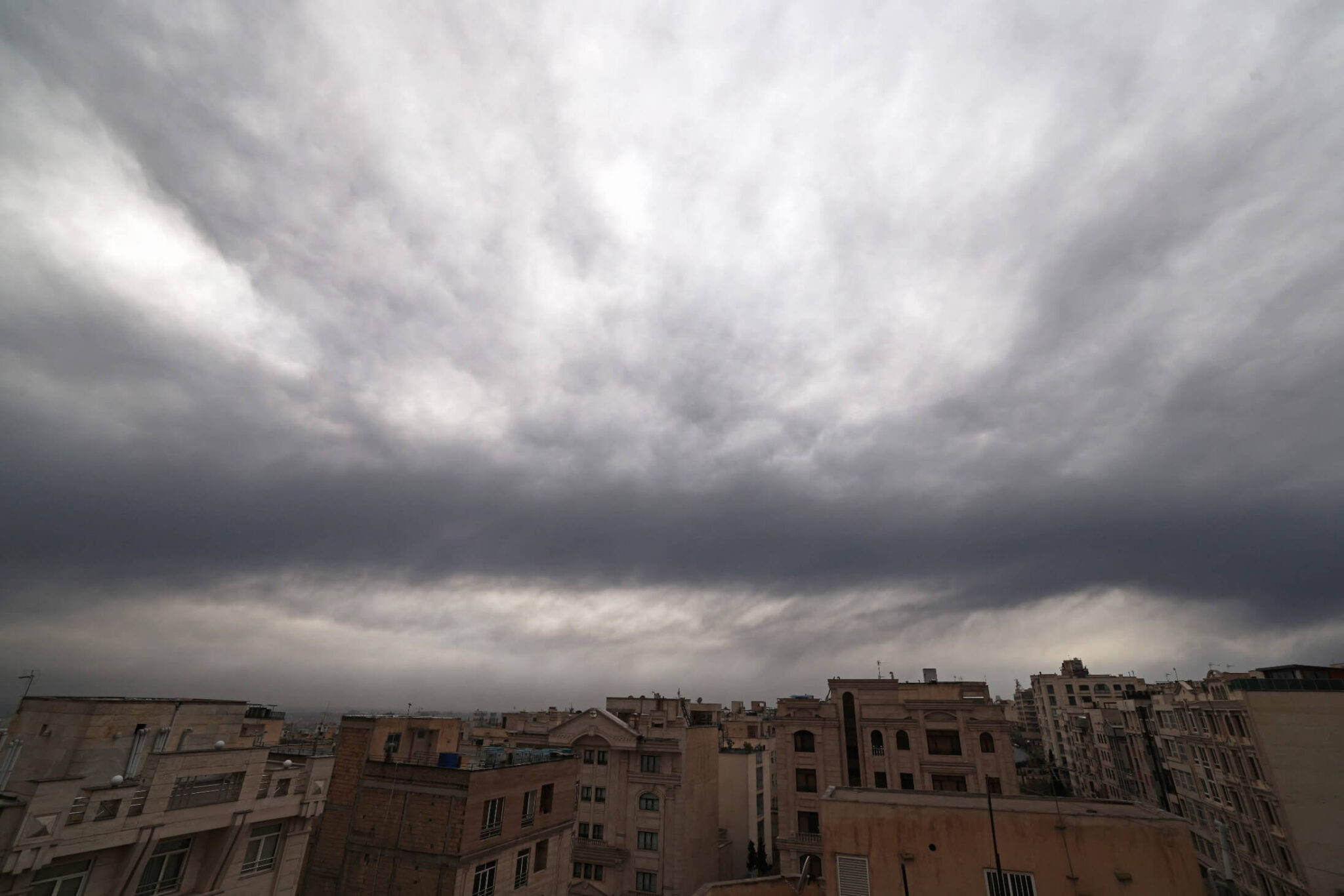
Source: AFP
By Mohamed Tolba
Although military operations between the United States and Israel on one side and Iran on the other were temporarily suspended following the ceasefire of April 8, 2026, the disinformation campaign surrounding the conflict has continued unabated.
A claim has been spreading on social media that the rain and flooding in Iran and neighboring countries were not natural weather events, but the result of an Iranian attack on a “secret center” in the UAE or “US radar stations” in the region. These facilities were allegedly working to control the weather and suppress rainfall.
On April 21, 2026, a post, purportedly from the Iranian Embassy in Afghanistan, appeared on X claiming that weather patterns in the region had changed after Iran destroyed a secret center in the UAE dedicated to cloud seeding and altering the climate.
This post alleged that in the wake of this attack: “… everything changed overnight. Regional weather patterns were radically altered. Iraq and Iran are now seeing heavy rainfall every week and a five-degree Celsius drop in temperatures.”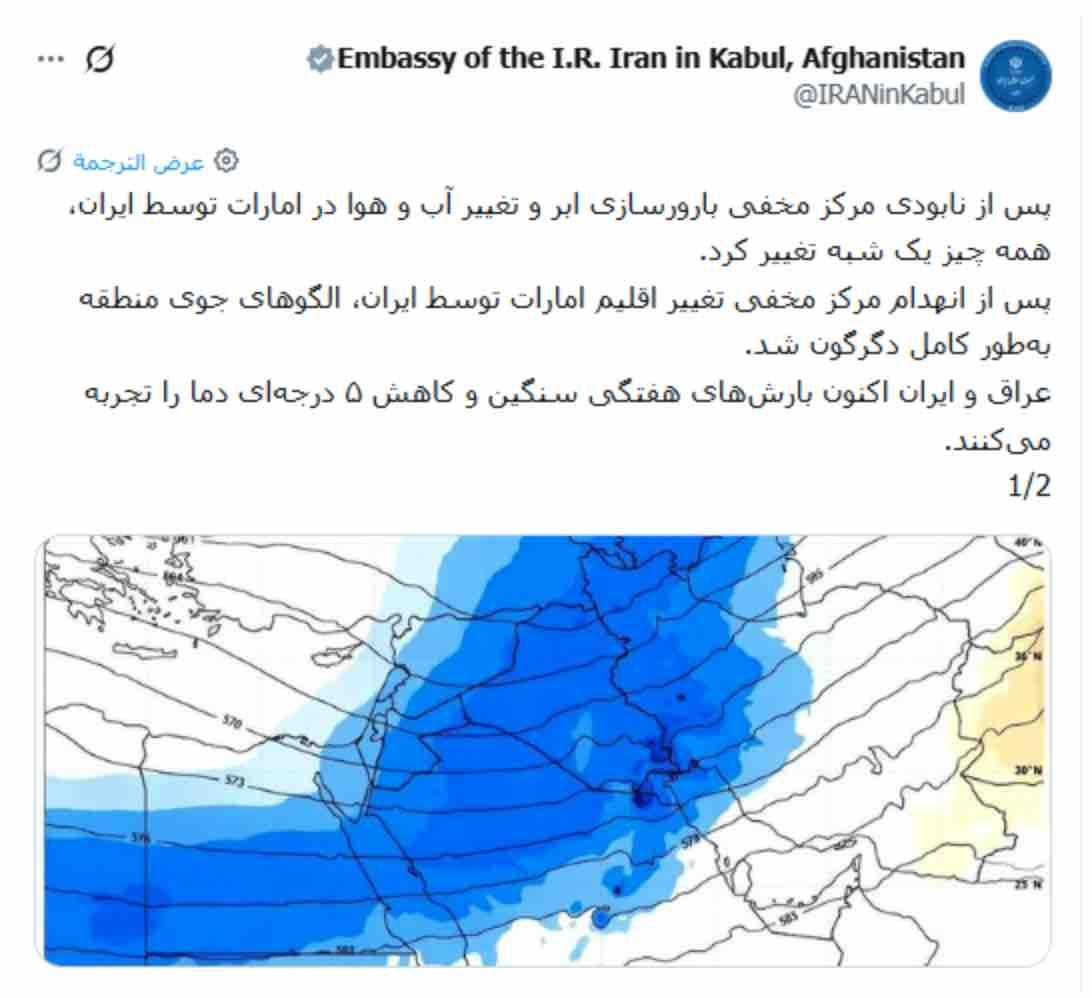
The alleged post from the Iranian Embassy in Afghanistan
But when we traced the claim’s origins online, we found no evidence that the original post had in fact appeared on the embassy’s official social media platforms. Our search did, however, turn up a link to a deleted post by the Turkish website “Qarar”.
Despite its weak sourcing and lack of digital evidence, the claim spread across Iranian and Arab websites and social media platforms, drawing hundreds of thousands of views and engagments. We found no corroborating information, however, from any reliable international, Emirati, or Iranian source to confirm the existence of any such secret climate-changing facility.
We contacted the Iranian Embassy in Kabul to verify whether the post was genuine, but have so far received no response.
To test the claim that temperatures in Iran and Iraq had fallen by five degrees Celsius, we looked at the daily NASA POWER data on average temperatures in 14 Iranian and Iraqi cities, using April 21, 2026, the date the post was published, as the reference point, excluded from the comparison itself.
To find out whether temperatures had actually dropped before the post, we compared the week prior to the post (April 14–20) with the previous week (April 7–13). The results showed the claim to be false: the average temperature did not fall, but it actually rose from 13.55°C to 15.35°C.
We then compared temperatures in the week preceding the post with the following week (April 22–28). The data showed a continued rise in the average temperature, reaching 18.24°C.
To understand the broader climate context, we compared April 2026 temperatures in selected cities with those for the same month in 2025 and 2024 in the same cities. This showed that April 2026 was on average 5.33°C cooler than April 2025, although the difference compared with April 2024 was only around 2.14°C.
This temperature drop was not uniform across the cities we examined , however. Average temperatures in Mashhad, Kerman and Zahedan were higher in April 2026 than in the same month in 2024. So the dip in temperatures in April 2026 compared with 2025 does not in itself scientifically demonstrateany sudden or unusual climatic change.
To see whether broader geographical analysis would support our findings, we used ERA5-Land data from the Copernicus Earth observation program covering all of Iran and Iraq. This data confirmed a steady upward trend, with the average temperature going from 16.14°C ( April 7-13) to 18.31°C ( April 14-20), and reaching 20.57°C in the week of April 22 to 28, 2026.
The readings also showed that the overall average temperature in April 2026 was 17.94°C, compared with 21.70°C for the same month in 2025, and 19.42°C in 2024 – meaning April was overall 3.76°C cooler in 2026 than in 2025, and only about 1.48°C cooler than in 2024.
Taken together, the NASA POWER and Copernicus data flatly contradict the claim of a five-degree drop in temperatures; inn fact, they show a steady rise in the average temperature, both before and after the post began circulating.
After the claim attributed to the embassy spread online, social media accounts began sharing videos as visual evidence that an attack on a fictitious climate-altering facility had caused a change in the weather.
One widely shared video showed water pouring down a mountain, with a caption claiming: “Iranian media are broadcasting footage of rain, snow and flash floods, and saying that the drought in Iran, that has gone on for a decade and a half, was caused by widespread cloud seeding carried out by the UAE and Israel.”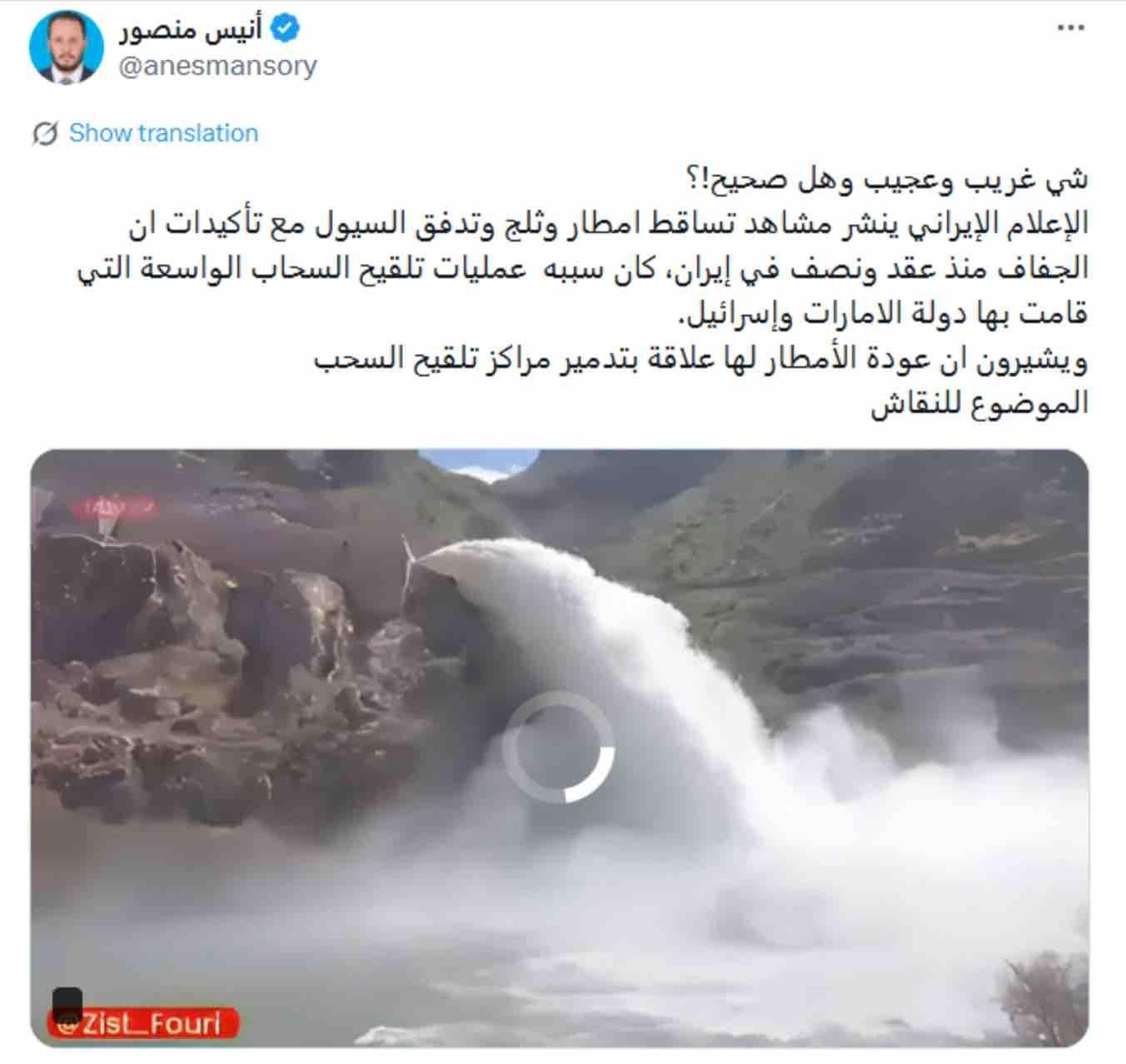
The video claiming torrential floods, linked to cloud seeding and the destruction of the alleged UAE center
A reverse image search shows that the video was originally posted on April 17, 2026 on the Telegram channel of Iran’s “Tasnim” news agency. The agency made no mention of any secret center or radar stations in its post. The clip was in fact published as part of a local news story on water flowing from the Daryan Dam in the border county of Paveh, in the northwest of Kermanshah Province.
The agency captioned the video: “The Daryan Dam, one of the country’s largest, with a storage capacity of over 400 million cubic metres, is now full and overflowing.”
We found neither the Tasnim nor other reliable Iranian media outlet had reported the destruction of any cloud-seeding centers, or any such climate-related operations carried out by the UAE or Israel.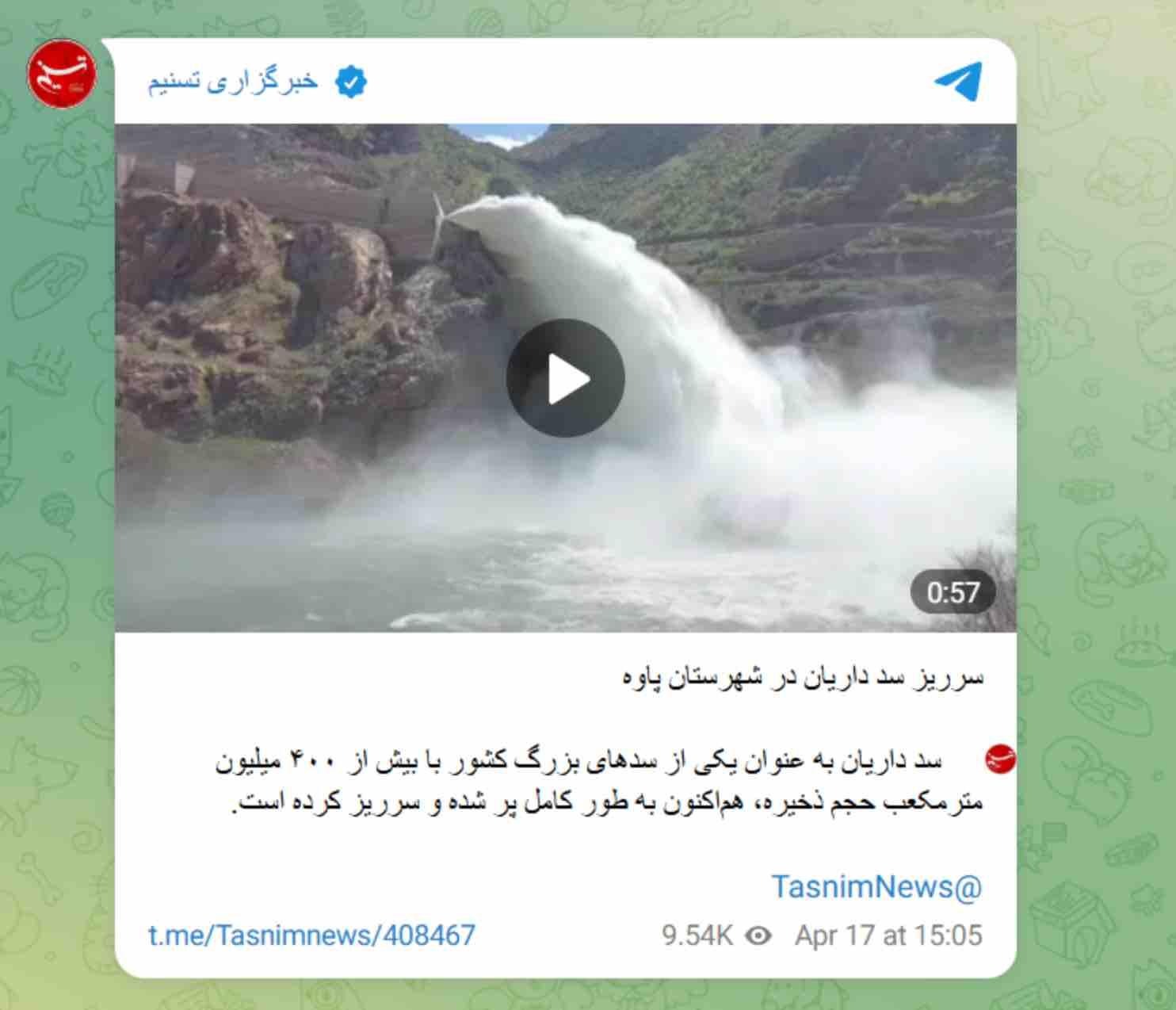
The original post with a video of water flowing from Iran’s Daryan Dam
Alongside the video of the overflowing dam, other accounts shared a clip of a huge vehicle emitting thick smoke through a nozzle mounted on a rotating platform alleging it was a “cloud-seeding machine,” or of technology directly linked to attempts to control the climate.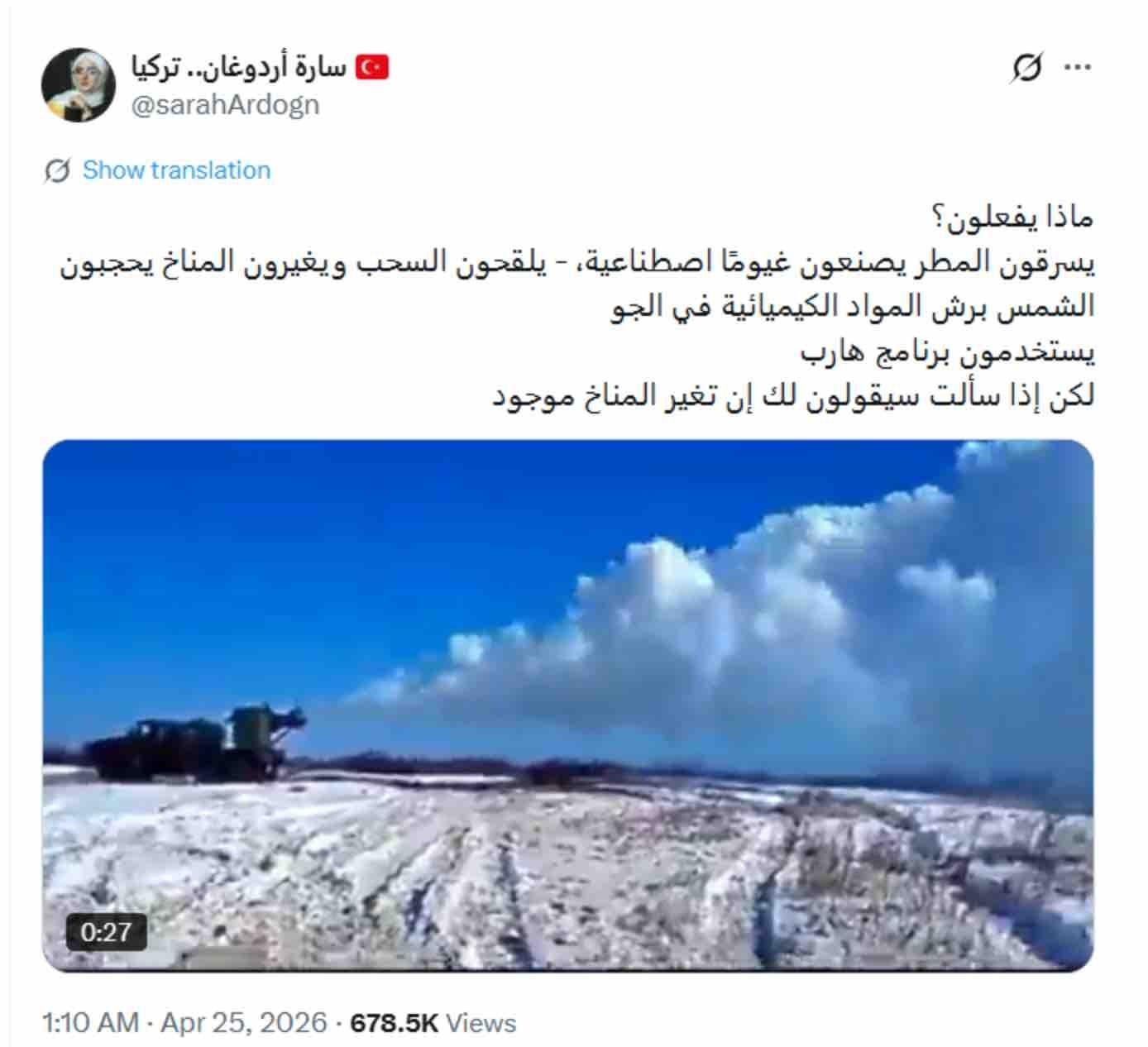
Claims of “rain theft” and “cloud seeding” circulated and were linked to the HAARP program
However, a reverse image search of still frames from this video led us to an older version published on YouTube on August 15, 2016. The clip is captioned in Russian ТМС-65д) – the designation of the Russian military vehicle TMS-65.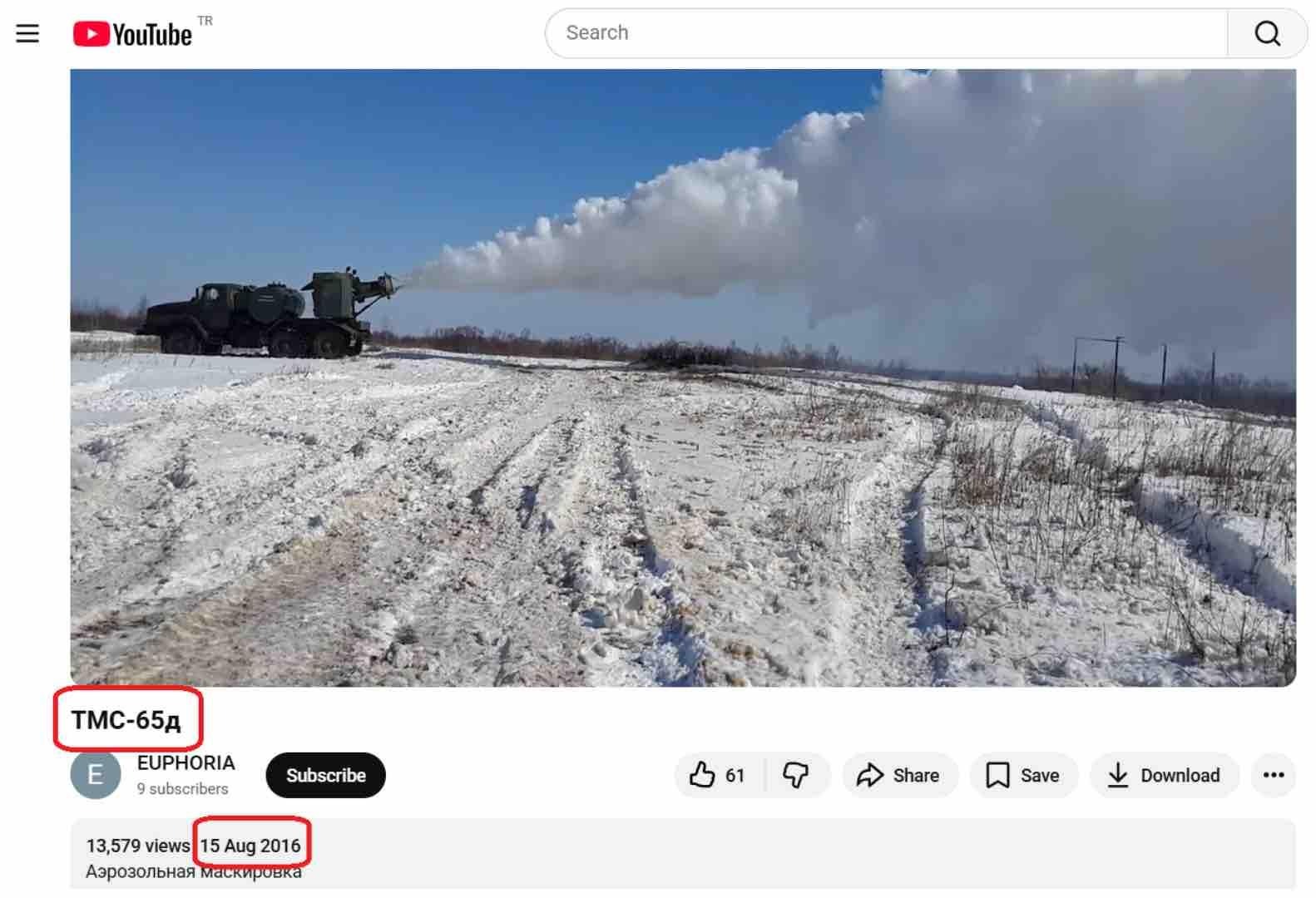
The original version of the video clip now circulating online with the claims of “rain stealing”
A look at the technical specifications of the TMS-65 made clear that it is not a weather-altering machine., but a specialized decontamination and sterilization system. According to technical data from the US Army’s Worldwide Equipment Guide database, it is a truck-mounted system designed for the rapid decontamination of military vehicles, towed weapons and other equipment.
The TMS-65 uses a powerful jet spray that produces a dense cloud of vapour ( mistakenly described in the tweet as smoke for making clouds). Russian reports showing TMS-65 vehicles, or variants, being used for mass disinfection operations during the COVID-19 pandemic provide further evidence of the system’s true prupose.
As part of our research into how the story spread, we analyzed 158 posts from 128 different X accounts published between between March 2 and May 29, 2026. Together, this sample drew around 13.7 million views and over 163,000 engagements.
The misleading posts centered on allegations of “ rain and cloud theft”, and the use of cloud-seeding technology and the HAARP program to control the weather, linkingthese theories to the war on Iran and using them to explain climatic changes in both Iraq and Iran.
Grok topped our sample in posting frequency, with 15 posts, but it had little reach:its posts collectively drew only 3,524 views and 22 engagements. This suggests the account’s t activity was mostly reactive – r replies and comments on other users’ posts – and that it played no central role in driving or amplifying the false claim.
The account of Dr. Hussein al-Safi, by contrast, had one of the highest engagements. Though it posted only once, the post spread widely, drawing around 1.7 million views and 24,262 engagements. The account – whose bio identifies the owner as a journalist tweeting from Iraq – promoted the same claim linking Iran’s supposed bombing of a cloud-seeding center in the UAE to climatic change in both Iran and Iraq.
In second place was the Iranian News / Breaking account. It also carried a single post, which generated around 980,000 views and 23,822 interactions and made the same false claim linking between the ending of drought in Iran and the attack on “rainmaking” facilities in Arab countries. The surprising thing here is that the geolocation of the account showed it was actually managed from North Africa, despite its focus on Iranian affairs.
Among the accounts that adopted the tactic of limited posting but with high impact was that of “Sara Erdoğan.. Turkey”. Though it posted just two tweets, these together generated around 2.56 million views and over 15.3 thousand interactions. Similarly, the account Anes Mansour (@anesmansory) carried two posts that generated around 1.72 million views.
The implication of this is that the false narrative was not disseminated by one “central node” (one account intensively driving the dissemination), but instead used a strategy of decentralised amplification, based on multiple accounts using a small number of posts designed to achieve the greatest possible reach and algorithmic impact.
Time-based analysis shows that most account activity occurred in the second half of April 2026. The campaign peaked on April 20 with 22 posts, generating over two million views and 30,000 interactions. There was a second surge on April 26, with 21 posts generating around 2.74 million views.
The circulating narratives rely on deliberately conflating three distinct technical ideas: the HAARP program; rainmaking or cloud-seeding technology; and meteorological and military radar systems. Although these terms are frequently invoked in conspiracy theories over control of the weather, the scientific literature clearly defines what each of them can actually do. It conclusively disproves the claim that rainfall and flooding in Iran and the region were caused by the destruction of a secret weather-controlling facility or radar system.
HAARP – the High-Frequency Active Auroral Research Program – is a research facility run by the University of Alaska Fairbanks, dedicated to studying the upper atmosphere, specifically the ionosphere.
Contrary to the circulating claims , HAARP cannot be used to control the weather, as its official website makes clear – for a simple physical reason: the radio waves HAARP transmits are not absorbed by the troposphere or stratosphere – the only two atmospheric layers where weather forms near Earth’s surface.
The World Meteorological Organization (WMO), defines “weather modification” as deliberate technical intervention in the atmosphere aimed at influencing local weather conditions. This is mainly done through cloud seeding, which involves dispersing fine particles within existing clouds to stimulate or modify precipitation – to increase rainfall, reduce hail, or disperse fog.
Countering claims of regional climate control, the WMO notes that the technique’s effectiveness remains limited and depends on specific atmospheric conditions. It points out that the immense amount of energy in atmospheric systems makes it scientifically impossible to create rain-bearing clouds from scratch, alter wind patterns to draw water vapour to one region rather than another, or to control extreme weather events.
Radar systems, including weather radar, are observation and measurement instruments . They cannot displace clouds or relocate storms. The US National Oceanic and Atmospheric Administration (NOAA), for example, explains that Doppler radar is used to detect precipitation and track the movement of rain or snow particles. It can only determine the location, formation, intensity and trajectory of weather events. It cannot alter them or influence their direction.
The claim that destroying radar systems caused renewed rainfall or a changed weather patterns thus rests on a fallacy – confusing radar’s monitoring role with the fanciful idea that it could be used as an “instrument of control.” Put simply, radar observes weather events; it does not create them.
Available climate records do not support the claim of a “widespread and exceptional” increase in rainfall in Iran after the war, or as a result of the destruction of the alleged installations and radar systems. Official figures show that the average national rainfall stayed close to normal levels (or was slightly higher for limited periods); the most notable feature was its highly uneven distribution across the country.
On May 26, 2026, the Iranian news agency ISNA quoted the head of Iran’s National Center for Climate and Drought Crisis Management (NCCSCM) – part of the country’s Meteorological Organization – as saying that average rainfall in Iran had remained within the normal range, while stressing the sharp variation across the country- which the statistics bear out. Rainfall fell by 33 percent on Qom, 32 percent in Semnan, and 30 percent in Markazi, and only 155mm of rain fell in the capital, Tehran, compared with a long-term average of 250mm- a 38 percent decrease.
But center’s director, Ahad Vazifeh, noted above-average rainfall in other provinces – Hormozgan, up 77 percent, and South Khorasan, up 49 percent. These figures undercut the notion of a “widespread” increase: the higher rainfall was concentrated in specific regions, while others continued to record below-average rain.
Vazifeh attributed this fluctuation in rainfall levels to well-known climatic and environmental factors, including changes in atmospheric circulation and wind patterns, and the effects of urban and industrial pollution, and the natural drought cycles that have marked Iran and the southwest Asian region for thousands of years.