


'/%3E%3C/svg%3E "Youtube")
26 August 2026
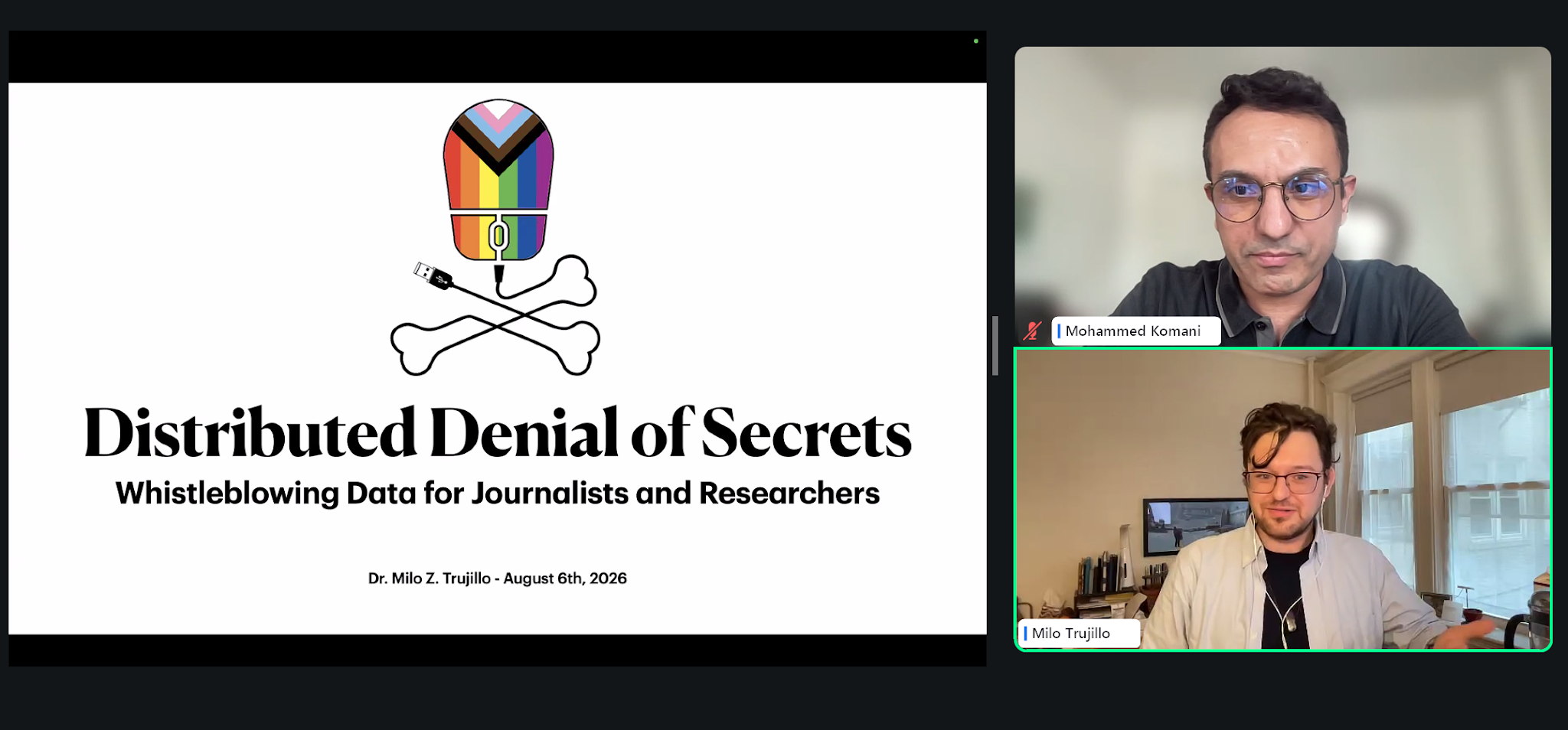
ARIJ organized a webinar titled “Data Journalism and Investigative Collaboration,” delivered by data scientist and researcher at the Vermont Complex Systems Institute at the University of Vermont (USA) and lecturer at the Network Science Institute at Northeastern University, Dr. Milo Trujillo, and moderated by ARIJ’s Senior Editor & Coach Mohammed Komani, with an attendance of 100 participants from 23 countries (58% female). The session covered data analysis methodologies, the history and role of Distributed Denial of Secrets (DDoSecrets) in publishing leaked documents, ethical and security considerations in handling sensitive data, and lessons from cross-border and cross-organizational investigative collaboration. This webinar is part of the activities of the seventh Data Journalism Diploma, in partnership with the Norwegian Embassy in Jordan.
Dr. Trujillo opened by framing what DDoSecrets — the organization he has been part of since 2019 — does: publishing and preserving large collections of leaked documents in the public interest, from files exposing the behavior of law enforcement agencies to documents unmasking right-wing militias and multinational corporations. He stressed that obtaining a leak is not the final destination but the beginning of a long journey, one that passes through verifying the data’s source and authenticity, cleaning and converting it into analyzable formats, and conducting a careful ethical assessment before publication that accounts for source protection and minimizing potential harm.
Trujillo highlighted a fundamental distinction that journalists often overlook: the difference between academic and journalistic approaches to the same data. An academic researcher is concerned with data completeness, biases, and ethical publication consent, and may spend years on a study, while a journalist works under deadline pressure and audience demands. He therefore emphasized that collaboration between the two is a professional necessity, not a luxury: the academic builds the analytical framework, and the journalist translates it into language that reaches people. He also introduced specialized research tools in this field, including Aleph, BlueLeaks Explorer, and TeleMessage Explorer, and how they enable journalists to search within massive datasets, track individuals and institutions, and connect threads together.
Post-webinar evaluation results showed an overall satisfaction rate of 87%, while Dr. Trujillo received a performance and engagement rating of 89%. In terms of professional impact, 87% of participants reported that the training changed their approach to handling sensitive and leaked data, either through a clearer understanding of ethical and security considerations or a partial shift in their methodology.
This webinar is part of ARIJ’s ongoing efforts to expand the tools available to Arab journalists and strengthen their capacity to handle complex data with professional and ethical responsibility, within a vision that makes international investigative collaboration a cornerstone for producing deeper, more rigorously documented investigations.