



'/%3E%3C/svg%3E "Youtube")
On the occasion of International Women’s Day, ARIJ held a webinar titled “Digital Violence: Through Their Eyes and Voices.” The webinar aimed to amplify the voices of women journalists and highlight their experiences covering digital violence against women, while sharing lessons learned from investigative journalism and in-depth reporting in this field. The webinar is fully available in English here.
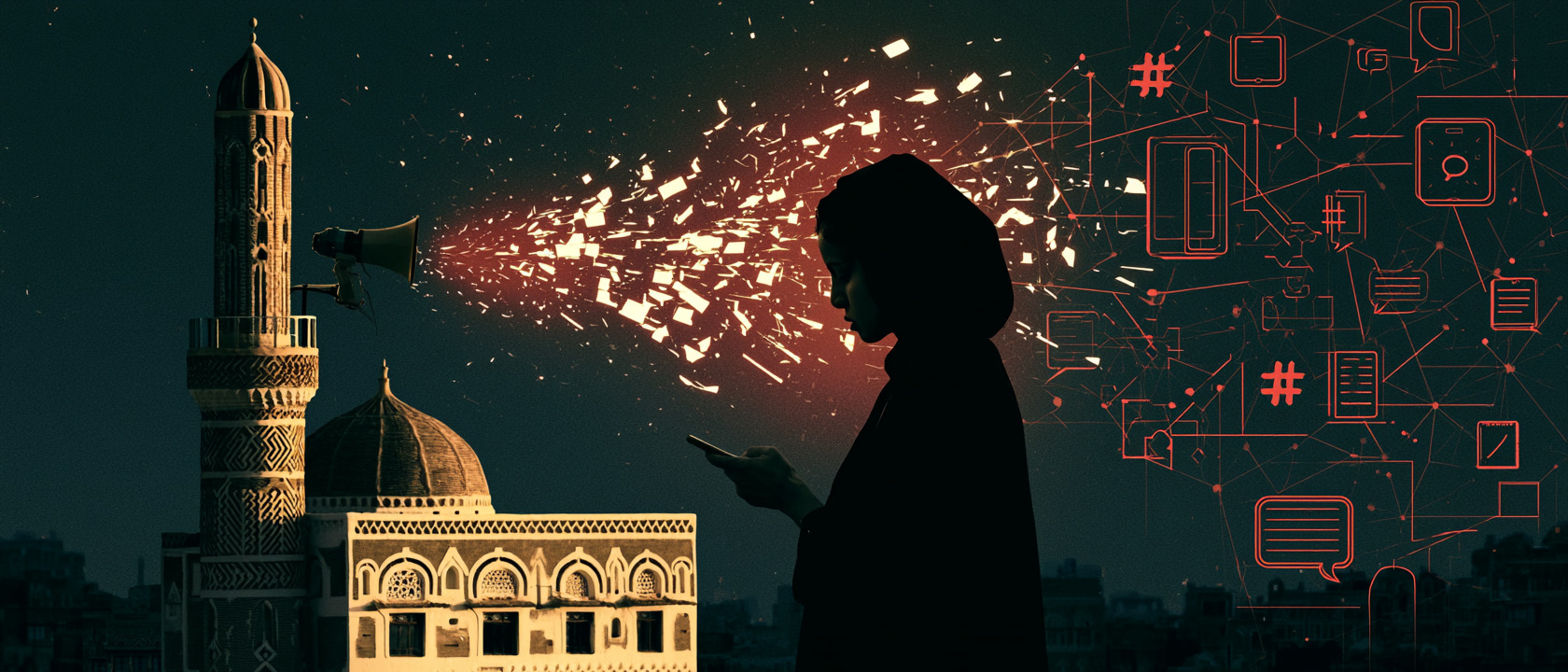
The session, moderated by ARIJ senior editor and trainer Farah Jallad, introduced the “I Will Not Stay Silent” project as an important reference for understanding the digital violence faced by female journalists in the Arab world and the various forms such violations can take.
Speakers from Yemen, Egypt, Iraq, and Algeria participated in the discussion, addressing the psychological and professional impact of digital violence on survivors and victims, as well as the importance of building trust between journalists and their sources when reporting on such sensitive issues.
In this context, Bassant Helmi, Founder & CEO of GPP, our partner in conducting this webinar, emphasized the role of civil society organizations and entities that work directly with victims in strengthening trust between journalists and survivors. She also stressed the importance of avoiding victim-blaming or questions that carry accusatory implications and shift responsibility from the perpetrator to the victim. Helmi noted that blaming victims often pushes them into silence and discourages them from reporting abuse, and may even lead them to withdraw from digital spaces, workplaces, or social life.
Journalist Eslah Saleh from Yemen spoke about her report entitled “From Behind Their Screens, In Yemen, Predators Target Women with Disabilities,” documenting the stories of girls and women with disabilities who have been subjected to online blackmail. She explained that several factors hinder the accountability of perpetrators, including the complexity of legal procedures and victims’ fear of social stigma or blame. She also noted that disability increases women’s vulnerability and compounds their exposure to digital violence.
Iraqi journalist and fact-checker Tamara Emad presented the findings of her report entitled “Iraqi Women in the Line of Electoral Fire,” documenting the experiences of Iraqi women candidates who participated in previous election cycles and faced both digital and offline political violence. She noted that the current cybercrime law does not provide a sufficient deterrent and called for a more effective and timely legal response to such offenses.
Meanwhile, Algerian journalist and women’s rights activist Madjeda Zouine, who did with ARIJ a report entitled“ How Algerian Women Are Denied Promotion and Excluded From Leadership Positions,” pointed out that discrimination against women is closely linked to persistent stereotypes that confine women’s roles to housekeeping, caregiving, and beauty. She added that male dominance in decision-making positions often limits women’s opportunities for promotion despite their competence and qualifications, thereby reproducing the same cycle of discrimination.
Journalist Nour El Shammady from Egypt also noted that digital violence can begin at an early age if it is not addressed properly. In her report on cyberbullying in schools, she revealed that female students in schools in Giza Governorate are frequently subjected to online harassment, leaving noticeable psychological effects. She stressed the need for schools and institutions to be adequately prepared to address violence in all its forms. This report is available in Arabic.
The webinar, which more than 30 female journalists specialised in covering digital violence attended and contributed with questions and comments, reaffirmed the importance of continuing to shed light on digital violence against women and strengthening journalism’s role in covering these issues with professionalism and sensitivity, in ways that support survivors, expose violations, and contribute to justice and accountability.