



'/%3E%3C/svg%3E "Youtube")
 Jordan
 October 22, 2026
 Technology
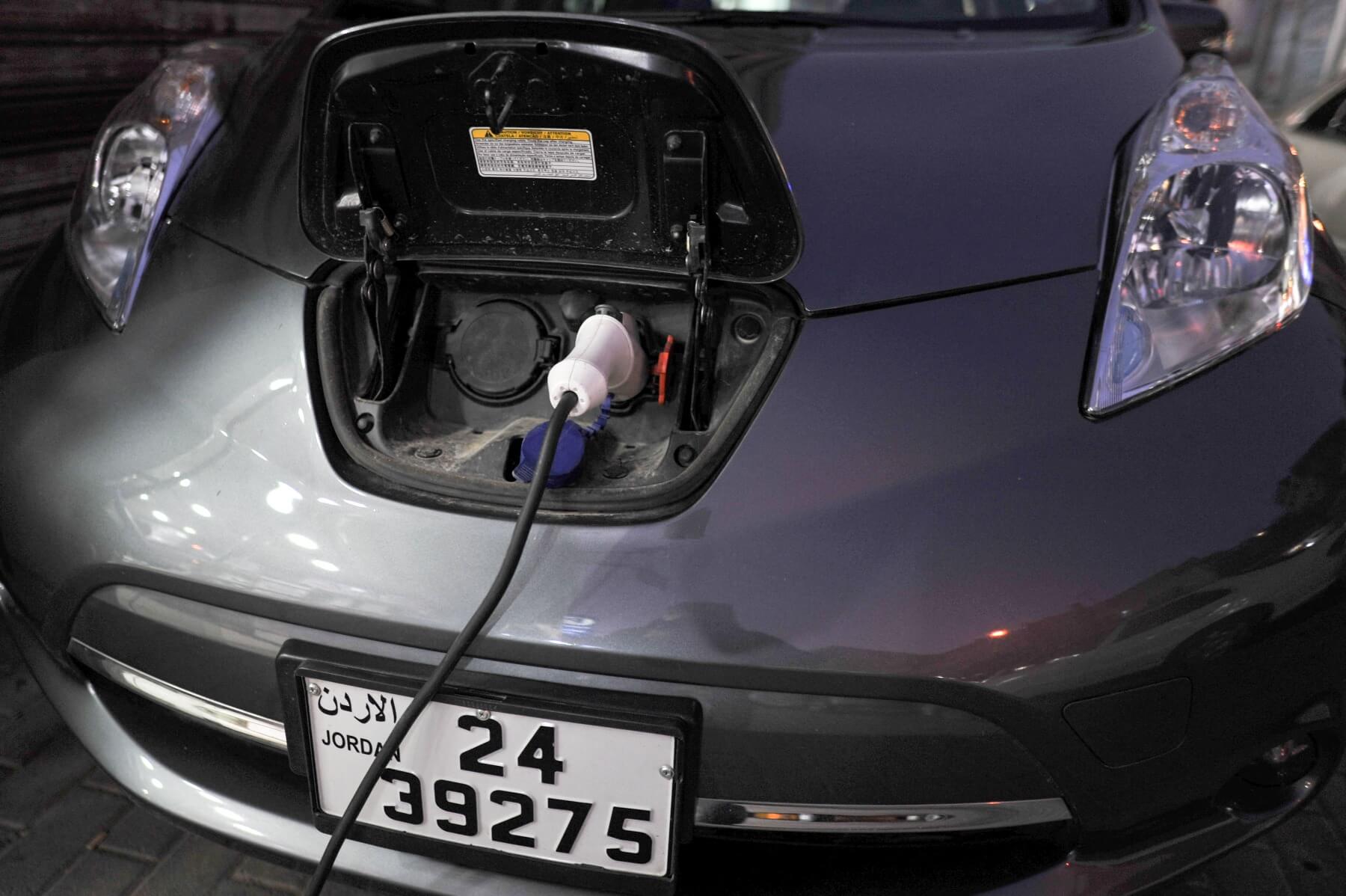
Source: AFP
Salam Freihat and Helwah Al-Arouri
“Electric cars are ticking time bombs,” says Mahmoud (not his real name). He has never owned or driven an electric car, never seen a battery catch fire, and never been in an accident involving one. But images of electric cars on fire, which he has seen repeatedly on his smart phone, were enough to convince him never to buy one.
He says what he fears most is the car catching fire or the battery exploding, especially with his children in the car.. He prefers diesel cars instead, which he says are easier to handle and which he can sometimes repair himself when things go wrong.
Mahmoud is not alone in thinking this way. Ali and Abdel Halim also worry that batteries in electric cars can catch fire or perform poorly in the hear t or in a collision. Others think Jordan’s high temperatures and terrain could increase the risks associated with electric cars.
But when we asked the people we interviewed what was driving their fears, they all pointed to one thing: video clips.
Clips of cars bursting into flames on the street or while charging, along with reports of batteries catching fire, circulate constantly on social media. constantly on social media. For some viewers, the sheer number of these clips has become proof that electric cars are dangerous .
A video published by Saraya News and several other outlets on July 23, 2026, shows a fire breaking out inside the parking garage of an apartment building. The video, captioned “Two electric vehicles catching fire triggers panic in Tabarbour,” attracted widespread engagement, with 456,000 views, more than 4,000 likes, and hundreds of comments and shares.
Although nothing in the video identifies the type of vehicles involved, apart from bystanders shouting “electric car,” the comments quickly shifted from the fire itself to warnings about electric cars, with some calling them “time bombs.”
Some comments supported electric cars; others opposed them
Source: Saraya News webpage
Translation of comments:
Footage of an electric car catching fire has become commonplace and a recurring news story that never fails to spark controversy. Al Wakeel News published a video clip captioned “Electric car catches fire in North Marka while charging.”.The clip received around 1.4 million views and hundreds of comments, most of them critical of electric cars and warning people not to buy them.
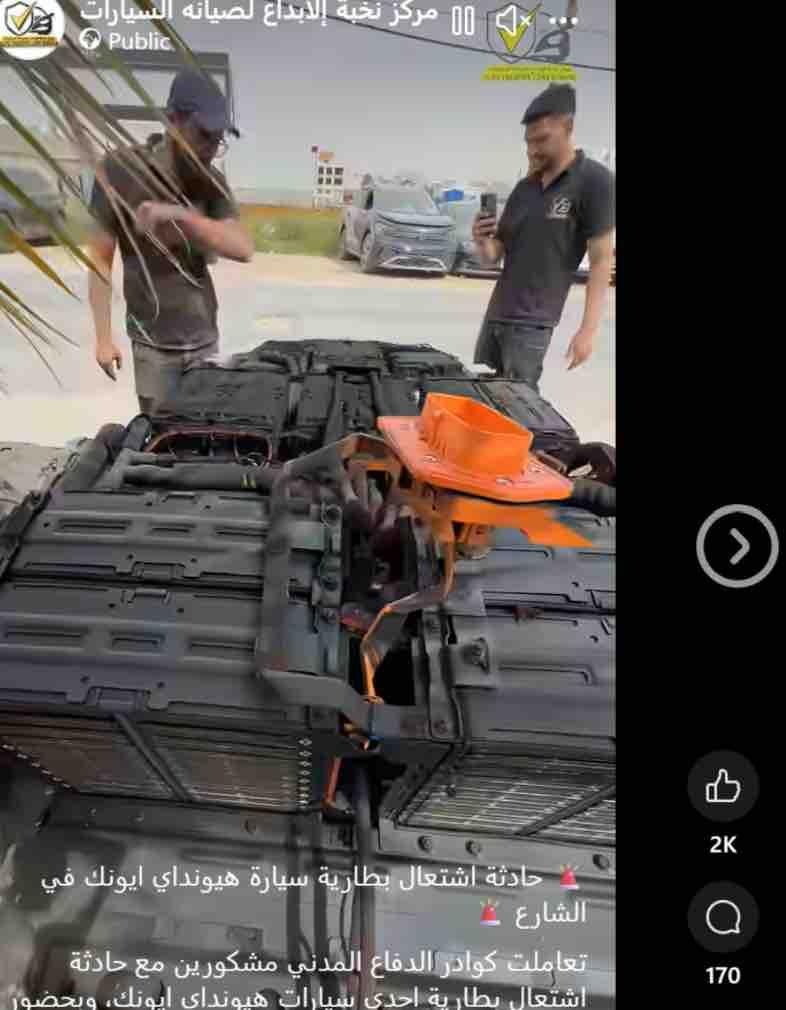
On May 9, 2026, the Elite Creative Cars Service Center also published a video clip captioned “Hyundai Ioniq battery catches fire on the street,” which had more than half a million views. Commenters voiced concerns about electric cars, even though the video was meant to show how to repair the battery.
Even when a news report does not specify the type of car on fire – as in the video posted by Roya News onJune 29, 2026, titled “Civil Defense crews tackle vehicle fire on Airport Road” – commenters assumed it was an electric car.
These media scare stories, coupled with recent government decisions (such as increased customs duties and a ban on importing electric cars that have been in use for more than three years, including the year of customs clearance), have made consumers hesitant.
Comments on a video titled “Electric vehicle catches fire in Aqaba,” published by Jordan News Agency on August 12, 2026, suggested that electric cars could not cope with “hot weather,” particularly Aqaba’s high temperatures..
Abdullah Al-Alawnah, an expert in electric vehicles, explains that modern models have advanced systems for managing the battery, temperature and electrical current. As a reult, high temperatures or fast charging do not necessarily mean that the car will catch fire or that so-called “thermal runaway” will occur.
The risk of fire increases if unsuitable connections or charging equipment are used, or if unauthorized modifications are made, safety systems are tampered with, or a damaged battery is used without being tested.
As for summer heat, Al-Alawnah explains that modern electric cars are equipped with battery temperature management systems, and some use liquid cooling technology to keep the battery cells within the appropriate operating range. When the temperature rises, he adds, the thermal management system kicks in to reduce heat or adjust battery performance and charging according to the vehicle’s specifications.
However, data from the annual statistical report of the Operations Division of the General Directorate of Civil Defense (part of the Public Security Directorate) paint a very different picture.
In 2025, fires occurred in 1,378 gasoline and diesel-powered vehicles (resulting in 82 injuries and three fatalities) and in 71 purely electric vehicles (resulting in 11 injuries and no fatalities). Another 138 hybrid vehicles caught fire (resulting in four injuries).
Electric cars make up around 15 percent of vehicles in Jordan, according to the Ministry of the Environment. If electric cars caught fire at the same rate as gasoline and diesel cars, the math suggests there would have been at least 206 electric vehicle fires.
Translation:
Explosion of battery in one of the most celebrated electric cars in Jordan. Details in first comment Comment by Firas Freihat: “Electric cars have become a danger and a threat; they could cause a catastrophe if, God forbid, one caught fire in a crowded place or a tunnel. Stay safe, everyone, and let’s not rush to buy electric cars.” “Gasoline cars don’t catch fire… nowhere near as much as electric cars, and they aren’t dangerous the way electric ones are; they run like clockwork and, praise God, there are none better; they are the most in demand worldwide.” Comment by Omar Habis Al-Farayzah Al-Abbadi: “Even if I had to walk a million kilometers, I wouldn’t buy an electric car.”
Source: Amman Voice
Translation: Two electric cars catch fire in Tabarbour; investigation underway to identify the cause.
Source: Amman Jo
Translation: Two electric vehicles catching fire triggers panic in Tabarbour
Source: Saraya News
According to the Jordan News Agency (Petra), the number of electric vehicles cleared through customs fell by over 49 percent in the first quarter of 2025, to 6,426, compared with 12,617 in the same period of 2024.
The chairman of the Jordanian Free Zones Investors Authority, MP Mohammed Al-Bustanji, attributes the decline in customs clearances to the decision to raise the progressive tax on these vehicles, which hurt the market performance and shifted demand toward vehicles not affected by the increase.
The Jordanian government later revisited the progressive tax and instead set a flat special tax of 27 percent on all categories of electric vehicles, regardless of their value of class. .
It also abolished the previous special tax regime, which had included plans to raise special tax rates to 55 percent.
“According to the Jordan Free and Development Zones Authority, electric vehicle customs clearances fell by 78 percent in the first quarter of 2026, compared with the same period in previous years, with only 2,263 vehicles cleared.”
Several studies comparing the life cycle of electric cars with that of internal combustion engine vehicles have found that electric cars are better for the environment overall.
Although manufacturing an electric car produces 40 to 50 percent more emissions than manufacturing a gasoline car, its lifetime emissions are 40 to 77 percent lower, depending on the region in question and the carbon intensity of the local power grid.
Furthermore, the extra emissions from manufacturing are offset after 70,000 to 120,000 kilometers of driving, making electric cars a more environmentally sustainable option in the long term.
Other studies show that when charged on the European electricity mix, an electric car contributes 20 to 24 percent less to global warming than a gasoline car.
Although the sharp decline in electric vehicle customs clearances is primarily due to recent government decisions to restructure the automotive sector, stoking public fears may slow down the phaseout of internal combustion engine cars (which cause carbon emissions and air pollution) and the adoption of environmentally friendly electric vehicles.
This trend could hamper Jordan’s efforts to meet its environmental commitments and reduce carbon emissions in the transportation sector, particularly as Jordan has pledged to reduce greenhouse gas emissions by 31 percent by 2030.